Iranian Court Imposes Capital Punishment on 23-Year-Old Student for Online Blasphemy
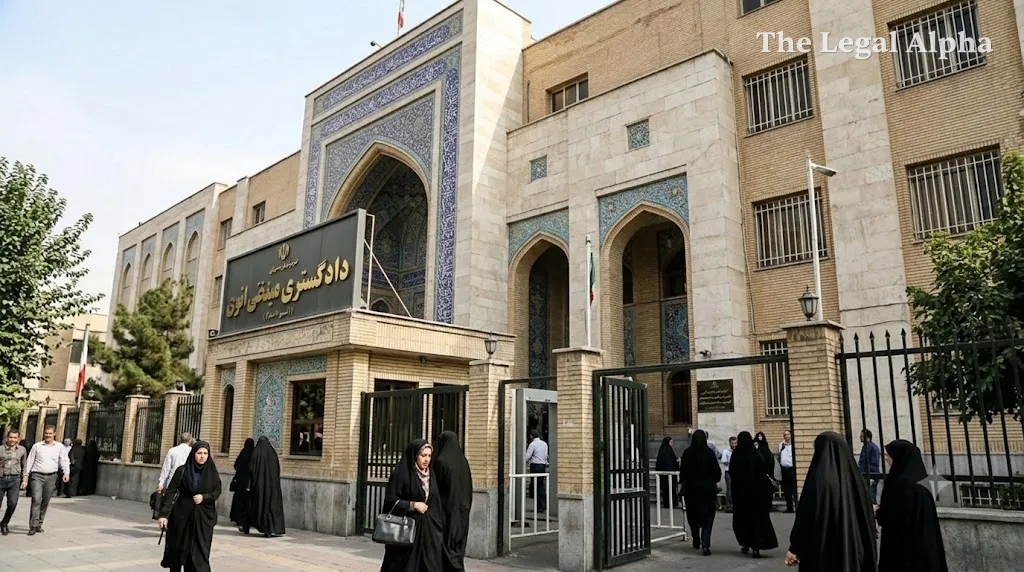
A criminal court in Iran has sentenced 23-year-old accounting student Najmeh Amini to death over social media remarks deemed insulting to the Prophet Muhammad and sacred Islamic figures. Security forces initially detained Amini in Mashhad in late January 2026 amidst wider civil unrest.
Following months of pre-trial detention in Vakilabad Central Prison, she was tried before Judge Javad Asiyan-Yazd on capital blasphemy charges. The trial court rendered a verdict of death by hanging, which remains subject to an appeal before Iran's Supreme Court. In a parallel proceeding, judicial authorities also sentenced her to more than twelve years' imprisonment on national security charges.
Legal Topic
-
Area of Law: International Criminal Law / Human Rights Law
-
Sub-topic: Capital Blasphemy and Freedom of Expression
Core Legal Issue
The primary legal issue centres on the application of Sabb al-Nabi (insulting the Prophet) under the Islamic Penal Code to online statements, specifically where capital punishment is imposed for non-violent digital speech.
The matter questions whether an accused's subjective mental state—such as claims of diminished capacity, intoxication, or unintentional utterance—legally negates the specific criminal intent (mens rea) required under statutory exceptions to avoid the death penalty for blasphemous speech.
What Did the Court / Authority Decide?
The trial bench in Mashhad convicted Amini under the capital provisions of the penal statute and ordered her execution by hanging.
-
Guilt Determination: The court found her online publications constituted intentional desecration of the Prophet and holy figures.
-
Sentence: The tribunal imposed the death penalty for the blasphemy infraction alongside a concurrent 12.5-year custodial sentence for anti-state security allegations.
-
Current Status: The capital ruling is not final; it is subject to mandatory appellate review by the Supreme Court of Iran before any execution warrant can be carried out.
Key Legal Points
-
Statutory Threshold for Capital Blasphemy: Under Iranian jurisprudence, Sabb al-Nabi carries mandatory capital punishment unless the defendant establishes statutory affirmative defenses, such as coercion, error, or lack of conscious intent.
-
Rebuttal of Mens Rea Defenses: The trial court rejected the defense's argument regarding involuntary or substance-induced lack of intent, treating public online publication as conclusive evidence of blasphemous intent.
-
International Human Rights Scrutiny: International bodies consistently maintain that Article 6 of the International Covenant on Civil and Political Rights (ICCPR)—to which Iran is a party—restricts the death penalty solely to the "most serious crimes" involving intentional killing, excluding speech-related offenses.
-
Procedural and Pre-Trial Rights: The prolonged detention without final disposition and restricted legal access during investigative custody form central grounds for expected Supreme Court challenges.
Relevant Law
-
Islamic Penal Code of the Islamic Republic of Iran: Article 262 (criminalising Sabb al-Nabi with the death penalty) and Article 263 (providing that if an accused claims the statements were made out of anger, mistake, or altered state, the punishment is reduced to discretionary flogging or imprisonment).
-
International Covenant on Civil and Political Rights (ICCPR): Article 6 (Right to Life and restriction of capital punishment) and Article 19 (Freedom of Expression and Opinion).
Arguments of the Parties
The Prosecution The State contended that Amini intentionally authored and disseminated remarks that directly mocked the Prophet Muhammad and revered Shiite figures, satisfying every element of statutory blasphemy. Prosecutors submitted that such public statements directly undermine the religious and social foundation of the state, requiring the full statutory penalty of death under religious law.
The Accused / Defense The defense submitted that Amini lacked the conscious legal intent required for blasphemy, asserting that the statements were made inadvertently during a temporary state of mental confusion and intoxication rather than calculated malice. Legal representatives urged the court to apply statutory exceptions that reduce liability when an accused acts without deliberate intent to insult holy figures.
Why Does It Matter?
This case demonstrates the severe friction between strict domestic religious penal codes and established international human rights standards on freedom of expression. If affirmed by the Supreme Court, the decision confirms that social media posts are treated with the same evidentiary gravity as physical, premeditated acts under severe anti-blasphemy laws.
For legal monitors and human rights observers, the ruling marks a heightened reliance on speech-based capital charges to penalize digital expression in the aftermath of widespread civic protests.
Legal Takeaway
Under Iran's statutory framework, digital publications can meet the threshold for capital blasphemy unless the defense successfully establishes statutory exceptions under Article 263 negating conscious intent. Because the death penalty in this matter is not yet final, the case now turns entirely on whether the Supreme Court will evaluate the absence of criminal intent on appeal.
Sources
Primary Source:
-
Judgments and Orders of the Criminal Court of Mashhad, Branch presided over by Judge Javad Asiyan-Yazd (Case records re: Sabb al-Nabi charges against Najmeh Amini, September 2026).
Additional Sources:
-
Reports by Iran Human Rights (IHRNGO) and Human Rights Activists News Agency (HRANA).
-
Legal commentary on Islamic Penal Code Articles 262 and 263; International Covenant on Civil and Political Rights (ICCPR) documentation.