High Court of Jammu & Kashmir and Ladakh Questions Continued Allotment of Official Residences to Political Figures
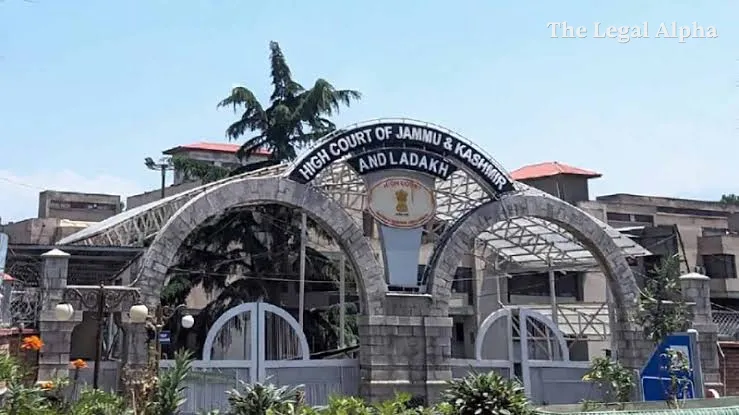
The High Court of Jammu & Kashmir and Ladakh has directed the Union Territory administration to explain the legal basis and policy framework under which political leaders—including former Chief Minister Ghulam Nabi Azad and former Bharatiya Janata Party (BJP) State President Ravinder Raina—continue to occupy government bungalows.
The matter arose during the hearing of a longstanding Public Interest Litigation (PIL) filed by advocate S.K. Bhalla in 2020, seeking the eviction of former ministers, ex-legislators, and political figures from public housing. When informed that an administrative committee had recommended allowing both leaders to retain their residences until March 2027 based on threat perceptions, the High Court asked the administration to demonstrate what statutory authority or uniform policy empowers such panels to grant extensions.
Legal Topic
Area of Law: Constitutional & Administrative Law
Sub-topic: Public Property Management / Executive Discretion & Judicial Review
Core Legal Issue
The primary question before the court is whether the executive branch holds uncanalised discretion to allocate or extend public housing to individuals holding no constitutional, legislative, or public office, under the umbrella of security assessments.
Specifically, the court is examining where an administrative review committee derives its statutory jurisdiction to recommend the retention of state properties, and whether a transparent, non-arbitrary, and uniform policy governs such decisions in compliance with Article 14 of the Constitution.
What Did the Court Decide?
-
The High Court refrained from passing immediate eviction orders or summarily canceling the existing allotments of the named leaders.
-
The bench formally called upon the Senior Additional Advocate General (Sr. AAG) to clarify the governing policy in Jammu and Kashmir regarding the retention of state bungalows by political functionaries.
-
The court asked the government to specify the legal source and statutory mandate from which the designated review committee derives its power to permit continued occupation.
-
Acceding to the administration's request for time to place an explanatory affidavit on record, the Division Bench scheduled the matter for its next hearing on November 12, 2026.
Key Legal Points
-
Non-Arbitrariness in State Asset Allocation: Executive discretion in distributing or continuing the use of limited public property must adhere to transparent norms and objective criteria rather than ad hoc executive choices.
-
Separation of Security and Housing Rights: The legal status of being an "evicted" or "former" representative means threat perception requires protective arrangements by the state, but does not inherently create a legally enforceable entitlement to occupy prime government estates.
-
Source of Committee Authority: Administrative committees formed by government order cannot exercise power over public resources without clear statutory or delegated regulatory backing.
-
Precedential Scrutiny: Prior orders of the Division Bench and Supreme Court precedents hold that personal security risks cannot serve as a blanket ground to bypass public property eviction laws.
Relevant Law
-
Article 14 of the Constitution of India: Equality before the law and protection against arbitrary state action in public resource distribution.
-
The Jammu and Kashmir Public Premises (Eviction of Unauthorised Occupants) Act, 1988: Statutory procedure governing the recovery and eviction of unauthorized persons from public land and premises.
-
Supreme Court Precedents on Public Housing (e.g., S.D. Bandi v. Divisional Traffic Officer, KSRTC (2013)): Landmark ruling holding that public properties are not meant for perpetual enjoyment by former ministers or legislators and directing strict timelines for vacation following the demitting of office.
Arguments of the Parties
Petitioner
-
Senior counsel appearing for the petitioner argued that unauthorized occupation of government housing cannot be legally sustained or justified merely by citing personal security assessments.
-
Counsel highlighted that a Division Bench of the High Court had previously ruled on December 26, 2022, declining to shield individuals from eviction solely on security grounds, while citing consistent authorities from the Supreme Court and the Delhi High Court.
The Administration / State
-
The Union Territory's legal team submitted that the extensions through March 2027 were based on formal recommendations made by a designated administrative committee tasked with assessing threat perceptions.
-
State counsel requested time from the bench to file a detailed affidavit explaining the statutory lineage of the committee and placing the uniform administrative policy on record.
Why Does It Matter?
The proceedings highlight a recurring constitutional friction between executive discretion and public resource stewardship. Across several Indian jurisdictions, the practice of accommodating political figures long after they demit public office has drawn intense scrutiny. By requiring the administration to show clear statutory backing rather than accepting executive security committee clearances at face value, the High Court reinforces the principle that scarce public assets cannot become de facto perks of political stature. The outcome on November 12, 2026, will likely establish whether administrative risk evaluations can legitimately override standard eviction mechanisms under public premises statutes.
Legal Takeaway
State-provided security does not equate to an automatic entitlement to state-owned housing. Any executive decision allowing non-office holders to occupy public bungalows must be founded on an explicit, uniform, and legally authorized policy that survives constitutional scrutiny under Article 14.
Sources
Primary Source:
-
High Court of Jammu & Kashmir and Ladakh, Srinagar Bench — Proceedings and interim order in PIL No. 17/2020 (S.K. Bhalla v. State of J&K and Ors.).
Additional Sources:
-
High Court of Jammu & Kashmir and Ladakh Order dated December 26, 2022 (declining security-based protection against eviction).
-
Official court record filings and submissions by the Senior Additional Advocate General, Jammu & Kashmir (October 14, 2026).