Equal Protection on Rails: Supreme Court Directs Mandatory Travel Insurance for Over-the-Counter Train Tickets
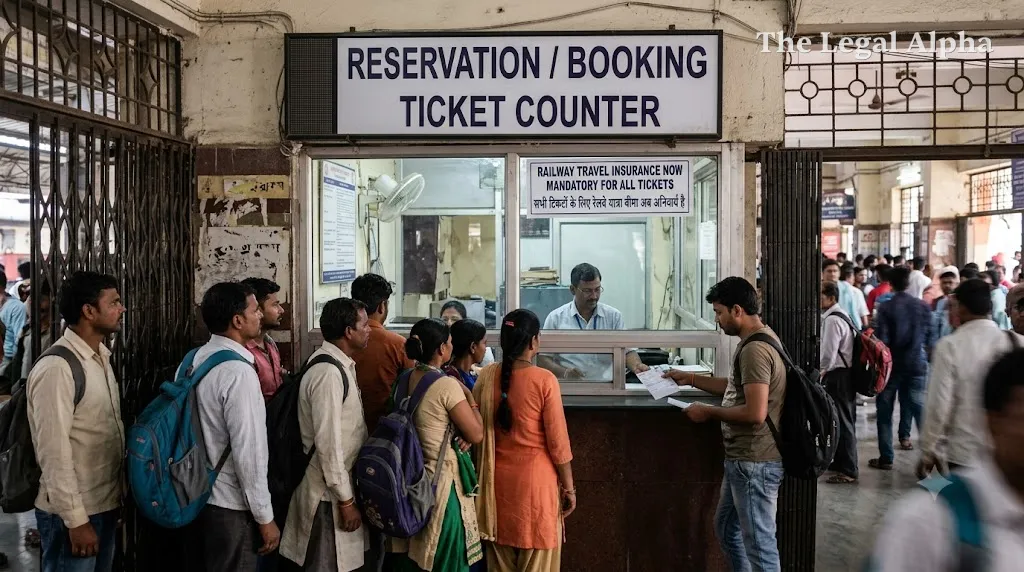
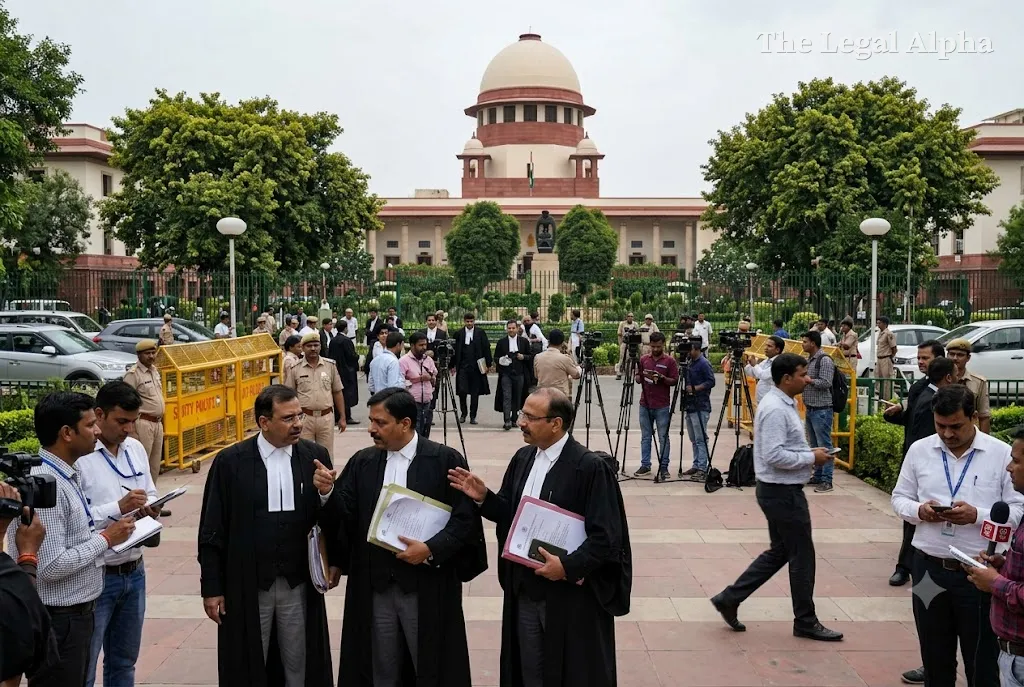
The Supreme Court of India has ordered the Railway Board to mandatorily provide travel insurance coverage for all passenger tickets bought over station booking counters, effective October 27, 2026.
Expressing strong dissatisfaction over persistent administrative inaction, the bench observed that authorities had failed to bridge the disparity between digital bookings and physical counter sales. While internet users booking via portals like IRCTC have long enjoyed access to low-cost accident insurance, millions of offline passengers—predominantly migrant workers, daily-wage laborers, and rural citizens—have remained excluded from similar coverage. The apex court placed personal accountability directly on the Railway Board to ensure full compliance within the stipulated two-week window.
Legal Topic
-
Area of Law: Public Law / Consumer Protection & Administrative Law
-
Sub-topic: Common Carrier Liability / Non-Discrimination under Article 14
Core Legal Issue
The principal legal issue concerns whether the state instrumentality (Indian Railways) created an arbitrary and discriminatory classification under Article 14 of the Constitution by offering optional travel insurance protection solely to passengers booking through digital interfaces while denying a comparable safety net to individuals purchasing physical counter tickets.
A secondary issue centers on the statutory and constitutional duty of care owed by public common carriers to protect passenger safety and financial welfare during untoward rail accidents, irrespective of the transaction medium used to book travel.
What Did the Court Decide?
The Supreme Court issued mandatory directions requiring the Railway Board to institute insurance coverage across all physical railway station counters by October 27, 2026, identical in scope to the mechanism offered for digital tickets.
The court made it clear that failure to execute the order within two weeks will result in direct personal liability and accountability falling upon the Railway Board. Concurrently, after the authorities sought additional time to show progress on passenger safety infrastructure, the bench paused an earlier directive summoning the Chairman and members of the Railway Board. The broader public interest proceedings addressing rail safety have been scheduled for further hearing on November 16, 2026.
Key Legal Points
-
Prohibition of Digital Apartheid: Providing beneficial welfare mechanisms solely to digital ticket purchasers constitutes an unreasonable classification that disproportionately disadvantages lower-income travelers.
-
Strict Executive Accountability: The Court attached explicit compliance responsibility to the Railway Board, signaling that prolonged bureaucratic non-implementation will draw institutional and judicial consequences.
-
Parity of Protection: Physical counter tickets must carry the same insurance protection terms available to e-ticket holders, eliminating transactional disparity in passenger safeguards.
-
Affirmative Duty of Public Carriers: The state operates passenger railways as a public utility under constitutional mandates of public welfare and safety, not strictly as a private commercial operator.
Relevant Law
-
Constitution of India: Article 14 (Right to Equality and protection against arbitrary state action) and Article 21 (Right to life and personal safety)
-
The Railways Act, 1989: Sections governing the administration of passenger transport and carrier obligations in accidents and untoward incidents
-
Railway Claims Tribunal Act, 1987: Framework regulating compensation mechanisms for rail accidents
Arguments of the Parties
The Petitioners / Public Interest Litigants
The petitioners argued that rail passengers are homogeneous in their exposure to risk during transit. They contended that limiting micro-insurance benefits to digital ticket holders penalizes economically vulnerable populations who lack smartphones, digital literacy, or online payment instruments, amounting to unconstitutional discrimination.
The Railway Administration
The authorities submitted that expanding insurance mechanics to over-the-counter sales involves systemic logistics, integration with ticketing software at thousands of counters, and ongoing negotiations with insurance underwriters. They requested additional time to devise a workable framework and sought indulgence regarding personal court appearances of top Railway Board officials.
Why Does It Matter?
This directive directly alters passenger rights across the Indian railway network, where tens of millions purchase paper tickets daily. Historically, victims of rail disasters who bought unreserved or counter tickets faced prolonged adjudication before the Railway Claims Tribunal with minimal immediate relief.
By mandating that station counter tickets mirror online insurance protections, the ruling levels the playing field for unreserved and counter-booked passengers. It sets a precedent against "digital exclusion" in state-run utilities, ensuring that modern safety measures and benefits introduced in digital portals cannot bypass traditional, ground-level public touchpoints.
Legal Takeaway
The Supreme Court has affirmed that the mode of ticket procurement cannot dictate passenger protection rights. State transport providers must extend basic safety protections and insurance coverage uniformly, ensuring digital modernization does not leave offline consumers legally and financially vulnerable.
Sources
Primary Source:
-
Supreme Court of India, Record of Proceedings / Interim Order dated October 14, 2026, directing parity in passenger travel insurance across railway booking counters.
Additional Sources:
-
The Indian Express: Supreme Court makes insurance mandatory for all train tickets from Oct 27 (Reported October 14, 2026).
-
Gujarat Samachar / Legal News Bureau: Equal Tracks, Equal Safety For Millions: SC Extends Rail Travel Insurance (October 14, 2026).