Federal Court Enjoins White House Press Revocations, Finding Likelihood of First and Fifth Amendment Violations
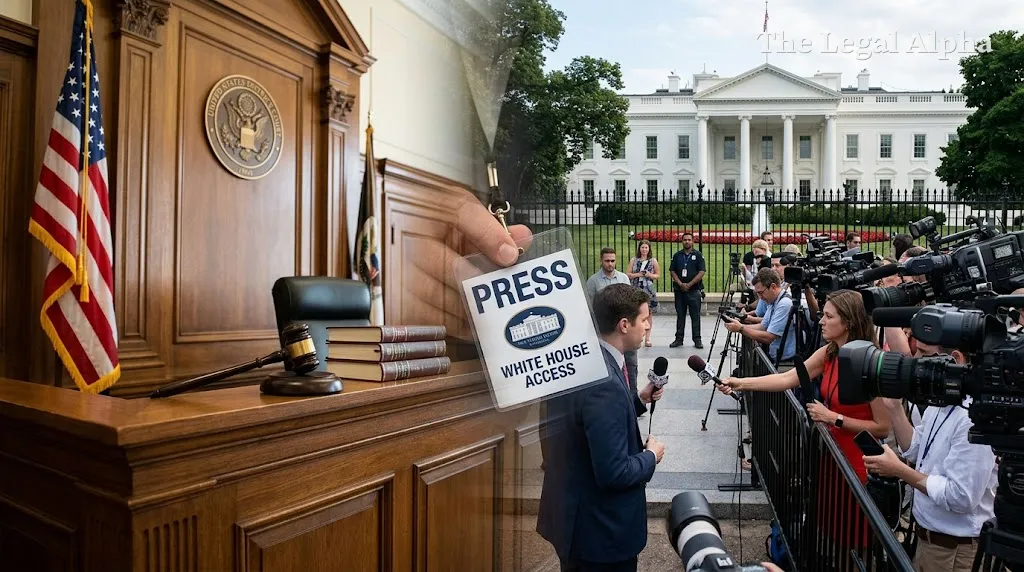
A federal judge in Washington, D.C., granted a preliminary injunction against the executive branch, barring officials from enforcing a directive that revoked press credentials for reporters from CNN, MS NOW, and Politico.
The dispute arose after the administration decided on September 18, 2026, to strip "hard pass" credentials from journalists employed by the three news organizations. Following an initial temporary restraining order that restored their entry, U.S. District Judge Timothy Kelly converted that relief into a formal preliminary injunction. The order preserves the status quo, ensuring the affected journalists retain operational access to White House grounds while their underlying civil lawsuit proceeds to trial.
Legal Topic
-
Area of Law: Constitutional Law
-
Sub-topic: First Amendment / Viewpoint Discrimination / Procedural Due Process
Core Legal Issue
The controversy centres on whether the executive branch possesses unreviewable administrative discretion to revoke established press credentials, or whether such exclusions constitute unlawful viewpoint discrimination under the First Amendment and a deprivation of protected liberty interests without procedural safeguards under the Fifth Amendment.
The legal threshold is whether the government can selectively exclude accredited press corps members based on displeasure with critical reporting, without providing clear notice, articulate neutral standards, or an administrative opportunity to contest the decision.
What Did the Court Decide?
Judge Kelly granted the plaintiffs' motion for a preliminary injunction, restraining the administration from executing or enforcing its September 18 revocation order.
The court ruled that the plaintiff news outlets demonstrated a strong likelihood of success on the merits, not only concerning their Fifth Amendment procedural due process claims, but across two distinct First Amendment claims as well. The judge observed that the revocations appeared directly tied to the administration's subjective perception that the outlets published biased and inaccurate coverage. The order keeps the credentials in force through the pendency of the litigation.
Key Legal Points
-
Viewpoint-Based Exclusion: The court recognized that denying established press facilities due to perceived bias or hostile coverage amounts to prohibited viewpoint discrimination under the First Amendment.
-
Protected Due Process Interests: Revoking long-standing White House press credentials implicates protected Fifth Amendment liberty interests, requiring pre-revocation notice, neutral criteria, and a meaningful opportunity to be heard.
-
Preliminary Relief Threshold: To obtain an injunction preserving status quo access, news organizations must demonstrate both immediate irreparable harm to newsgathering and a substantial likelihood of prevailing on constitutional claims.
-
Limits of Executive Discretion: While executive staff manage building security, physical press access cannot be deployed as a coercive leverage mechanism to chill investigative journalism or extract favorable reporting.
Relevant Law
-
First Amendment to the United States Constitution: Protects freedom of the press and proscribes government viewpoint discrimination.
-
Fifth Amendment to the United States Constitution: Guarantees procedural due process prior to the deprivation of protected life, liberty, or property interests.
-
Sherrill v. Knight, 569 F.2d 124 (D.C. Cir. 1977): The foundational precedent establishing that White House press credentials cannot be denied or revoked arbitrarily, requiring published standards and fair administrative process.
-
CNN v. Trump, 347 F. Supp. 3d 1 (D.D.C. 2018): Binding district precedent granting interim relief against credential revocations lacking procedural safeguards.
Arguments of the Parties
Petitioner / Applicant (News Outlets) Counsel for the news organizations argued that the wholesale revocation of their credentials was a direct retaliation against editorial content and critical reporting. The media outlets submitted that executive officials intentionally acted to chill press freedoms, suppress adversarial coverage, and bypass mandatory due process procedures required by settled D.C. Circuit case law.
Respondent / Opposing Party (Department of Justice) The Department of Justice contended that the exclusions were legitimate administrative measures taken in response to what it characterized as indefensible journalistic conduct and improper decorum. Government attorneys argued that credential management falls within broad executive operational prerogative and defended the administration's actions as justified regulatory control over White House grounds.
Why Does It Matter?
This decision reaffirms enforceable constitutional limitations on presidential control over press corps access. By finding that the media outlets are likely to succeed on both First Amendment free press claims and Fifth Amendment due process claims, the ruling curtails attempts by public officials to leverage physical credentialing as an editorial enforcement tool.
The ruling reinforces the principle that accredited press facilities function under legal guardrails rather than executive whim. For newsrooms, the injunction provides procedural security against retaliatory expulsions ahead of major political cycles, reaffirming that the state cannot condition access on editorial compliance.
Legal Takeaway
Executive officials cannot revoke accredited press passes based on displeasure with news reporting or perceived editorial hostility. Any attempt to strip established press access without published standards, evidence of neutral misconduct, and robust procedural due process violates fundamental constitutional protections.
Sources
Primary Source:
-
Memorandum Opinion and Order Granting Preliminary Injunction, U.S. District Court for the District of Columbia, Judge Timothy Kelly (issued October 2026).
Additional Sources:
-
Filings and official proceedings, U.S. Department of Justice and Counsel for Plaintiffs (Theodore J. Boutrous, Jr.).
-
Case record and hearing transcripts, U.S. District Court for the District of Columbia.