Supreme Court Rebukes Election Commission Over Untraceable Vote-Counting Video, Warns of Adverse Inference
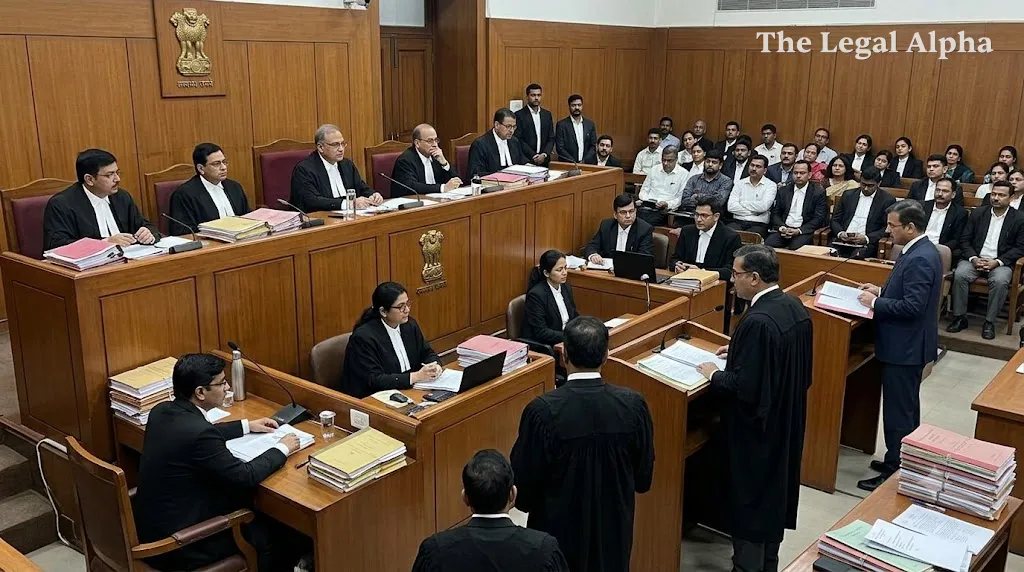
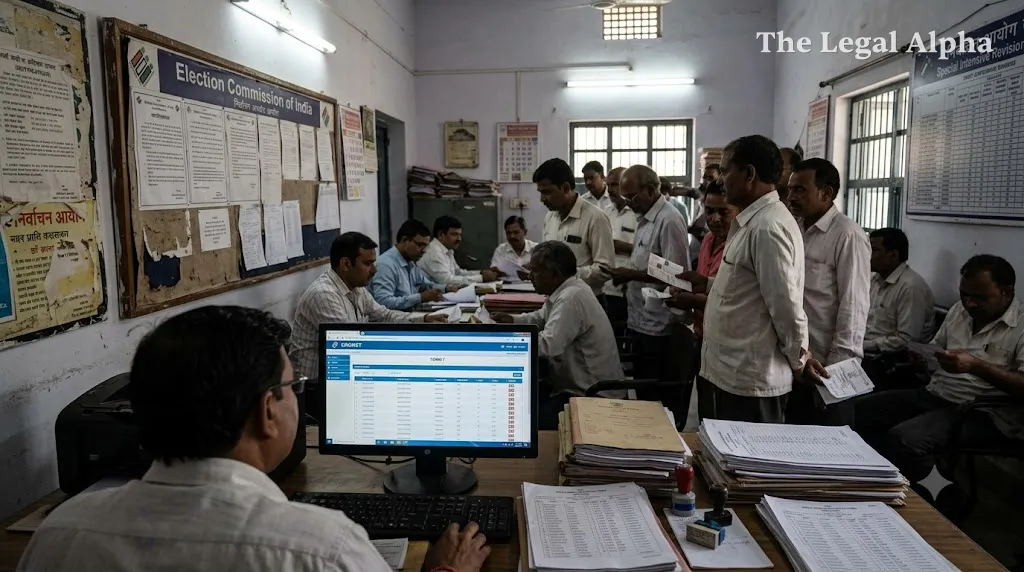
The Supreme Court of India sharply criticized the Election Commission of India (ECI) after the poll body claimed it could not locate the 2023 video recording of the vote-counting process for Karnataka’s Sringeri Assembly constituency. A bench comprising Justice Sanjay Kumar and Justice Sanjeev Sachdeva took strong objection to the ECI’s explanation, cautioning that the court would draw an adverse inference against the authority if the missing records were not produced by the next date of hearing.
The matter arises out of an election dispute between Congress leader T.D. Rajegowda and Bharatiya Janata Party (BJP) candidate D.N. Jeevaraj concerning the recounting and re-verification of postal ballots from the 2023 Karnataka Assembly polls. Rajegowda, who had initially won the election before a subsequent recount altered the tally, petitioned the apex court seeking the production of the original counting videos and the election observer’s report to address allegations of procedural irregularities.
Legal Topic
Area of Law: Election Law / Constitutional Law
Sub-topic: Custody of Election Records, Conduct of Elections, and Evidentiary Presumptions
Core Legal Issue
The primary legal issue is whether the Election Commission of India, as a constitutional body mandated to oversee free and fair elections, bears an absolute legal duty to maintain proper custody and preservation of statutory election records—including video recordings of the counting process.
The court was directly addressing the evidentiary consequence of a constitutional election authority failing to produce mandatory contemporaneous records during an election petition, and whether such failure warrants the invocation of an adverse inference under evidentiary rules.
What Did the Court / Authority Decide?
The Supreme Court firmly rejected the Election Commission’s claim that it was still "trying to trace" the missing video footage, characterizing the defense as unacceptable.
The bench issued a strict direction ordering the ECI to produce whatever video footage and related records it possesses on the next scheduled hearing date. The court explicitly cautioned that if the ECI fails to place the requisite recordings before the bench, it will draw an adverse inference against the Commission regarding the propriety of the counting process. The substantive dispute over the validity of the recount remains pending before the apex court.
Key Legal Points
-
Constitutional Obligation of Record Custody: The ECI holds a non-delegable responsibility to preserve all official records, forms, and video logs connected to the conduct and counting of elections.
-
Rejection of Administrative Lapses: The Supreme Court emphasized that an election authority cannot offer administrative inability or misplacement as a legitimate defense when election integrity is formally challenged.
-
Doctrine of Adverse Inference: If a party or custodian withholds or fails to produce material evidence in its custody without lawful explanation, the court possesses the power under the law of evidence to presume that the unproduced evidence would be unfavorable to that party's stance.
-
Transparency in Postal Ballot Recounts: Contemporaneous video logs and observers’ reports constitute indispensable evidence for verifying whether Returning Officers complied with statutory rules and statutory guidelines during recounts.
Relevant Law
-
Article 324 of the Constitution of India: Mandates the superintendence, direction, and control of elections in the Election Commission of India.
-
Representation of the People Act, 1951: Governing the conduct of elections, disputes, and trial of election petitions (notably Sections 80, 100, and 169).
-
Conduct of Elections Rules, 1961: Prescribing statutory rules for counting, preservation, and custody of ballot papers and election recordings (notably Rules 56C, 92, and 93).
-
Handbook for Returning Officers: Including specific operational guidelines (such as Guideline 15.25) governing recounting procedures, observer scrutiny, and compulsory videography of counting tables.
-
Section 114, Illustration (g) of the Indian Evidence Act, 1872 / Section 119 of the Bharatiya Sakshya Adhiniyam, 2023: Empowering courts to draw an adverse inference that evidence which could be and is not produced would, if produced, be unfavorable to the person withholding it.
Arguments of the Parties
Petitioner / Moving Party (T.D. Rajegowda)
Counsel for the petitioner submitted that the recount, which altered the original margin and favored the opposing candidate, lacked procedural regularity and transparency. It was argued that the observer’s report and the unedited video recordings of both the initial count and the subsequent recount are critical contemporaneous evidence required to evaluate whether the postal ballot re-verification was conducted in accordance with statutory guidelines.
Respondent Authority (Election Commission of India)
Counsel appearing for the ECI stated before the court that the authorities were actively attempting to trace the counting video recordings from the 2023 election and requested further latitude to locate the files.
Why Does It Matter?
This development reinforces judicial oversight over the administrative functioning and custodial obligations of the Election Commission of India. In contested legislative elections decided by narrow margins, video recordings often provide the single most authoritative, tamper-proof record of what transpired at the Returning Officer's table.
By warning that an adverse inference will be drawn against the constitutional body itself, the Supreme Court signals that institutional carelessness or loss of key election records will not be treated lightly. This stance protects election petitioners from having legitimate statutory challenges thwarted by administrative failures, reinforcing accountability in electoral dispute adjudication.
Legal Takeaway
The Election Commission of India is legally required to preserve contemporaneous election records and cannot bypass judicial scrutiny by claiming recordings are untraceable. In election disputes, a failure by election authorities to produce mandated counting footage entitles the court to invoke adverse inference against the integrity of the contested procedure.
Sources
Primary Source:
-
Judicial Proceedings & Oral Observations, Supreme Court of India, Bench of Justice Sanjay Kumar and Justice Sanjeev Sachdeva, Hearing on Sringeri Constituency Election Dispute, October 14, 2026.
-
High Court of Karnataka, D.N. Jeevaraja v. T.D. Rajegowda, Election Petition No. 20 of 2023.
Additional Sources:
-
Conduct of Elections Rules, 1961 (Rules on Counting and Record Retention).
-
Handbook for Returning Officers, Election Commission of India.