Shifting the Grounds of Dissent: Supreme Court and Delhi High Court Moved Against Order Barring Demonstrations at Jantar Mantar
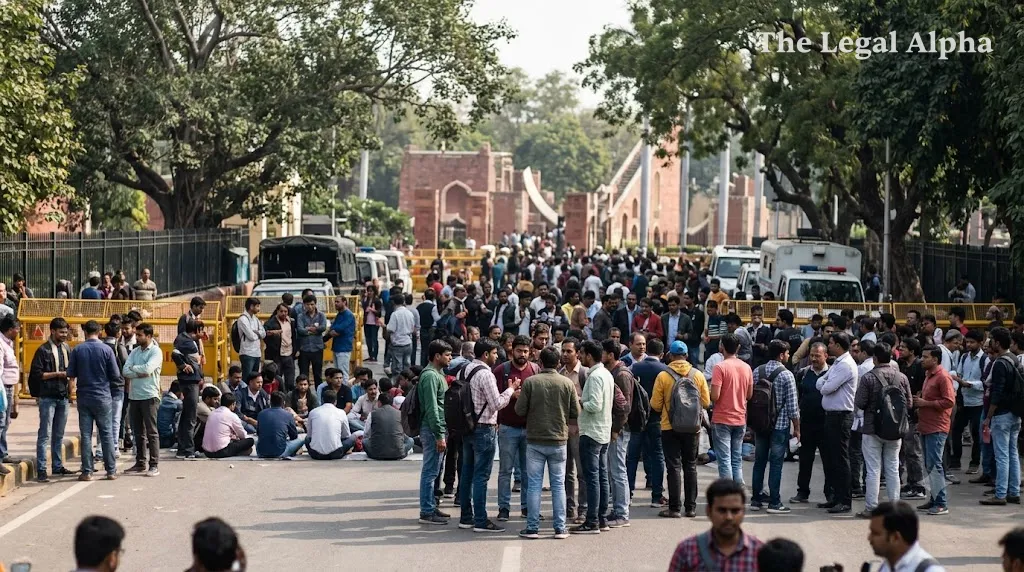
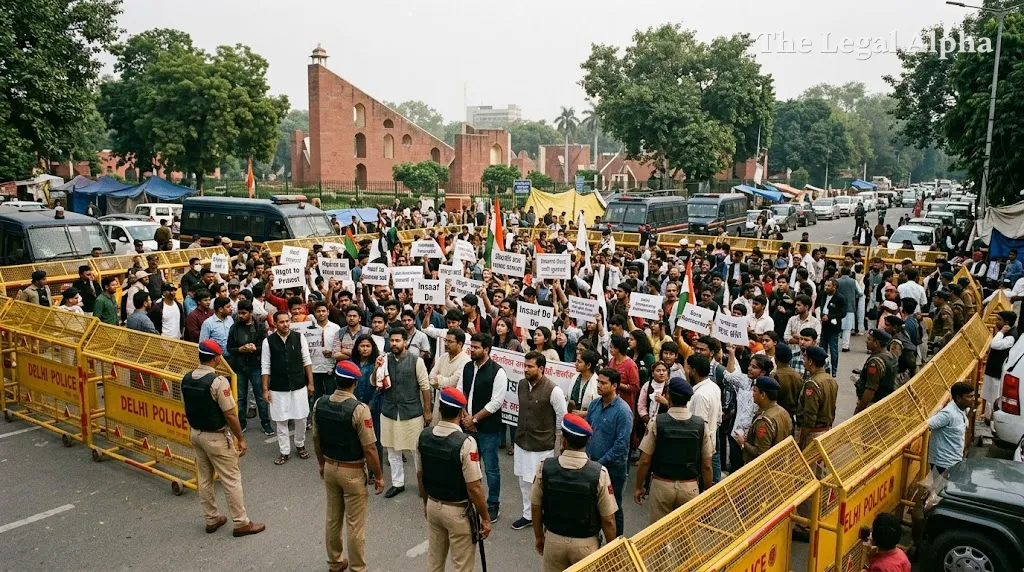
The Delhi Police issued a standing order revoking Jantar Mantar’s decades-long status as the national capital's primary venue for peaceful demonstrations and public protests. In its place, law enforcement designated three alternative venues across the city: Ramlila Maidan, Burari Ground, and the CBD Ground in East Delhi.
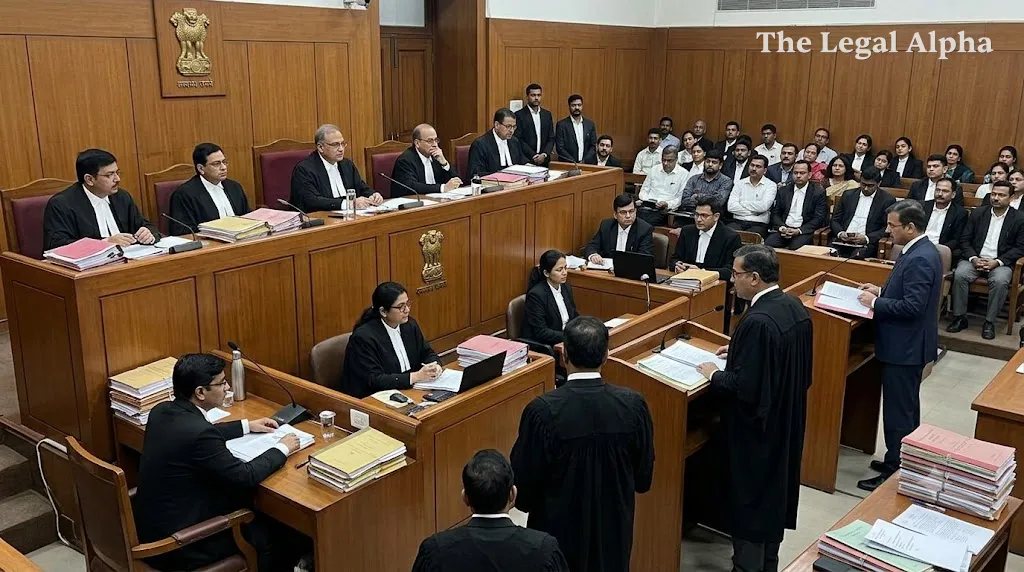
This sudden administrative relocation has triggered immediate judicial pushback. Independent lawyers and political youth bodies filed separate petitions before both the Supreme Court of India and the Delhi High Court, contending that banishing public demonstrations to remote or peripheral sites effectively dismantles citizens' fundamental right to assemble and air legitimate grievances within reach of constitutional and government institutions.
Legal Topic
Area of Law: Constitutional and Administrative Law
Sub-topic: Right to Peaceful Assembly / Freedom of Speech and Expression / Reasonableness of Police Restrictions under Article 19
Core Legal Issue
The legal conflict centers on the boundary between an administration’s power to regulate public order and traffic versus the constitutional guarantee to assemble peacefully without arms under Article 19(1)(b) read with Article 19(1)(a).
The courts must evaluate whether completely de-notifying a historically recognized, central demonstration venue and banishing protesters to peripheral zones meets the constitutional test of "reasonable restrictions" under Article 19(3). The critical inquiry is whether an administrative relocation that diminishes the visibility and political efficacy of peaceful protest renders that fundamental freedom illusory in practice.
What Did the Court / Authority Decide?
The Delhi Police enacted the change via an executive standing order signed by the Police Commissioner, citing directions and observations issued by the Supreme Court concerning public order and site regulation as their operational basis.
On the judicial front, the Delhi High Court issued notice on the preliminary requests seeking reconsideration of protest permission while permitting the petitioners to amend their pleadings to challenge the de-notification order itself. In the Supreme Court, a fresh writ petition has been formally instituted and placed before the bench. As it stands, neither court has stayed the police standing order; both matters remain pending determination on their merits.
Key Legal Points
-
Proportionality of Executive Action: Administrative orders regulating public space cannot be exercised as an indirect tool of suppression; restrictions must adhere strictly to the doctrine of proportionality rather than operating as blanket exclusions.
-
Right to Meaningful Audience: Constitutional jurisprudence recognizes that the right to assemble includes the implicit right to demonstrate within sight and earshot of the relevant authorities and the public.
-
Regulatory Void at New Sites: The challenged order removed Jantar Mantar while allegedly failing to outline a clear, functioning operational mechanism for permissions and logistical access at the newly substituted locations.
-
Interpretation of Prior Precedent: While previous judicial rulings allowed reasonable crowd regulation at Jantar Mantar, the petitions challenge whether those directions can be interpreted as an administrative mandate to abolish the venue altogether.
Relevant Law
-
Constitution of India: Article 19(1)(a) (Freedom of speech and expression), Article 19(1)(b) (Right to assemble peacefully and without arms), and Article 19(3) (State powers to impose reasonable restrictions in the interests of public order).
-
Delhi Police Act, 1978: Standing orders and administrative regulatory powers governing assemblies, processions, and maintenance of public order within the National Capital Territory.
-
Mazdoor Kisan Shakti Sangathan (MKSS) v. Union of India (2018): The landmark Supreme Court precedent that struck down continuous section 144 bans at Jantar Mantar, affirming citizens' rights to hold peaceful protests there subject to balanced administrative guidelines.
Arguments of the Parties
Petitioners The petitioners argue that the standing order is arbitrary, unguided, and disproportionate. They submit that shifting demonstration zones to peripheral areas like Burari effectively insulates public authorities and lawmakers from accountability by stripping protests of visibility. The petitioners further contend that the 10-day prior application mandate and the absence of clear access protocols at alternative venues impose an unreasonable pre-censorship barrier on spontaneous civic expression.
Delhi Police / State The police maintain that the de-notification is a lawful regulatory step enacted pursuant to Supreme Court orders addressing urban congestion, institutional security, and continuous public nuisance in the capital’s central business and administrative zone. The administration argues that the right to protest is not absolute and that the state has fulfilled its constitutional duty by designating alternative, spacious sites—namely Ramlila Maidan, Burari Ground, and CBD Ground—to safely manage large gatherings without disrupting central Delhi.
Why Does It Matter?
This legal battle touches the core mechanics of participatory democracy in India. The outcome will set a definitive precedent regarding whether the executive can satisfy constitutional assembly rights by consigning dissent to peripheral, low-visibility zones.
If upheld, the de-notification signals a broader trend toward sanitizing central capital areas from public demonstrations, directly impacting advocacy groups, trade unions, student outfits, and ordinary citizens seeking direct redress from central ministries. Conversely, if the courts intervene, the rulings will delineate clear limits on executive discretion when balancing public order concerns with fundamental democratic freedoms.
Legal Takeaway
The right to assemble peacefully is not merely a theoretical guarantee; its constitutional validity relies on access to venues where public grievances can be visibly and meaningfully voiced. Relocating public demonstrations through executive orders remains subject to strict judicial scrutiny under the proportionality standard of Article 19(3).
Sources
Primary Source:
-
Standing Order of the Commissioner of Police, Delhi, dated October 11, 2026, de-notifying Jantar Mantar and notifying alternative protest grounds.
-
Record of Proceedings in the Indian Youth Congress application before the Delhi High Court (Bench of Justice Amit Mahajan).
Additional Sources:
-
High Court and Supreme Court filings via reports by Bar and Bench, The Hindu, and Press Trust of India.