High Court in Belfast Fast-Tracks Orange Order Challenge to Drumcree Parade Revocation
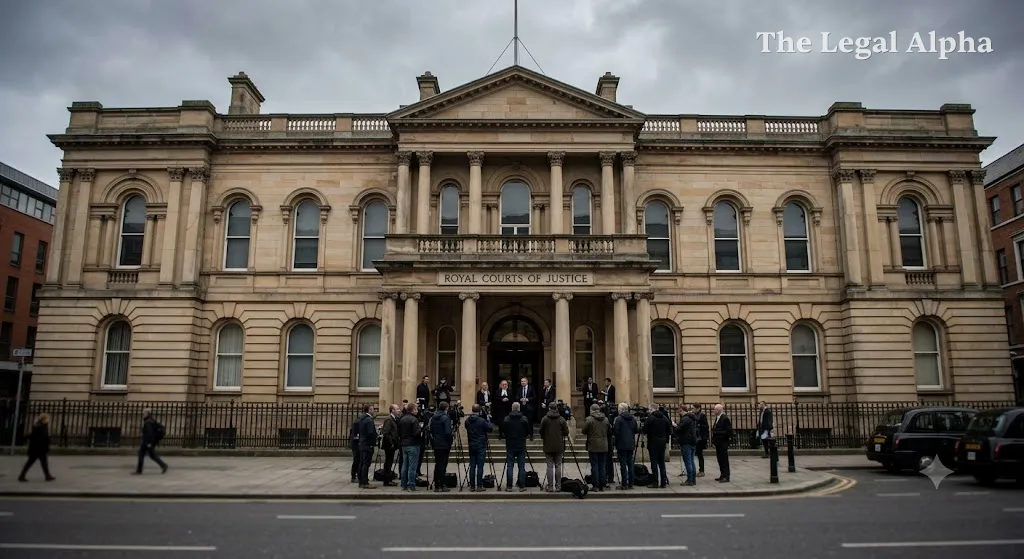
The High Court in Belfast has scheduled an expedited, rolled-up hearing for October 19, 2026, to examine the legality of statutory interventions that halted the long-disputed Drumcree parade.
Members of Portadown Orange Lodge filed an application for judicial review after permission to traverse the nationalist Garvaghy Road was effectively revoked following high-level political and security interventions. During preliminary proceedings, the court granted an adjournment and permitted the applicants to expand their legal challenge to include Police Service of Northern Ireland (PSNI) Chief Constable Jon Boutcher as an additional respondent. The dispute centers on security assessments submitted by police leadership that prompted statutory reviews of an earlier determination permitting the procession.
Legal Topic
Area of Law: Public Law / Human Rights
Sub-topic: Judicial Review / Freedom of Assembly and Public Order
Core Legal Issue
The core legal question is whether statutory authorities and security leadership acted lawfully, rationally, and within their statutory remit under the Public Order (Northern Ireland) Order 1987 and the Public Processions (Northern Ireland) Act 1998 when reassessing and rescinding authorization for a contentious public march. Specifically, the court must resolve whether the Chief Constable's public order threat assessment and the subsequent ministerial intervention breached procedural fairness or improperly infringed upon the applicants' qualified assembly rights under Article 11 of the European Convention on Human Rights (ECHR).
What Did the Court Decide?
The High Court adjourned the substantive challenge to October 19, 2026, directing that the case proceed on a "rolled-up" basis. Under this procedure, the presiding judge will simultaneously adjudicate the threshold question of whether to grant leave for judicial review and, if granted, decide the full legal merits in the same hearing. The court also allowed the applicants' request to formally add the PSNI Chief Constable to the proceedings alongside the Northern Ireland Secretary of State and the relevant regulatory authorities.
Key Legal Points
-
Rolled-Up Judicial Review: The court utilized a rolled-up procedure to manage severe time sensitivity, avoiding procedural bifurcation while maintaining strict scrutiny over the decision-making process.
-
Executive vs Regulatory Competence: The challenge targets the boundary between independent parading oversight and executive security interventions triggered by changing policing risk assessments.
-
Standard of Review on Police Threat Assessments: The court must evaluate whether the Chief Constable’s assessment of serious public unrest constituted an irrational basis or a lawful, proportionate exercise of statutory duty.
-
Balance of Qualified Rights: The litigation tests the state’s positive obligation to protect public assembly against its duty to prevent severe public disorder, protect life, and preserve community safety under ECHR Articles 2, 8, 9, 10, and 11.
Relevant Law
-
Public Processions (Northern Ireland) Act 1998: Sections governing the powers, determinations, and review mechanisms of the Parades Commission regarding contentious route conditions.
-
Public Order (Northern Ireland) Order 1987: Legislative framework governing public order, assembly restrictions, and police operational discretion.
-
Human Rights Act 1998 / European Convention on Human Rights (ECHR): Article 9 (Freedom of thought, conscience, and religion), Article 10 (Freedom of expression), and Article 11 (Freedom of peaceful assembly and association), as balanced against the prevention of disorder and the protection of the rights of others.
Arguments of the Parties
Petitioner / Applicant
The applicants argue that the decision to reverse authorization for the procession was procedurally flawed, irrational, and disproportionately infringed upon their fundamental assembly rights. They contend that the Chief Constable exceeded lawful bounds by requesting ministerial intervention to overturn an existing regulatory determination, effectively yielding to unlawful counter-protests rather than facilitating a permitted parade.
Respondent / State Authorities
The statutory respondents contend that public authorities acted strictly within their legal mandates in response to a volatile security landscape. They maintain that when police intelligence indicates that facilitating an event poses an intolerable risk of widespread sectarian violence, injury, and severe disruption, the Chief Constable and the executive have a legal duty to intervene to protect life and community peace.
Why Does It Matter?
This dispute tests the limits of judicial deference toward operational policing assessments in sensitive, post-conflict environments. By bringing the Chief Constable directly into the judicial review, the High Court’s eventual ruling may set an important benchmark for how public bodies reassess assembly approvals when threatened counter-demonstrations create acute public disorder risks. The decision will clarify the precise standard of procedural fairness required before an administrative body or minister can revoke a previously authorized assembly.
Legal Takeaway
A regulatory approval to assemble is not absolute and remains vulnerable to judicial and executive reconsideration if escalating operational threats compromise public safety. However, when police assessments serve as the direct trigger to cancel a permitted march, those security evaluations become subject to direct judicial review for rationality, evidence, and procedural fairness.
Sources
Primary Source:
-
High Court of Justice in Northern Ireland (Judicial Review Division), preliminary directions and listing order in the matter of an application by Portadown Orange Lodge No. 1, October 12, 2026.
Additional Sources:
-
Public Processions (Northern Ireland) Act 1998, c. 2.
-
Northern Ireland Court Service Listings and High Court Proceedings, Belfast.