Public Order vs Right to Peaceful Assembly: Delhi Administration Backs Police Restraint Amid Mass Street Demonstrations
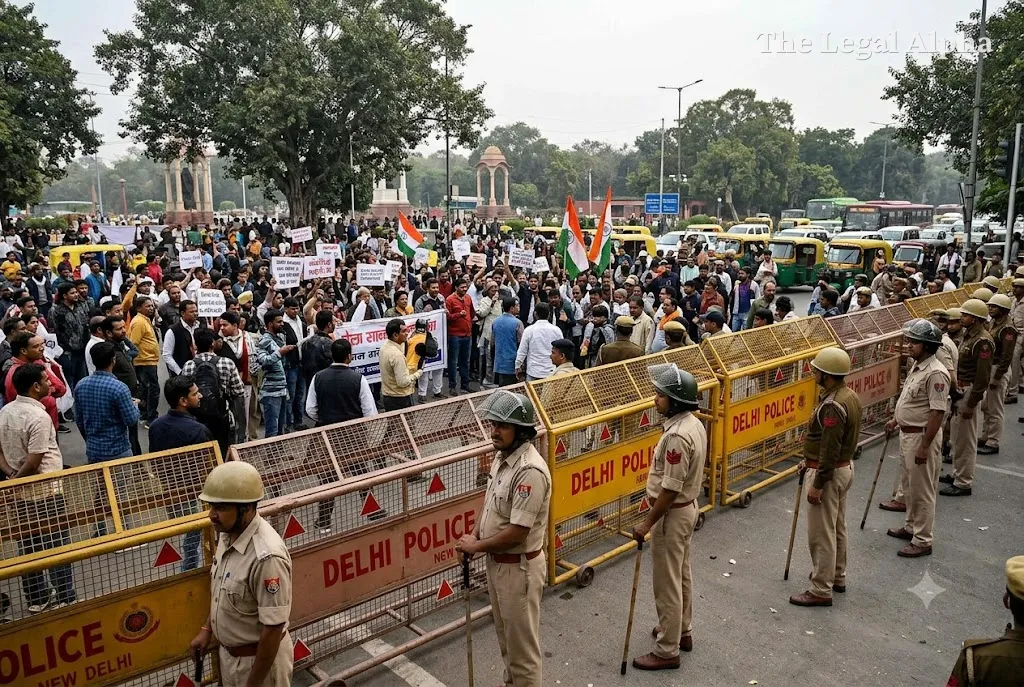
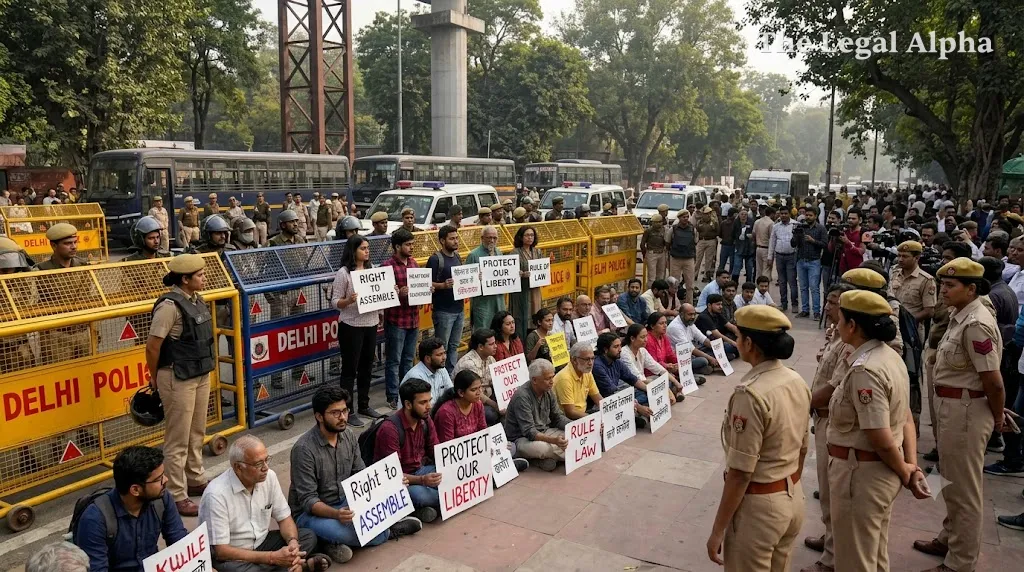
Delhi Chief Minister Rekha Gupta issued an official statement addressing the intense street demonstrations across the national capital, commending law enforcement agencies for exercising restraint and cautioning against deliberate disruptions to public order. The development follows widespread street protests organized by opposition parties and civil groups over electoral roll revisions, which triggered significant administrative curbs, preventative detentions, and traffic bottlenecks across central Delhi.
Gupta alleged that demonstrators attempted to deliberately provoke security personnel and paralyze civic life, reiterating that while democratic dissent is permitted, the state will firmly enforce legal measures against unauthorized blockades that infringe on citizen safety and free movement.
Legal Topic
-
Area of Law: Constitutional Law / Administrative Law
-
Sub-topic: Public Order, Preventive Detention, and Regulation of Public Assembly
Core Legal Issue
The controversy turns on the constitutional balance between the fundamental right to assemble peaceably without arms under Article 19(1)(b) and the state's regulatory power under Article 19(3) to impose reasonable restrictions in the interests of public order.
At issue is whether the administration's broad deployment of prohibitory orders, preventive detentions, and denial of demonstration venues satisfies the test of proportionality, or whether such enforcement measures disproportionately stifle lawful political protest under the pretext of maintaining civic order.
What Did the Authority Decide?
Chief Minister Rekha Gupta affirmed the Delhi administration’s full backing of police enforcement actions, emphasizing that law enforcement must take all necessary steps to maintain normalcy, protect public property, and prevent disruptions to ordinary citizens.
The administration signaled that the law would strictly take its course against individuals attempting to breach security arrangements or incite confrontation with on-duty personnel. Concurrently, police authorities maintained strict regulatory oversight over designated assembly sites, continuing curbs on unauthorized gatherings across sensitive zones.
Key Legal Points
-
Public order powers must balance the fundamental right to protest with the constitutional rights of the broader public to life, livelihood, and unhindered movement on public thoroughfares.
-
Police regulatory authority under local police enactments and procedural codes permits the dispersal of assemblies, but statutory actions remain strictly governed by the standard of minimum and proportionate force.
-
Preventive detention and prohibitory orders under administrative law cannot operate as permanent or blanket bans on peaceful opposition mobilization.
Relevant Law
-
Article 19(1)(b) & Article 19(3), Constitution of India: Guarantee of the right to assemble peaceably without arms, subject to reasonable restrictions in the interests of the sovereignty and integrity of India or public order.
-
Article 21, Constitution of India: Protection of life, personal liberty, and the right to uninhibited movement and safety for ordinary citizens.
-
Section 163 of the Bharatiya Nagarik Suraksha Sanhita, 2023 (BNSS): Executive magistrate powers to issue urgent orders in cases of nuisance or apprehended danger (replacing Section 144 of the CrPC).
-
Delhi Police Act, 1978: Regulatory framework governing public order, procession licensing, and the prevention of street obstruction.
-
Amit Sahni v. Commissioner of Police (Shaheen Bagh Case, 2020): Supreme Court holding that while protests are a fundamental right, public ways and spaces cannot be occupied indefinitely to the detriment of general commuters.
Arguments of the Parties
The Delhi Administration The Chief Minister contended that the demonstrations had moved beyond peaceful assembly into deliberate attempts to trigger confrontation with security personnel and hold the capital hostage. The administration submitted that the state holds a primary duty to safeguard ordinary citizens from disruption, protect public transit networks, and ensure that civil order is not sacrificed to political agitation.
The Protesters and Opposition Groups Opposition representatives and participating groups argued that the administration was misusing executive power and police machinery to suppress legitimate political expression and grievances. They asserted that denying protest permissions, imposing widespread restrictions, and conducting mass preventative detentions violated their fundamental rights under Article 19, alleging excessive administrative overreach rather than a genuine law-and-order concern.
Why Does It Matter?
This development highlights the ongoing legal friction in high-density urban capitals between freedom of assembly and municipal functionality. For civil society and political organizations, it underscores that the exercise of protest rights remains closely subject to venue designations, police permissions, and time-and-place regulations.
For law enforcement and municipal authorities, it reinforces the mandate laid down by constitutional courts: state action cannot become punitive against peaceful dissent, and any curbs on movement must strictly adhere to statutory requirements of necessity, imminence, and proportionality.
Legal Takeaway
The right to assemble peaceably is constitutionally protected, but it is not an absolute right to occupy public roadways or disrupt civilian movement indefinitely. Executive authorities may regulate street demonstrations to preserve public order, provided all preventive and enforcement measures remain strictly proportionate, non-arbitrary, and procedurally grounded in law.
Sources
Primary Source:
-
Official Public Statement and Press Communication by Chief Minister Rekha Gupta regarding public order enforcement and assembly management, Government of NCT of Delhi.
Additional Sources:
-
Asianet Newsable, Delhi News: CM Rekha Gupta Thanks Residents, Issues Strong Message On Law And Order.
-
The Times of India, Anti-SIR Demonstrations and Public Order Response in the National Capital.
-
Hindustan Times, Administrative Statements and Enforcement Curbs on Delhi Protests.