Clean Air Versus Cultural Practice: Supreme Court Explores Balanced Approach on Firecrackers Ahead of Festive Season
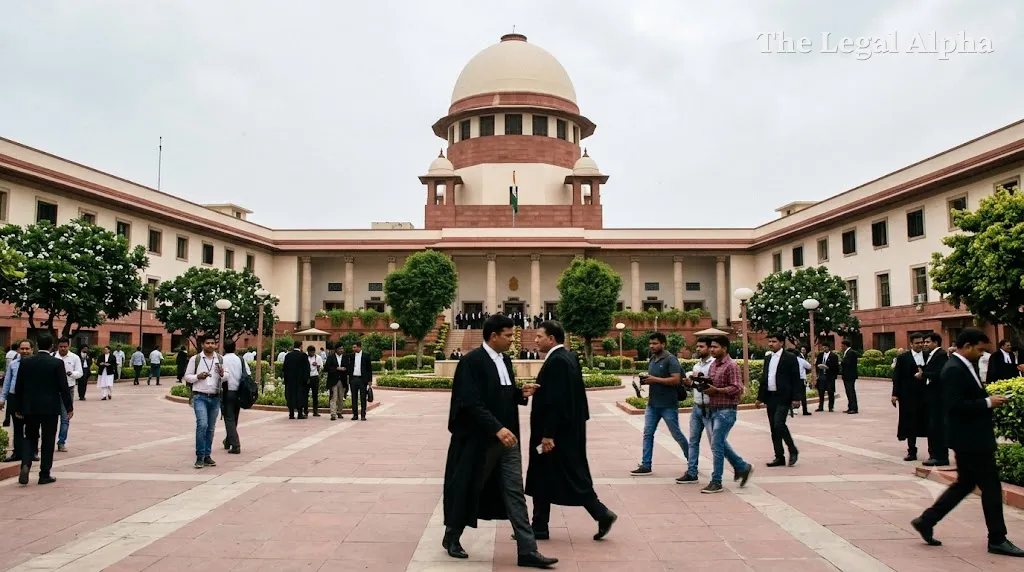
The Supreme Court of India examined the recurring issue of seasonal air quality deterioration in the National Capital Region (NCR), focusing on the friction between public health safeguards and the bursting of firecrackers during festivals. During the hearing of an ongoing suo motu matter, a three-judge Bench led by Chief Justice of India Surya Kant, alongside Justice Joymalya Bagchi and Justice V. Mohana, considered potential measures to curb severe toxic smog.
During the exchange, Justice Bagchi questioned the inherent religious necessity of bursting firecrackers, querying the direct nexus between theological rites and pyrotechnics. In response, Chief Justice Surya Kant underlined that judicial intervention must exercise restraint regarding community sensibilities, advocating instead for civic awareness, voluntary restraint, and the exploration of safer alternatives, such as certified green crackers. The Bench forwarded stakeholder proposals to the statutory air quality panel and scheduled further hearings for October 15, 2026.
Legal Topic
Area of Law: Environmental and Constitutional Law
Sub-topic: Fundamental Right to Health, Freedom of Religion, and Regulatory Enforcement in NCR Pollution
Core Legal Issue
The matter centers on resolving the constitutional tension between Article 21 (the fundamental right to health and a clean environment) and Article 25 (the freedom of conscience and religious practice).
Specifically, the Court is evaluating whether seasonal bans on fireworks can be effectively enforced without alienating the public, and whether judicial directives should enforce outright prohibitions or adopt calibrated regulatory mechanisms combined with state-led awareness campaigns.
What Did the Court / Authority Decide?
The Bench did not issue an immediate blanket ban or final ruling, maintaining that the proceedings remain in progress. The Court observed that while public health cannot be compromised, judicial measures should refrain from hurting religious sentiments, favoring a balanced, pragmatic formula over unworkable prohibitions.
The Bench instructed that concrete recommendations regarding firecracker regulation and broader pollution control be submitted to the Commission for Air Quality Management (CAQM) for assessment. The proceedings were adjourned to October 15, 2026, for further evaluation of policy options and enforcement viability.
Key Legal Points
-
Harmonising Competing Rights: Judicial intervention seeks an equilibrium between public health protection under Article 21 and cultural practices, steering away from polarized extremes.
-
Limitations of Coercive Bans: The Bench noted that total prohibitions often face severe compliance hurdles on the ground, making voluntary public consciousness and social awakening critical components of enforcement.
-
Viability of Regulated Alternatives: The Court indicated that permitting verified green crackers and structured timing windows may serve as a workable middle ground between an outright ban and unchecked environmental harm.
-
Statutory Role of CAQM: Technical evaluations and mitigation policies remain within the domain of specialized bodies like the CAQM rather than rigid ad-hoc judicial fiats.
Relevant Law
-
Constitution of India:
-
Article 21 (Protection of life and personal liberty, encompassing the right to clean air and a pollution-free environment)
-
Article 25 (Freedom of conscience and free profession, practice, and propagation of religion, subject to public order, morality, and health)
-
Article 48A (Directive Principle mandating the State to protect and improve the environment)
-
-
The Commission for Air Quality Management in National Capital Region and Adjoining Areas Act, 2021: Statutory framework governing emission standards and anti-pollution interventions across Delhi-NCR.
-
The Air (Prevention and Control of Pollution) Act, 1981: Primary legislation empowering regulatory authorities to control industrial and ambient air emissions.
-
Judicial Precedent: Arjun Gopal and Others v. Union of India (2018), where the Supreme Court prohibited toxic chemical formulations (such as barium salts) and permitted only low-emission "green crackers."
Arguments of the Parties
Amicus Curiae
Senior Advocate Aparajita Singh, assisting the court as amicus curiae, submitted that the right to life and bodily health must take precedence, highlighting the acute respiratory suffering inflicted on vulnerable demographics, particularly infants, children, and senior citizens. The amicus contended that festive rituals cannot justify severe environmental degradation and urged strict judicial oversight over cyclic administrative inaction.
Fireworks Traders and Industry Representatives
Counsel representing the fireworks manufacturers submitted that broad prohibitions disproportionately penalize compliant manufacturers who have transitioned toward certified low-emission formulations. The industry maintained that livelihoods across the manufacturing and retail sectors must be protected through clear, predictable regulatory parameters rather than eleventh-hour blanket bans.
Why Does It Matter?
Air pollution across North India during the onset of winter represents one of the region's most acute public health emergencies. The Supreme Court's deliberations highlight the practical limitations of judicial bans that fail to achieve community compliance on the ground.
By shifting the conversation toward voluntary introspection, statutory evaluation by the CAQM, and regulated green technologies, the Bench is attempting to avoid the annual cycle of litigation followed by widespread non-compliance. This approach emphasizes that long-term environmental remediation relies as much on civic responsibility and administrative coordination as on formal court orders.
Legal Takeaway
The right to a clean and healthy environment under Article 21 remains paramount, yet courts increasingly acknowledge that enforcement requires public cooperation alongside regulatory standards. Sustainable environmental jurisprudence demands balanced, technologically viable alternatives rather than unmonitored outright bans.
Sources
Primary Source:
Supreme Court of India, Record of Proceedings / Oral Observations in In Re: Curbing Air Pollution in the National Capital Region - Solid Waste Management and Burning of Crop Residue and Firecrackers, SMW(C) No. 15/2026 (Bench of CJI Surya Kant, Justice Joymalya Bagchi, and Justice V. Mohana, hearing dated October 12, 2026).
Additional Sources:
Arjun Gopal & Ors. v. Union of India & Ors. (2018) 16 SCC 788; The Commission for Air Quality Management in National Capital Region and Adjoining Areas Act, 2021.