Covert GPS Car Tracking Exposes Statutory Gap in UK Stalking Laws
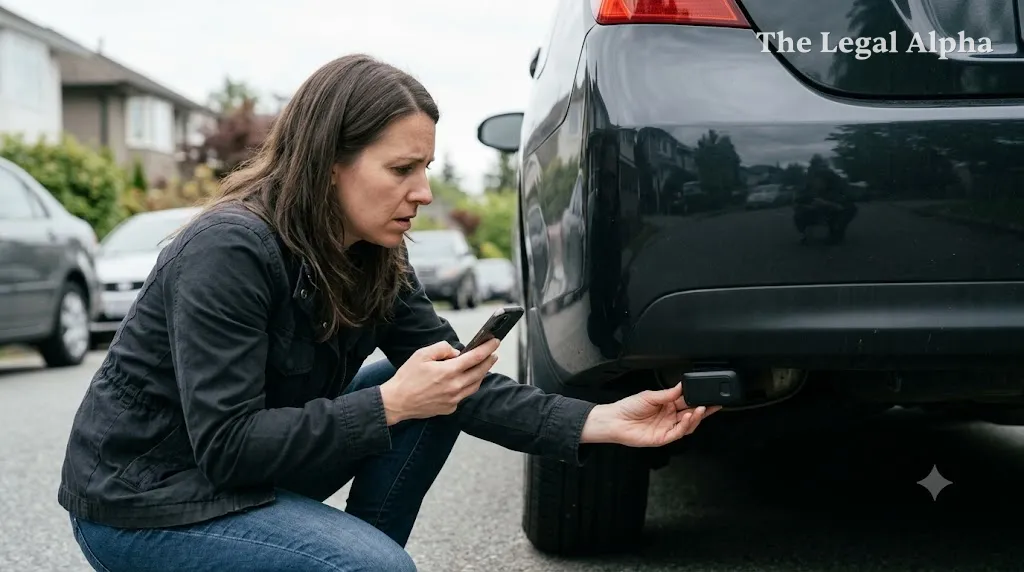
A domestic abuse survivor in the United Kingdom has called for urgent legislative reform after discovering an electronic tracking device attached beneath the bumper of her car, linked directly to her former partner. The device was identified only after she received an automated smartphone alert warning that an unknown tracking unit was travelling alongside her.
When the incident was reported to local police, authorities stated they were powerless to intervene under criminal stalking provisions because the physical attachment and discovery of the tracker constituted a single identified event. The incident has brought renewed scrutiny to how English law defines stalking patterns, particularly where high-tech surveillance and consumer location tags enable persistent digital intimidation without repeated physical encounters. The UK government confirmed that findings into tech-facilitated abuse are currently under review, with an official response expected shortly.
Legal Topic
-
Area of Law: Criminal Law & Domestic Abuse
-
Sub-topic: Harassment, Stalking, and Tech-Facilitated Abuse
Core Legal Issue
The threshold question is whether the unilateral placement of a continuous remote-tracking beacon on a victim's property satisfies the statutory requirement of a "course of conduct" under UK anti-stalking laws, or whether police can treat it as a non-actionable single occurrence.
Under existing statutes, stalking and harassment require repeated actions on at least two occasions. When an offender plants a single physical gadget that subsequently relays real-time location data for weeks or months, current enforcement practices often interpret the initial placement as a isolated event. The legal dilemma centers on whether modern surveillance mechanisms represent an ongoing, continuous course of conduct in real-time, or if specific legislative amendments are required to explicitly criminalise the deployment of covert tracking devices without proof of separate physical encounters.
What Did the Authority Decide?
The police declined to proceed with criminal charges against the former partner, citing the absence of a legally actionable "course of conduct" under prevailing harassment and stalking legislation because the discovery was an isolated event.
On a policy level, the Home Office has acknowledged systemic gaps in protections against tech-enabled domestic abuse. While ministers have not introduced emergency standalone legislation, the government confirmed it is evaluating consultative findings on digital stalking and will publish its formal policy response and recommendations in due course.
Key Legal Points
-
The "Course of Conduct" Hurdle: Current legislation requires harassment or stalking to involve conduct on at least two distinct occasions, creating an enforcement barrier when an abuser plants a surveillance device once that tracks continuously.
-
Digital Continuity vs. Physical Acts: Prosecutors and investigators struggle to classify passive, server-driven digital pings as separate acts of stalking, allowing single-installation surveillance to fall through criminal loopholes.
-
Evidentiary Thresholds in Non-Physical Surveillance: Without physical breaches or explicit contact, police frequently treat covert geolocation monitoring as insufficient to prove fear of violence or serious alarm and distress.
-
Regulatory Lag Behind Consumer Tech: Low-cost Bluetooth and GPS tracking tags have outpaced the statutory framework, creating enforcement friction between civil protection orders and criminal law thresholds.
Relevant Law
-
Protection from Harassment Act 1997: Sections 2A and 4A criminalise stalking and stalking involving fear of violence or serious alarm or distress, requiring a "course of conduct" (conduct on at least two occasions).
-
Domestic Abuse Act 2021: Governs controlling or coercive behaviour in intimate or family relationships and introduces Domestic Abuse Protection Orders (DAPOs).
-
Serious Crime Act 2015, Section 76: Prohibits controlling or coercive behaviour in an intimate or family relationship, but requires evidence of a continuous pattern with a substantial adverse effect on day-to-day activities.
Arguments of the Parties
Complainant and Victim Advocates
The complainant argued that planting a covert tracking device on a vehicle is not an isolated, one-off act; it enables active, minute-by-minute surveillance that shatters a survivor's physical security. Advocates contend that interpreting the placement of a tracking beacon as a single instance disregards the reality of tech-enabled coercive control. They argue the law must either define real-time tracking as a continuous course of conduct or enact a discrete criminal offence for unauthorized digital geolocation tracking.
Law Enforcement and the State
Police and charging authorities maintained that they are constrained by strict statutory language requiring demonstrable conduct on at least two separate occasions. Where an offender plants a beacon in an isolated event and does not visibly approach or contact the victim thereafter, prosecutors face evidential barriers establishing the repeated overt acts necessary for a stalking prosecution. The government stated it is actively studying the scope of tech abuse to evaluate what statutory revisions are required.
Why Does It Matter?
This development exposes how traditional criminal frameworks fail to protect against low-cost, off-the-shelf tracking technologies. While the law historically conceived stalking as repeated physical following, loitering, or direct unwanted communication, modern stalking frequently operates silently via Bluetooth tags and hidden telematics.
If criminal enforcement continues to require multiple separate physical incidents, domestic abusers can maintain persistent surveillance over victims with near-total legal impunity. This highlights a growing imperative for statutory definitions of harassment to evolve, shifting from counting discrete physical acts to evaluating the persistent digital impact of tech-facilitated coercive control.
Legal Takeaway
Under the Protection from Harassment Act 1997, criminal stalking charges hinge on proving a multi-event course of conduct, a test that frequently fails victims when surveillance relies on a single covertly installed tracking device. Closing this loophole will require statutory reform that explicitly recognises automated, continuous geolocation tracking as an actionable course of conduct or a standalone criminal offence.
Sources
Primary Source:
-
Protection from Harassment Act 1997 (c. 40), ss. 2A, 4A, and 7 (Statutory Definition of "Course of Conduct").
-
Home Office Consultation & Policy Review on Tech-Facilitated Abuse and Stalking Responses.
Additional Sources:
-
ITV News Investigation, Domestic abuse survivor demands law change after ex tracks her car, reported by Amelia Beckett, 12 October 2026.