Federal Court Blocks Re-Branding of John F. Kennedy Center as Statutory Mandate Prevails
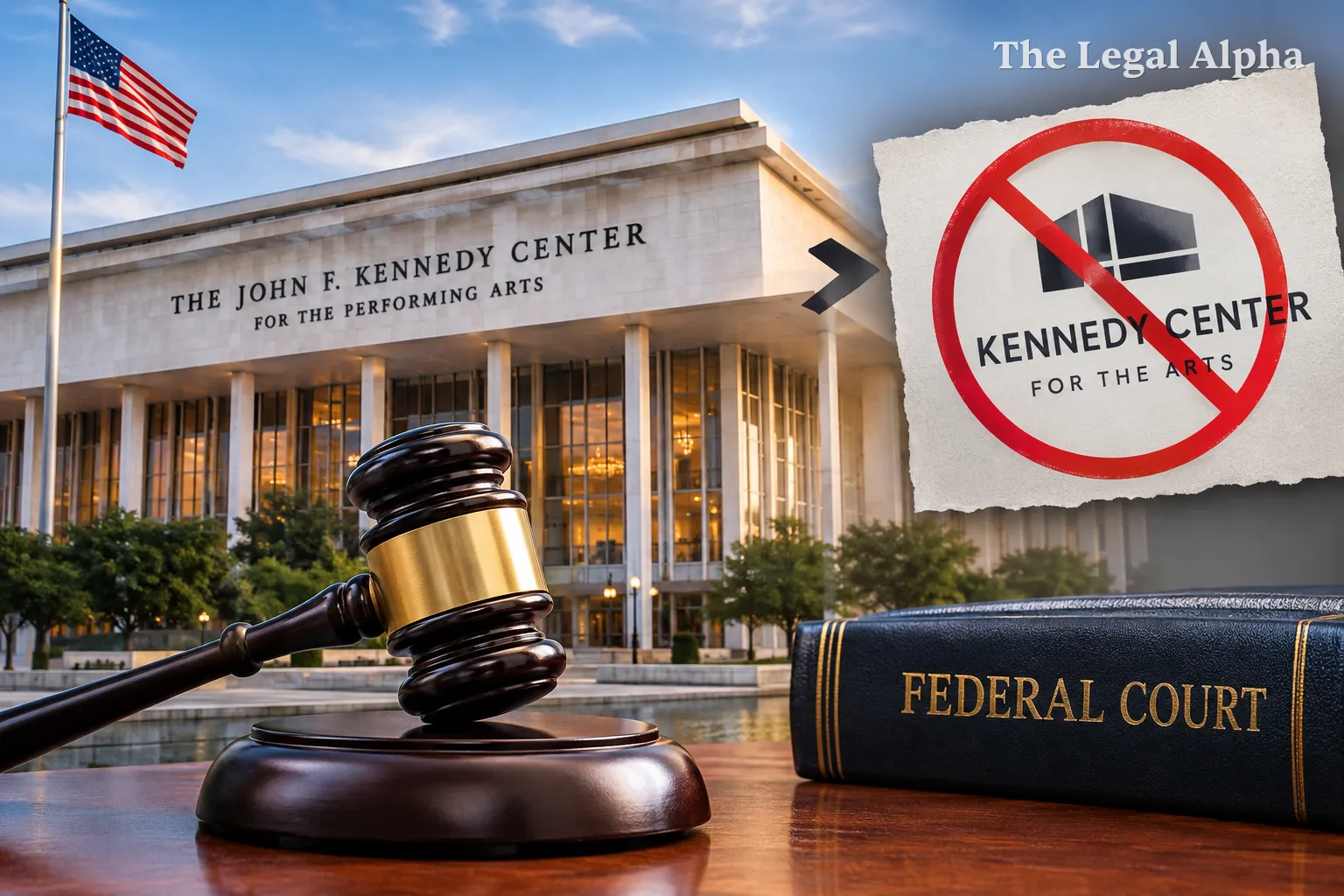
The U.S. District Court for the District of Columbia issued a decisive ruling restraining the Board of Trustees of the John F. Kennedy Center for the Performing Arts from adding Donald Trump's name to the national landmark.
The decision marks the latest escalation in a legal dispute initiated by U.S. Representative Joyce Beatty (D-Ohio), an ex-officio trustee of the institution. Beatty challenged board resolutions designed to re-brand the complex and restrict trustee oversight.
Following earlier judicial orders mandating the removal of Trump's name and restoring trustee participation, the board made repeated attempts to affix Trump’s name to the property, prompting renewed judicial intervention.
Legal Topic
-
Area of Law: Administrative Law & Constitutional Law
-
Sub-topic: Statutory Mandates / Delegation of Powers & Fiduciary Governance of Federal Instrumentalities
Core Legal Issue
The core legal question before the court was whether the governing board of a Congressionally chartered living memorial possesses the administrative discretion to alter, augment, or re-brand the statutory name of the institution without explicit legislative authorization from the United States Congress.
The litigation examined whether statutory designations enacted by Congress strictly circumscribe board governance, and whether federal procedural guarantees require full participation rights for statutory ex-officio trustees.
What Did the Court / Authority Decide?
U.S. District Judge Christopher R. Cooper granted injunctive relief barring the implementation of the board's re-branding resolution.
-
The court held that the statutory framework governing the John F. Kennedy Center establishes it as a sole living memorial to President John F. Kennedy, leaving no legal authority for the board to co-name or append other names to the national monument.
-
The ruling reaffirmed prior determinations ordering the removal of non-statutory branding from physical infrastructure, official domains, and public assets.
-
The court preserved the procedural rights of statutory trustees, cementing injunctions against board maneuvers designed to silence or bypass dissenters.
-
Substantive proceedings concerning ancillary discovery disputes—including Department of Justice assertions of executive privilege regarding operational communications—remain pending.
Key Legal Points
-
Supremacy of Statutory Naming Mandates: Administrative trustees cannot amend or dilute explicit designations created by an Act of Congress absent amendatory federal legislation.
-
Ultra Vires Administrative Action: Actions taken by a federally chartered board that contradict its founding enabling statute exceed administrative authority and are legally void.
-
Rights of Ex-Officio Trustees: Statutory board members cannot be disenfranchised, muted, or administratively sidelined to circumvent internal procedural safeguards.
-
Limitations on Executive Renaming Discretion: Executive authority and donor influence do not override statutory restrictions governing public memorials and trust property.
Relevant Law
-
John F. Kennedy Center Act (20 U.S.C. § 76h et seq.): Designates the facility as the sole national memorial to President John F. Kennedy and dictates board duties and governance boundaries.
-
Administrative Procedure Act (5 U.S.C. § 706): Governs judicial review of federal instrumentality actions deemed ultra vires, arbitrary, or contrary to constitutional/statutory authority.
-
Separation of Powers Doctrine (U.S. Constitution, Article I): Vests exclusive legislative power in Congress regarding the creation, naming, and terms of federal memorials and property governance.
Arguments of the Parties
Petitioner (Representative Joyce Beatty): The petitioner argued that Congress specifically enacted legislation designating the facility as the living memorial to President Kennedy alone.
Counsel asserted that the board acted ultra vires by attempting to rename the facility without legislative sanction, and that silencing ex-officio members during deliberations violated statutory oversight and governance duties.
Respondents (Board of Trustees & Supporting Parties): The respondents submitted that the governing board retains discretionary authority over naming recognitions, structural designations, and fundraising incentives necessary to maintain operational solvency and fund vital capital repairs.
They contended that administrative naming recognitions do not repeal the underlying statutory memorial status and fall within customary fiduciary management.
Why Does It Matter?
This development clarifies the boundaries of governance across federally chartered cultural and civic instrumentalities. It establishes that appointed boards cannot leverage internal votes to reshape statutory entities into executive naming vehicles.
The decision also safeguards the oversight functions of statutory and ex-officio trustees, ensuring that minority voices and Congressional representatives on hybrid boards cannot be procedurally silenced during institutional disputes.
Legal Takeaway
Administrative and fiduciary boards of congressionally created institutions remain strictly bound by their enabling statutes. Even unanimous board resolutions cannot alter statutory mandates, re-brand public memorials, or silence statutory trustees without explicit Congressional authorization.
Sources
Primary Source:
-
Beatty v. Trump et al., Memorandum Opinion and Order, U.S. District Court for the District of Columbia (Judge Christopher R. Cooper presiding).
Additional Sources:
-
John F. Kennedy Center Act, 20 U.S.C. § 76h et seq.
-
Docket filings and official proceedings, U.S. District Court for the District of Columbia.