Global Legal Leaders Convene in Copenhagen as Arctic Sovereignty and Rule of Law Dominate IBA Opening
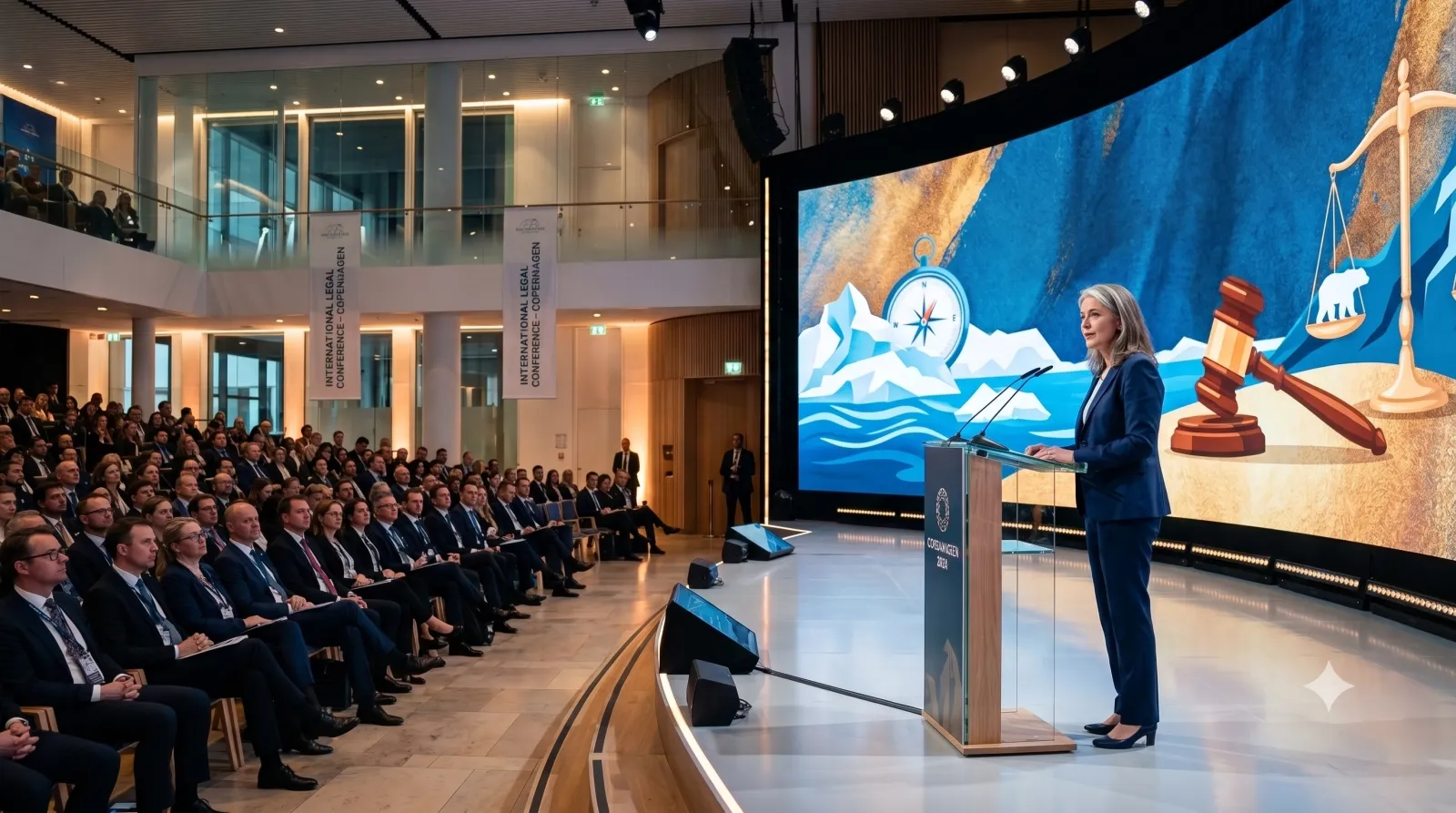
More than 6,000 legal practitioners, jurists, and diplomats convened in Copenhagen for the opening of the International Bar Association (IBA) Annual Conference 2026. Against a backdrop of rising geopolitical tension and escalating pressure on the multilateral system, the assembly placed the defence of the international legal order at the centre of its agenda.
The opening proceedings highlighted Arctic governance, with Greenland taking prominence as a vital case study in territorial sovereignty, self-determination, and the resilience of international law. Senior dignitaries, including Danish Foreign Minister Lars Løkke Rasmussen, IBA President Claudio Visco, and human rights advocate Prince Zeid Ra'ad Al Hussein, addressed the delegation, warning that foundational post-war legal frameworks risk displacement by unilateral coercion and power politics.
Legal Topic
Area of Law: Public International Law
Sub-topic: Territorial Sovereignty, Arctic Governance, and the Rule of Law
Core Legal Issue
The core legal question centres on how international institutions, bilateral compacts, and multilateral treaties can withstand the erosion of the rules-based order, specifically in strategically vulnerable territories such as the Arctic.
As geopolitical competitors increasingly test territorial borders and resource-rich jurisdictions, legal systems must balance constitutional autonomy arrangements—such as Greenland's status within the Realm of Denmark—against wider obligations under international conventions, maritime law, and regional security pacts.
What Did the Court / Authority Decide?
While the IBA is an international professional association rather than an adjudicative body, the assembly articulated clear institutional stances and policy directives:
-
Affirmation of Legal Primacy: Delegates and leadership formally rejected the resurgence of "might makes right" politics, affirming that territorial boundaries and international disputes must be governed strictly by established legal norms rather than unilateral force.
-
Spotlight on Greenland and Regional Autonomy: The conference elevated Greenland's evolving legal status, highlighting how self-governance frameworks interact with foreign affairs, defensive sovereignty, and environmental stewardship.
-
Call for Professional Mobilisation: The IBA leadership tasked member bars and practitioners worldwide with actively defending judicial independence, sustaining treaty compliance, and shielding democratic mechanisms against political retrenchment.
Key Legal Points
-
Erosion of Multilateral Frameworks: Post-World War II legal instruments and dispute-resolution bodies face unprecedented strain from state actors prioritising unilateral power over treaty commitments.
-
Sovereignty and Sub-State Autonomy: The constitutional relationship between Denmark and Greenland provides a complex model for devolution, resource rights, and territorial integrity in high-stakes geopolitical zones.
-
Integrity of the Maritime and Environmental Order: Arctic territories present critical legal challenges regarding maritime demarcation under the UN Convention on the Law of the Sea (UNCLOS) and environmental preservation frameworks.
-
Role of the Legal Profession: Legal practitioners were designated as essential frontline guarantors of the rule of law, responsible for safeguarding institutional checks and balances across jurisdictions.
Relevant Law
-
Charter of the United Nations (1945): In particular, Article 2(4), prohibiting the threat or use of force against the territorial integrity or political independence of any state.
-
United Nations Convention on the Law of the Sea (UNCLOS, 1982): Governing continental shelf claims, navigation rights, and jurisdiction over Arctic maritime corridors.
-
Act on Greenland Self-Government (Act No. 473 of 12 June 2009): The domestic constitutional statute governing Greenland’s autonomous powers and the management of foreign affairs, defence, and natural resources within the Kingdom of Denmark.
-
International Covenant on Civil and Political Rights (ICCPR, 1966): Specifically Article 1 regarding the legal right of peoples to self-determination.
Arguments of the Parties
Proponents of Strict International Legal Restraint
Speakers including Danish Foreign Minister Lars Løkke Rasmussen and IBA leadership argued that stability in regions like the Arctic depends entirely on unwavering adherence to international law, transparent diplomatic compacts, and multilateral dispute mechanisms. They contended that permitting major powers to circumvent legal conventions sets a destabilising precedent that imperils smaller nations and self-governing territories.
Pressures from Realpolitik and Strategic Competition
International observers and state actors operating outside traditional multilateral consensus contend that shifting resource security demands, emerging sea routes, and strategic vulnerability necessitate unilateral or ad-hoc security measures. This posture suggests that existing treaties and jurisdictional structures may be ill-equipped to address rapid Arctic transformations without pragmatic adjustments to balance of power.
Why Does It Matter?
The deliberations in Copenhagen signal a shifting mandate for international lawyers and cross-border commercial advisers. The Arctic is no longer an isolated periphery; it has become an active theatre for conflicting sovereignty claims, shipping corridors, and natural resource extraction.
For global enterprises, investors, and state bodies, developments concerning Greenland and broader Arctic governance have direct implications for cross-border investments, maritime transport compliance, environmental mandates, and project finance. When multilateral treaties are challenged, sovereign and commercial risks escalate, requiring general counsel to navigate heightened sanctions exposure, shifting jurisdictional limits, and heightened political risks.
Legal Takeaway
The preservation of territorial integrity and constitutional autonomy in vulnerable regions depends directly on the enforcement of established international treaties. For corporate and public-sector counsel alike, monitoring jurisdictional and sovereignty disputes in the Arctic is now essential for evaluating long-term cross-border compliance, regulatory exposure, and legal certainty.
Sources
Primary Source:
-
Opening Ceremony Addresses, International Bar Association (IBA) Annual Conference 2026, Copenhagen, Denmark (4 October 2026).
Additional Sources:
-
The Global Legal Post, Denmark Welcomes the IBA Annual Conference as Greenland Takes Centre Stage at Opening Ceremony (October 2026).
-
Commercial Dispute Resolution (CDR), International Law Under Pressure, Warns IBA (5 October 2026).
-
Leaders League, 2026 IBA Annual Conference Opens in Copenhagen with Rule of Law as its Defining Motto (5 October 2026).