Punjab and Haryana High Court Entrusts CBI with Corruption Probe Involving Chief Minister’s Secretariat

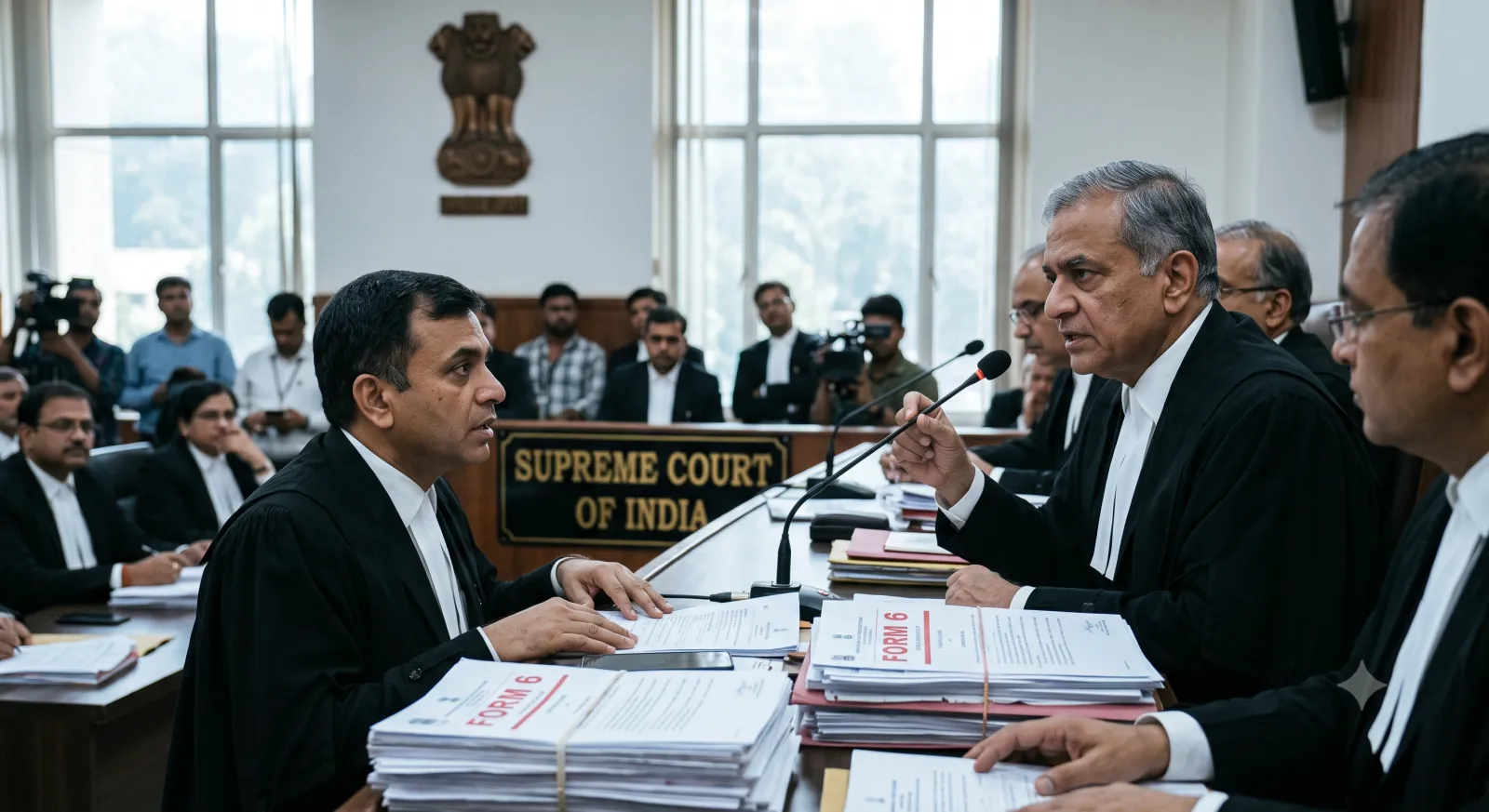
The Punjab and Haryana High Court directed the Central Bureau of Investigation to institute a regular criminal case into corruption allegations connected to Punjab Chief Minister Bhagwant Mann’s secretariat. The directive was issued during the hearing of a public interest litigation filed by advocate Nikhil Saraf, which highlighted inaction by the Punjab Police regarding communications sent by the Enforcement Directorate. The financial agency had flagged alleged illicit activities by middlemen and public functionaries—principally concerning an Officer on Special Duty in the Chief Minister's office—involving cash-for-transfers, procurement favoritism, and regulatory clearances. Taking note that local law enforcement had confined its response to an informal preliminary inquiry without registering a First Information Report, the Division Bench led by Chief Justice Ashwani Kumar Mishra and Justice Rohit Garg transferred the investigation to the central agency to guarantee an unbiased inquiry.
Legal Topic
Area of Law: Criminal Law and Constitutional Jurisprudence
Sub-topic: Exercise of Writ Jurisdiction / Transfer of Investigation to Independent Agency
Core Legal Issue
The fundamental legal question before the High Court was whether the failure of state law enforcement to register an FIR upon receiving credible intelligence disclosing cognizable offences against influential officials warranted the invocation of extraordinary constitutional powers under Article 226 of the Constitution of India.
The court examined whether inaction or superficial preliminary inquiries by the state police in matters involving individuals seated at the helm of state administration compromises institutional integrity, thereby justifying the transfer of the probe to the Central Bureau of Investigation to ensure public trust and a fair investigation.
What Did the Court / Authority Decide?
The High Court ordered the CBI to formally register a criminal case and conduct a full-scale investigation into the allegations raised in the ED's communications.
The Bench rejected the approach of the Punjab Police, observing that when communications from a statutory authority reveal prima facie commission of cognizable corrupt practices in high public office, the statutory mandate demands the prompt registration of an FIR rather than protracted, non-statutory inquiries. Emphasizing that the integrity of governance and public interest were directly at stake, the court transferred the matter to ensure the investigation remains completely independent from executive interference within the state machinery.
Key Legal Points
-
Mandatory Registration of FIR: When information shared by a statutory investigative body prima facie discloses cognizable offences, police authorities are duty-bound to register a formal FIR under the Code of Criminal Procedure / Bharatiya Nagarik Suraksha Sanhita rather than shelving the matter under the garb of preliminary inquiries.
-
Extraordinary Transfer Powers: High Courts possess constitutional jurisdiction under Article 226 to transfer criminal probes from local police to the CBI where allegations involve high public officials and there is an institutional risk of partiality or executive inertia.
-
Public Confidence in the Rule of Law: Preservation of public confidence in the administration of justice serves as a primary ground for directing an independent probe when serious allegations surround the highest executive offices of a state.
Relevant Law
-
Section 154 of the Code of Criminal Procedure, 1973 / Section 173 of the Bharatiya Nagarik Suraksha Sanhita, 2023: Statutory mandate governing mandatory registration of an FIR upon disclosure of cognizable offences, reiterating principles established in Lalita Kumari v. Government of Uttar Pradesh.
-
Prevention of Corruption Act, 1988: Statutory framework governing bribery, illegal gratification, and misuse of official position by public servants.
-
Section 66(2) of the Prevention of Money Laundering Act, 2002: Statutory provision authorizing the Enforcement Directorate to share intelligence with other enforcement authorities regarding offences falling within their jurisdiction.
-
Article 226 of the Constitution of India: Writ jurisdiction enabling High Courts to safeguard the rule of law and direct independent investigations.
Arguments of the Parties
Petitioner
The petitioner contended that the Enforcement Directorate had supplied tangible intelligence pointing to widespread extortion, irregular administrative transfers, and corrupt practices involving individuals inside the Chief Minister's secretariat. It was submitted that despite the disclosure of serious cognizable misconduct, the state police abdicated their statutory duty by failing to register a formal case, demonstrating institutional reluctance to investigate top administrative aides.
State and Opposing Authorities
The State maintained that the local authorities had not closed the matter but were carrying out preliminary inquiries to ascertain the veracity of the communications received from the central agency before proceeding with coercive or formal criminal steps.
Why Does It Matter?
This development underscores the constitutional safeguards that prevent state-level law enforcement from insulating influential political functionaries against accountability. By stepping in where police inaction coincided with allegations reaching the Chief Minister’s immediate staff, the High Court reinforced the settled doctrine that statutory thresholds for initiating a criminal investigation apply uniformly, regardless of the stature of the office involved. It also clarifies the operational effect of intelligence shared under the Prevention of Money Laundering Act, setting a precedent that state agencies cannot indefinitely stall actionable disclosures through procedural formalities.
Legal Takeaway
When credible information from an official agency discloses cognizable corruption involving high-ranking public functionaries, law enforcement authorities must immediately lodge an FIR. Failure to do so warrants judicial intervention and the transfer of the probe to an independent central agency to preserve the rule of law.
Sources
Primary Source:
Order of the High Court of Punjab and Haryana in Nikhil Saraf v. State of Punjab and Others (Decided October 05, 2026).
Additional Sources:
Proceedings and disclosures under Section 66(2) of the Prevention of Money Laundering Act, 2002; High Court registry record notes.