Apex Court Refutes Nod to Modified Form 6, Calls for Records in Plea Alleging Unilateral Functioning by Election Commission
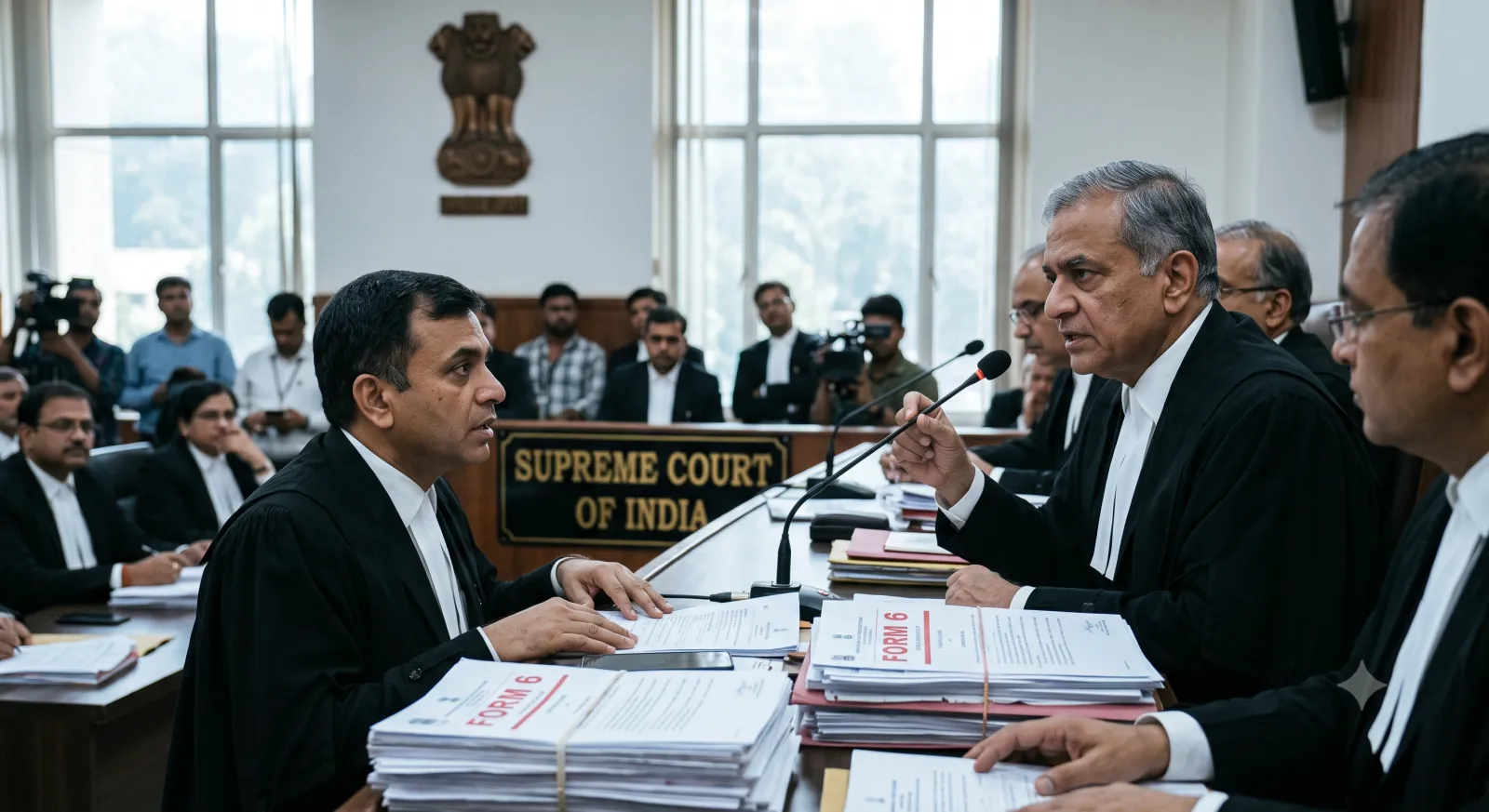
The Supreme Court of India clarified that it never approved alterations made to Form 6—the statutory form used for enrolling new voters—countering assertions linked to the poll body's regulatory actions. A bench headed by Chief Justice of India Surya Kant issued formal notice to the Union of India and the Election Commission of India on petitions challenging the decision-making process within the poll panel.
The petitions arose after reports alleged that Chief Election Commissioner Gyanesh Kumar made unilateral decisions concerning the Special Intensive Revision (SIR) process, allegedly overriding objections from fellow Election Commissioners. The court declined to grant an ex-parte suspension of the Chief Election Commissioner, noting that while administrative procedures must comply strictly with statutory mandates, drastic interim orders cannot be passed without hearing the poll body and examining the official records.
Legal Topic
-
Area of Law: Constitutional & Administrative Law
-
Sub-topic: Multi-Member Commission Functioning / Electoral Reforms & Rule-Making Powers
Core Legal Issue
The controversy centres on whether an administrative authority within a multi-member constitutional body can unilaterally alter statutory electoral procedures and statutory declaration requirements under subordinate legislation without collective majority consensus or formal statutory amendments.
The Supreme Court is assessing whether unilateral directives modifying statutory enrollment conditions violate the mandate requiring collegiate functioning, and whether decisions issued without unanimity or majority consent can stand under administrative and constitutional law.
What Did the Court / Authority Decide?
The Supreme Court issued formal notice to the Election Commission and the Union Government, directing them to place on record their formal replies and the relevant decision-making files.
-
CJI Surya Kant explicitly stated that the Supreme Court has not approved any modified version of Form 6, noting that the bench will examine the records to determine who authorized the changes.
-
The bench rejected requests for an interim ex-parte suspension or injunction against the Chief Election Commissioner, highlighting the necessity of examining official files before concluding whether unilateral actions occurred.
-
The court observed that the Election Commission is governed by mandatory statutory frameworks requiring either unanimous or majority decisions, warning that any unilateral action found in violation of statutory procedure would be judicially invalidated.
Key Legal Points
-
Multi-member statutory and constitutional bodies are legally obliged to function collegially, where decisions must be arrived at either unanimously or by majority consensus.
-
Statutory forms specified in subordinate rules cannot be modified through unilateral administrative fiat if the enabling statutory framework requires formal rule-making procedures.
-
Courts will refrain from granting ex-parte interim injunctions against constitutional functionaries based primarily on investigative reports without examining certified official records and responses.
-
Any administrative order or directive demonstrated to have been issued ultra vires the collegiate process remains subject to judicial review and subsequent invalidation.
Relevant Law
-
Article 324 of the Constitution of India: Superintendence, direction, and control of elections vested in the Election Commission.
-
The Chief Election Commissioner and other Election Commissioners (Appointment, Conditions of Service and Term of Office) Act, 2023: Provisions regulating the transaction of business and decision-making by majority or consensus.
-
Registration of Electors Rules, 1960: Statutory framework governing electoral rolls and prescribed registration formats, including Form 6.
-
T.N. Seshan, CEC of India v. Union of India (1995): Landmark precedent holding that the Election Commission operates as a collegiate body and decisions must reflect consensus or a majority view.
Arguments of the Parties
Petitioners
The petitioners submitted that unilateral decisions were implemented in the conduct of the Special Intensive Revision process, bypassing dissenting opinions voiced repeatedly by fellow Commissioners. They contended that unauthorized conditions and supplementary declarations were grafted onto Form 6, erecting extra-statutory barriers for voter enrollment and undermining the integrity of free and fair electoral administration.
Election Commission / State
While formal counter-affidavits have been directed to be filed, the court noted that administrative bodies carry a presumption of following statutory provisions until official records demonstrate otherwise. Counsel argued against granting sudden ex-parte interim suspensions, maintaining that institutional governance and forthcoming electoral obligations require adherence to orderly procedural review.
Why Does It Matter?
This development reinforces the core constitutional doctrine that independent commissions are collegiate entities, not unitary hierarchies. By disowning any prior judicial sanction for changes made to Form 6, the Supreme Court curtails the administrative misuse of judicial observations to legitimize contested executive circulars.
If the apex court finds that statutory voter forms and revision rules were amended without proper legal sanction, thousands of registrations and verification notices issued under the modified criteria could face legal vulnerability, setting a strict standard for procedural compliance across electoral authorities.
Legal Takeaway
Administrative and constitutional authorities operating as multi-member bodies cannot substitute individual discretion for statutory collegiate consensus. Any alterations to statutory voter registration forms must strictly adhere to the prescribed rule-making framework rather than administrative directives.
Sources
Primary Source:
-
Supreme Court of India, Proceedings and oral observations in pleas challenging Election Commission of India decision-making (Bench comprising Chief Justice Surya Kant and Justice Joymalya Bagchi, October 5, 2026).
Additional Sources:
-
LiveLaw Court Record, Supreme Court Refuses To Suspend CEC Gyanesh Kumar Ex Parte, Says Modified Form 6 Not Approved by Apex Court (October 5, 2026).
-
Registration of Electors Rules, 1960, Schedule Formats for Voter Registration (Form 6).