Supreme Court Opens New Term Reviewing Energy Giants' Push to Bar Municipal Climate Tort Lawsuits
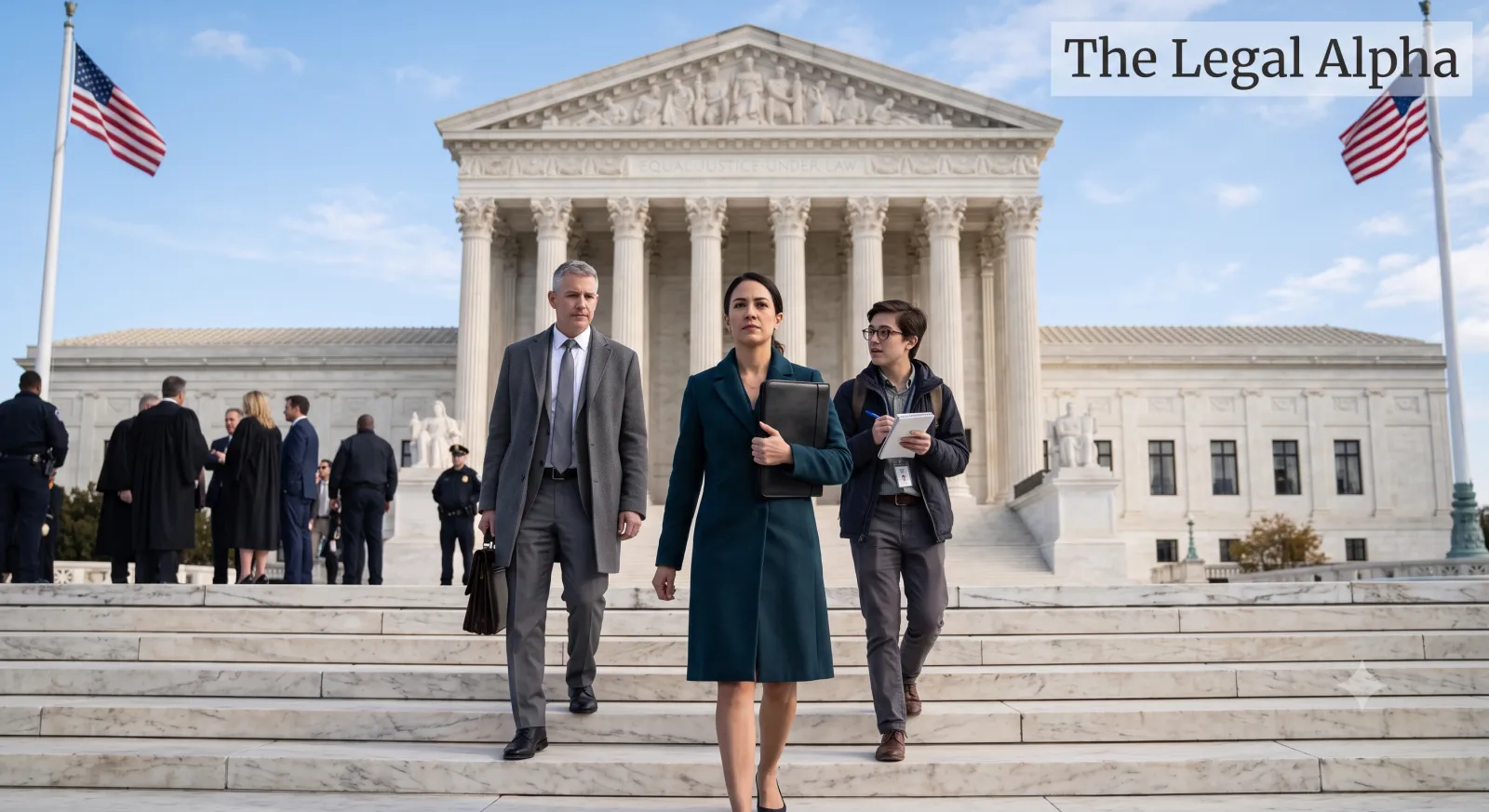
The Supreme Court of the United States opened its 2026–27 judicial term on Monday, October 5, 2026, with oral arguments in a pivotal dispute pitting energy giants ExxonMobil and Suncor Energy against local municipalities in Colorado. Officials from the City of Boulder and the Board of County Commissioners of Boulder County filed suit seeking monetary damages to cover substantial municipal expenses—including infrastructure repairs, flood mitigation, emergency management, and environmental adaptation—attributable to the worsening impacts of climate change.
ExxonMobil and Suncor appealed to the nation's highest court after the Colorado Supreme Court ruled that Boulder's claims under state common law could proceed to trial. The dispute carries exceptional legal significance because nearly 60 state and municipal governments across the country have instituted similar tort actions against fossil fuel corporations. A definitive threshold ruling from the Supreme Court will determine whether state court civil litigation remains an available avenue to pursue global warming remediation costs or is entirely shut down.
Legal Topic
-
Area of Law: Environmental Law / Civil Litigation
-
Sub-topic: Federal Preemption / State Common Law Tort Liability
Core Legal Issue
The core legal question before the Court is whether federal statutory law—specifically the Clean Air Act—and the structural federal common law governing interstate and transboundary air pollution preempt and displace state-law common law claims (such as public nuisance, strict liability, and deceptive trade practices) brought against energy producers for climate-related harms.
The justices must resolve whether local governments can hold corporate manufacturers financially accountable under state tort law for the downstream effects of global greenhouse gas emissions, or whether regulating and balancing cross-border environmental impacts is an exclusively federal responsibility reserved to Congress and executive agencies.
What Did the Court / Authority Decide?
The Supreme Court heard oral arguments on October 5, 2026, marking the formal start of substantive review in the appeal. No final determination on the merits has been handed down yet. The case remains pending before the justices, with an opinion expected before the conclusion of the term by late June 2027.
Key Legal Points
-
Federal Preemption vs. State Common Law: The litigation tests whether the Clean Air Act expressly or impliedly preempts state common law nuisance and consumer protection claims arising out of global emissions.
-
Displacement of Transboundary Nuisance: Energy companies rely heavily on federal precedent establishing that the Clean Air Act displaced federal common law interstate nuisance actions, contending this leaves no jurisdictional room for varied state tort suits.
-
Damages vs. Direct Regulation: Plaintiffs argue that seeking monetary compensation for local infrastructure damage does not equate to setting regulatory emissions caps, relying on statutory savings clauses that preserve state common law remedies.
-
Judicial Participation: Justice Samuel Alito recused himself from the proceedings following scrutiny concerning energy sector investments, leaving an eight-member bench to evaluate the dispute.
Relevant Law
-
Federal Statute: Clean Air Act (42 U.S.C. § 7401 et seq.)
-
Judicial Precedents:
-
American Electric Power Co. v. Connecticut (2011), holding that the Clean Air Act displaced federal common law rights to seek abatement of greenhouse gas emissions.
-
Native Village of Kivalina v. ExxonMobil Corp. (9th Cir. 2012), extending federal displacement doctrine to claims for monetary damages under federal common law.
-
City of New York v. Chevron Corp. (2d Cir. 2021), ruling that state-law claims seeking to address global emissions are precluded by federal common law.
-
Arguments of the Parties
Petitioners (ExxonMobil and Suncor Energy)
The companies argued that climate change is inherently transboundary and global in nature, requiring unified national policy rather than a patchwork of fifty separate state tort systems. According to the corporations, Congress vested exclusive regulatory authority over airborne emissions in the federal government through the Clean Air Act, which precludes state-law damage actions targeting the lawful production and marketing of energy. They contended that allowing local municipalities to impose billions of dollars in retroactive tort liability would functionally dismantle federal regulatory oversight and unconstitutionally project local policy onto the global economy.
Respondents (City of Boulder and Boulder County)
Boulder submitted that its claims are traditional state-law actions designed to address local harms, localized property damage, and corporate misrepresentation. The local governments argued that the Clean Air Act contains explicit savings clauses designed to protect state-level statutory and common law rights. According to Boulder, the lawsuit does not ask courts to regulate emissions or restrict ongoing operations, but rather seeks compensatory damages for past misrepresentations and infrastructure adaptation costs, which fall squarely within historic state police powers.
Why Does It Matter?
This case carries profound consequences for the future of environmental tort litigation and municipal governance. If the Supreme Court rules in favor of the energy producers, it will establish a binding national precedent requiring the dismissal of dozens of pending climate suits filed by cities, counties, and states nationwide. Such a decision would formally foreclose state tort law as an avenue to shift climate adaptation costs from taxpayers onto fossil fuel producers.
Conversely, if the Court determines that state-level claims are not preempted, energy corporations will face discovery and civil jury trials in state forums. That scenario would expose major corporate energy balance sheets to potential billions of dollars in liability, significantly transforming risk underwriting, corporate environmental compliance, and legal exposure for fossil fuel companies operating across the United States.
Legal Takeaway
The Supreme Court's evaluation of the Boulder dispute will definitively decide whether federal environmental statutes extinguish state common law tort suits over global warming costs. If the Court finds federal preemption, it will effectively insulate the energy industry from state court damages claims and preserve emissions oversight as an exclusively federal domain.
Sources
Primary Source:
-
Petition for a Writ of Certiorari and Oral Arguments in Suncor Energy (U.S.A.) Inc. v. Board of County Commissioners of Boulder County (Supreme Court of the United States).
-
Decision of the Supreme Court of Colorado in Board of County Commissioners of Boulder County v. Suncor Energy (U.S.A.) Inc.
Additional Sources:
-
Clean Air Act, 42 U.S.C. § 7401 et seq.
-
U.S. Supreme Court Precedents: American Electric Power Co. v. Connecticut, 564 U.S. 410 (2011).