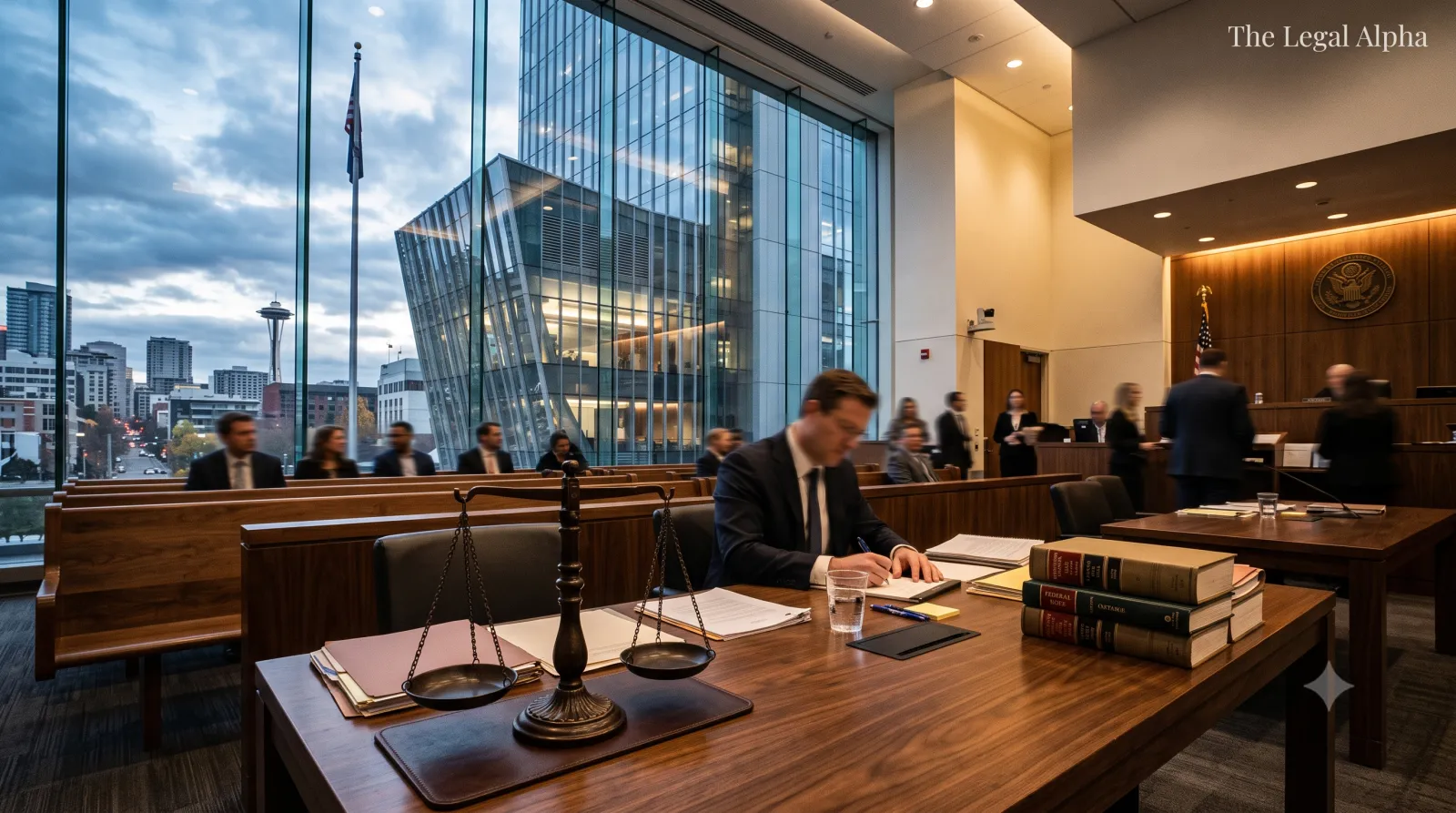
Federal Prosecutors Charge California Resident with Operating as Unregistered Chinese Agent Targeting Son of Taiwan's President
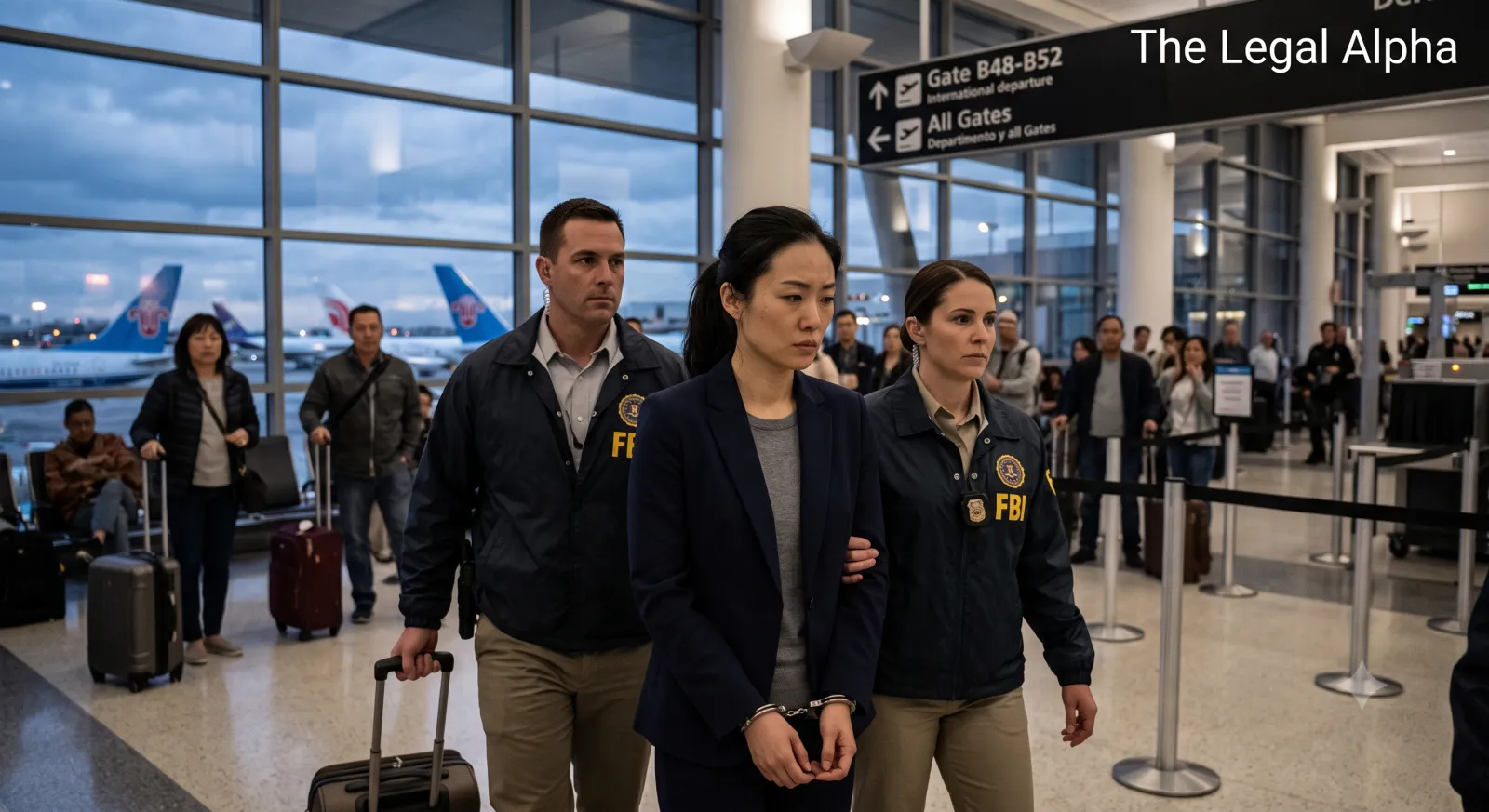
Federal law enforcement authorities arrested 34-year-old California real estate agent Wanying "Heather" Zhang at Los Angeles International Airport as she prepared to board an overseas flight to China. Prosecutors in the United States District Court for the Central District of California charged Zhang with acting as an illegal agent of the Chinese government without providing prior notification to the U.S. Attorney General.
According to investigators, Zhang travelled to the Seattle area in 2025 at the direction of Chinese officials to carry out physical surveillance on Ting-Yu Lai—the U.S.-based son of Taiwanese President Lai Ching-te—and his family. Federal prosecutors allege that Zhang documented their residence, vehicles, and license plates, and transmitted recordings and operational intelligence to contacts connected to the Chinese government while attempting to evade detection.
Legal Topic
-
Area of Law: National Security & Criminal Law
-
Sub-topic: Foreign Agent Registration / Transnational Repression
Core Legal Issue
The legal question focuses on whether the defendant acted within the United States as an agent of a foreign power under foreign direction or control without first providing official statutory notification to the United States government.
Unlike standard intelligence-gathering involving classified state secrets, the charge examines whether conducting non-public surveillance and information-gathering against foreign political figures and their families on domestic soil at the behest of an overseas principal violates statutory requirements governing unregistered foreign operatives.
What Did the Court / Authority Decide?
Federal prosecutors filed a criminal complaint initiating formal prosecution against Zhang in the Central District of California. Law enforcement executed an arrest warrant at Los Angeles International Airport prior to her departure.
The legal proceedings remain at their preliminary stage:
-
The defendant was remanded into custody pending an initial appearance in Los Angeles federal court.
-
No determination of guilt or preliminary trial ruling has been entered, and the statutory presumption of innocence applies.
-
Pretrial detention, formal indictment, and bail evaluations will be handled by a U.S. Magistrate Judge in subsequent hearings.
Key Legal Points
-
Extraterritorial and Covert Directives: Criminal liability under federal foreign agent statutes does not require the handling of classified materials; operational activity carried out under foreign direction or control is sufficient.
-
Statutory Notification Mandates: Anyone operating within the United States subject to the direction of a foreign government or official must notify the Attorney General prior to acting, unless a formal diplomatic exemption applies.
-
Evidentiary Standard for Tradecraft: Proof of intentional concealment, evasive travel, and targeted transmission of personal records supports allegations of acting under foreign control rather than private interest.
-
Presumption of Innocence: The filed criminal complaint functions solely as an accusatory instrument setting forth probable cause for arrest, requiring government substantiation at trial beyond a reasonable doubt.
Relevant Law
-
18 U.S.C. § 951: Prohibits individuals from acting as agents of foreign governments within the United States without prior notification to the Attorney General.
-
18 U.S.C. § 371: Governs criminal conspiracy where multiple parties agree to commit an offense against the United States or obstruct federal statutory functions.
-
Federal Rules of Criminal Procedure, Rule 4 & Rule 5: Governing arrest warrants, complaint filings, and initial appearances before a federal magistrate judge.
Arguments of the Parties
Prosecution / The United States
The Department of Justice contends that Zhang acted knowingly under the instructions and control of Chinese state officials. Prosecutors maintain that she traveled interstate to conduct targeted reconnaissance, compiled detailed identification and location data concerning a foreign head of state's family member, and secretly relayed this intelligence abroad without registering her relationship with federal authorities.
Defense / Opposing Position
The defendant has not yet entered a formal plea or presented a substantive defense in open court. Under standard defense principles in foreign agency proceedings, defendants typically argue that casual travel, non-classified observations, or informal social inquiries do not meet the legal threshold of formal agency, direction, or control by an overseas foreign government entity.
Why Does It Matter?
This prosecution illustrates an expanding federal focus on countering transnational repression—actions where foreign governments monitor, intimidate, or track political rivals and their families living abroad.
From an enforcement standpoint, the case demonstrates the Department of Justice's sustained reliance on Section 951 rather than classical espionage provisions when prosecuting covert surveillance that targets civilian and political figures. For individuals residing in or doing business across international jurisdictions, it underscores that conducting targeted investigative tasks or sharing location data at the request of overseas government contacts can trigger severe criminal consequences under domestic national security statutes.
Legal Takeaway
Conducting domestic reconnaissance or intelligence gathering under the direction of an overseas government without advance notification to the Department of Justice constitutes a serious federal offense under 18 U.S.C. § 951. Criminal liability does not turn on whether classified government documents were compromised, but on the failure to formally disclose foreign direction and control.
Sources
Primary Source:
-
Criminal Complaint and Public Statements, United States v. Wanying Zhang, U.S. Attorney’s Office for the Central District of California / Federal Bureau of Investigation (October 2026).
Additional Sources:
-
Official Statement of Taiwan Presidential Office Spokesperson Karen Kuo (October 2026).
-
Reuters News Wire Service & Associated Public Court Filings Documentation (October 2026).