Delhi Magistrate Calls for Police Action Taken Report on Complaint Over Sonia Gandhi’s 1980 Voter Roll Entry
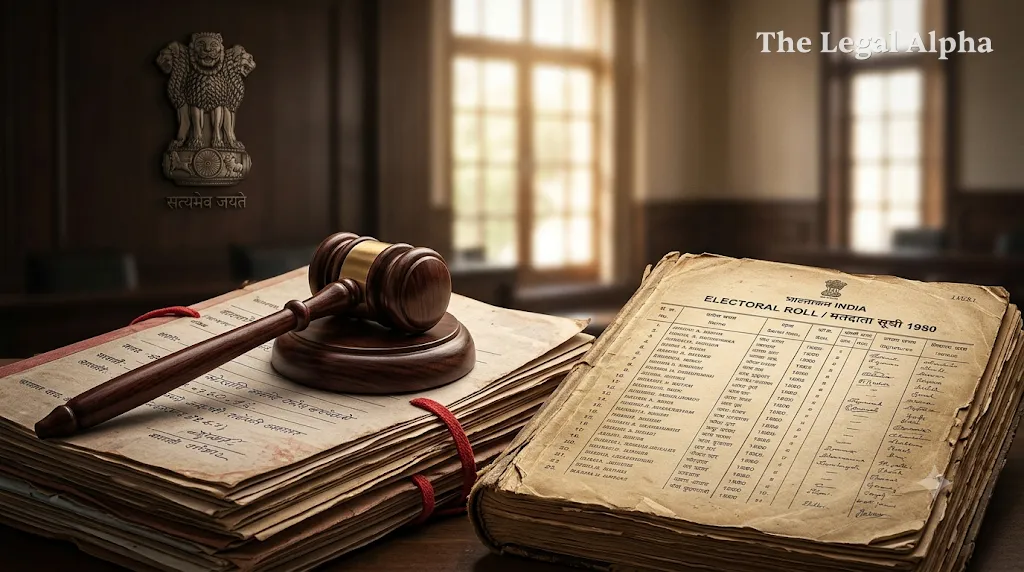
A magistrate court in New Delhi has directed the Delhi Police to file an Action Taken Report (ATR) on a private criminal complaint seeking a police investigation against senior Congress leader Sonia Gandhi. The complaint alleges that Gandhi’s name was unlawfully added to the New Delhi constituency’s electoral rolls in 1980, roughly three years before she acquired Indian citizenship in April 1983.
Judicial Magistrate First Class (JMFC) / Additional Chief Judicial Magistrate Vinod Joshi of the Rouse Avenue Courts passed the order on November 18, 2026, directing the Station House Officer of the IP Estate Police Station to submit the report. The case stems from a complaint originally filed in August 2025 by advocate Vikas Tripathi, who has sought the registration of a First Information Report (FIR).
The matter returned to the magistrate’s docket after a Sessions Court set aside an earlier dismissal of the complaint. Because the dispute involves statutory citizenship rules, electoral eligibility, and the procedural threshold for ordering a criminal probe against a prominent public figure, the court's preliminary inquiry has drawn significant legal and public attention.
Legal Topic
Area of Law: Criminal Procedure / Election & Citizenship Law
Sub-topic: Registration of FIR under BNSS / Electoral Roll Eligibility
Core Legal Issue
The central legal question before the magistrate is whether the complainant's allegations and supporting documents disclose the commission of a cognizable offence—specifically cheating and forgery—warranting a court-ordered police investigation under Section 175(3) of the Bharatiya Nagarik Suraksha Sanhita (BNSS).
Alongside this procedural threshold, the court must consider the boundary between criminal jurisdiction and administrative election mechanisms, specifically whether an alleged irregularity in historical voter lists constitutes a criminal act or falls within the domain of the Election Commission of India.
What Did the Court / Authority Decide?
The Rouse Avenue Court has not ordered the registration of an FIR against Sonia Gandhi. Instead, the court took a preliminary procedural step by calling for an Action Taken Report from the Delhi Police to ascertain what steps, if any, law enforcement has taken regarding the complaint.
During the hearing, the court also addressed the evidentiary record:
-
Document Verification: When the complainant submitted attested copies of the electoral rolls for 1980, 1981, and 1983, the court directed him to place the original attested copies on record.
-
Next Steps: The court scheduled the matter for further hearing on November 28, 2026.
What remains pending is the substantive decision on whether to allow or dismiss the plea for an FIR. The allegations remain untested, and no judicial finding of wrongdoing has been made.
Key Legal Points
-
Preliminary Inquiry Under BNSS: Under Section 175(3) of the Bharatiya Nagarik Suraksha Sanhita, a magistrate evaluating an application for a police investigation must apply judicial mind, consider police submissions, and conduct any necessary inquiry before deciding whether to direct an FIR.
-
Revisional Court Remand: In September 2025, an Additional Chief Judicial Magistrate had initially dismissed the complaint for lacking cogent evidence. However, on September 21, 2026, Special Judge Vishal Gogne of the Sessions Court overturned that dismissal as a "non-speaking" order and remanded the matter back, holding that a revisional court cannot step into the magistrate's shoes to directly adjudicate a Section 175(3) plea.
-
Strict Evidentiary Standards for Forgery: Courts require specific, verifiable foundational records rather than uncertified photocopies or bald assertions to establish prima facie elements of cheating and forgery.
-
Citizenship as a Prerequisite for Voting: Under Indian constitutional and statutory frameworks, Indian citizenship is a mandatory qualification for inclusion in an electoral roll.
Relevant Law
-
Section 175(3), Bharatiya Nagarik Suraksha Sanhita (BNSS), 2023: Empowers a magistrate to order a police investigation into a cognizable offence after considering the complainant's application and any police submissions.
-
Article 326 of the Constitution of India: Establishes adult suffrage for elections to the Lok Sabha and State Legislative Assemblies, explicitly limiting registration as a voter to citizens of India.
-
Section 16 of the Representation of the People Act, 1950: Disqualifies any person who is not a citizen of India from being registered in an electoral roll.
-
The Citizenship Act, 1955: Governs the acquisition and determination of Indian citizenship, under which Gandhi acquired citizenship in April 1983.
Arguments of the Parties
Complainant (Vikas Tripathi)
Represented by Senior Advocate Ajay Burman, the complainant contended that Sonia Gandhi’s name appeared in the New Delhi constituency’s electoral roll in 1980, nearly three years before she became an Indian citizen on April 30, 1983. He claimed that her name was subsequently deleted in 1982 and re-entered in 1983, alleging that forged documents must have been submitted to secure the initial 1980 registration.
Respondent (Sonia Gandhi)
In earlier revisional proceedings before the Sessions Court, Gandhi—represented by Senior Advocate R.S. Cheema—opposed the complaint as frivolous, politically motivated, and an abuse of the legal process. Her counsel argued that the complainant failed to produce any primary documentary evidence showing forgery or falsification of records by her, and contended that criminal courts should not be used to revive decades-old media controversies or assume the administrative functions of the Election Commission.
Why Does It Matter?
This development highlights the procedural rigor required when private citizens invoke criminal law over historical administrative records. Following the enactment of the Bharatiya Nagarik Suraksha Sanhita, magistrates face heightened scrutiny to ensure that orders either granting or refusing police investigations are backed by clear, reasoned analysis rather than summary dismissals.
Beyond the political profile of the respondent, the proceedings underscore the legal distinction between an administrative error in an electoral roll and an intentional criminal offence like forgery. To trigger a criminal investigation, a complainant cannot merely point to a discrepancy in historical voter lists; they must present credible prima facie material linking the accused to an unlawful act.
Legal Takeaway
Calling for an Action Taken Report is a routine, fact-gathering step and does not mean the court has accepted the allegations or ordered a criminal case. Before deciding whether an FIR should be registered, the magistrate will examine the police report alongside verified original records to determine if any credible evidence of a criminal offence actually exists.
Sources
Primary Source:
Order dated November 18, 2026, passed by Judicial Magistrate First Class / Additional Chief Judicial Magistrate Vinod Joshi, Rouse Avenue Courts, New Delhi, in Vikas Tripathi v. State.
Additional Sources:
-
Order dated September 21, 2026, passed by Special Judge Vishal Gogne, Rouse Avenue Courts, New Delhi.
-
The Bharatiya Nagarik Suraksha Sanhita, 2023; The Representation of the People Act, 1950; The Citizenship Act, 1955; The Constitution of India.
-
Court reporting and case records from LiveLaw, Bar and Bench, and ANI.