Supreme Court Calls for Restraint from Sanjay Raut Over Remarks Against CJI Surya Kant
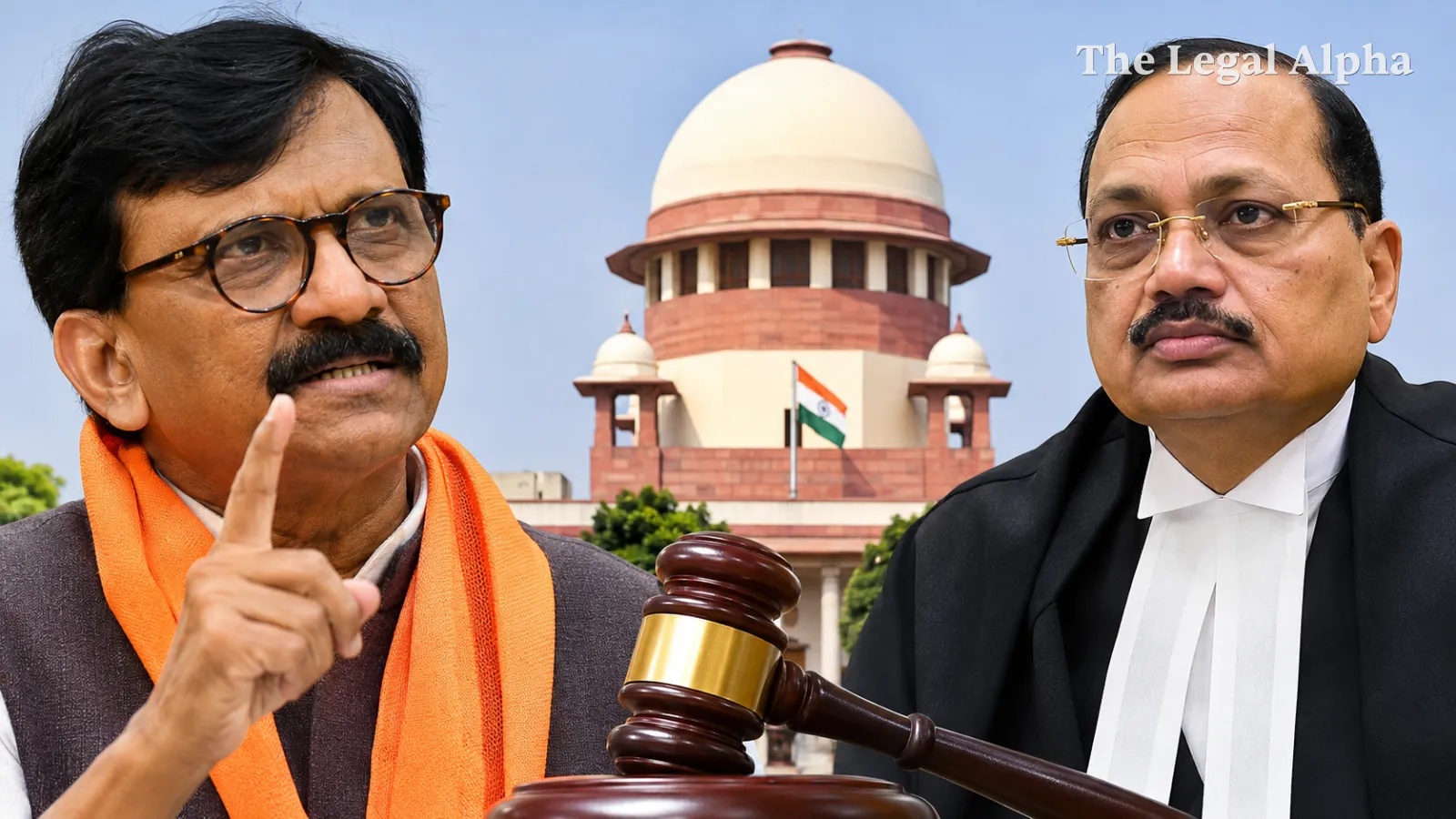
The Supreme Court has criticised Shiv Sena (UBT) leader Sanjay Raut over his remarks concerning Chief Justice of India Surya Kant, emphasising that public figures, particularly experienced politicians, should exercise restraint while commenting on the judiciary.
The development raises questions about the boundaries of public criticism of judicial institutions, the responsibility of political leaders in public discourse and the distinction between fair criticism and statements that may affect the dignity or authority of courts.
What Happened?
The observations were made by a Bench of Justices Aravind Kumar and Vipul M. Pancholi while hearing criminal contempt proceedings initiated against Raut and journalist Nikhil Wagle over alleged objectionable social media statements concerning CJI Surya Kant and the judiciary.
The Court reminded Raut that his long experience as a politician and parliamentarian should be accompanied by restraint in his public statements. It also indicated that an apology in a matter of this nature must reflect genuine remorse.
The proceedings arose following statements and social media posts made in the aftermath of the Chief Justice declining a request for a personal meeting with a delegation of Opposition leaders. The controversy subsequently led to a contempt petition before the Supreme Court.
Area of Law
Area of Law: Constitutional Law
Sub-topic: Contempt of Court / Freedom of Speech and Expression / Judicial Institutional Authority
Core Legal Issue
The proceedings raise the question of whether public statements and social media posts directed at the Chief Justice of India and the judiciary cross the permissible limits of fair criticism and attract scrutiny under the law of criminal contempt.
The matter also concerns the relationship between freedom of expression, including political criticism, and the responsibility to avoid statements alleged to undermine the authority or public confidence in the judicial institution.
What Did the Supreme Court Observe?
The Bench criticised Raut's language and emphasised that an experienced parliamentarian should understand the importance of restraint while commenting on judicial institutions.
The Court also sought further explanations regarding the subsequent social media posts and directed Raut and Wagle to submit additional affidavits addressing the court's concerns. The contempt proceedings remain pending; the Court has not delivered a final determination of liability.
Key Legal Points
-
The Supreme Court emphasised restraint in public statements concerning the judiciary, particularly by experienced public figures.
-
The Court is examining alleged social media remarks in the context of criminal contempt proceedings.
-
An apology does not necessarily conclude contempt proceedings; the Court may assess the nature of the conduct and the explanation offered.
-
The Bench sought additional affidavits concerning posts allegedly made after the initial contempt proceedings were initiated.
-
The proceedings remain pending, and no final finding of criminal contempt has been made against the respondents.
Relevant Law
Contempt of Courts Act, 1971
-
Section 2(c) – Defines criminal contempt, including acts or publications that scandalise or tend to scandalise a court, prejudice judicial proceedings or interfere with the administration of justice.
-
Section 15 – Addresses the procedure for initiating criminal contempt proceedings, including proceedings initiated on the basis of consent of the Attorney General or Solicitor General in specified circumstances.
These provisions are relevant to the broader contempt proceedings. The precise legal grounds and application of statutory provisions should be confirmed from the court's pleadings and orders.
Arguments of the Parties
Supreme Court Bar Association (SCBA)
The SCBA reportedly contended that Raut's subsequent social media posts continued to be objectionable despite the apology already tendered, and argued that his conduct warranted further judicial scrutiny.
Sanjay Raut
Raut's counsel submitted that an unconditional apology had already been tendered and sought consideration of the same by the Court. The Bench, however, sought a further affidavit addressing the subsequent posts.
Nikhil Wagle
Wagle's counsel placed his apology and explanation before the Bench and argued for consideration of his client's circumstances separately from Raut's conduct.
Why Does It Matter?
The proceedings highlight the continuing tension between freedom of expression and the protection of judicial institutions from statements alleged to undermine their authority. Political leaders, journalists and other public figures routinely comment on judicial decisions and institutional conduct, but such commentary may become legally contentious when allegations of criminal contempt arise.
The case also underscores that the Supreme Court may examine conduct beyond the initial statements when subsequent publications or posts become part of the controversy. At the same time, the final outcome will depend on the Court's assessment of the allegations, the respondents' explanations and the applicable law.
Legal Takeaway
The Supreme Court's observations reinforce the importance of responsible public criticism of judicial institutions, particularly by public figures with substantial political or professional experience. However, the contempt proceedings remain pending, and the Court's observations during the hearing should not be treated as a final finding of criminal contempt.
Sources
Primary Source: Supreme Court hearing/order in the criminal contempt proceedings — the underlying order was not independently located or verified at the time of drafting.
Additional Sources: