Ninth Circuit Temporarily Freezes Reinstatement of Court-Appointed Seattle US Attorney in High-Stakes Separation of Powers Clash
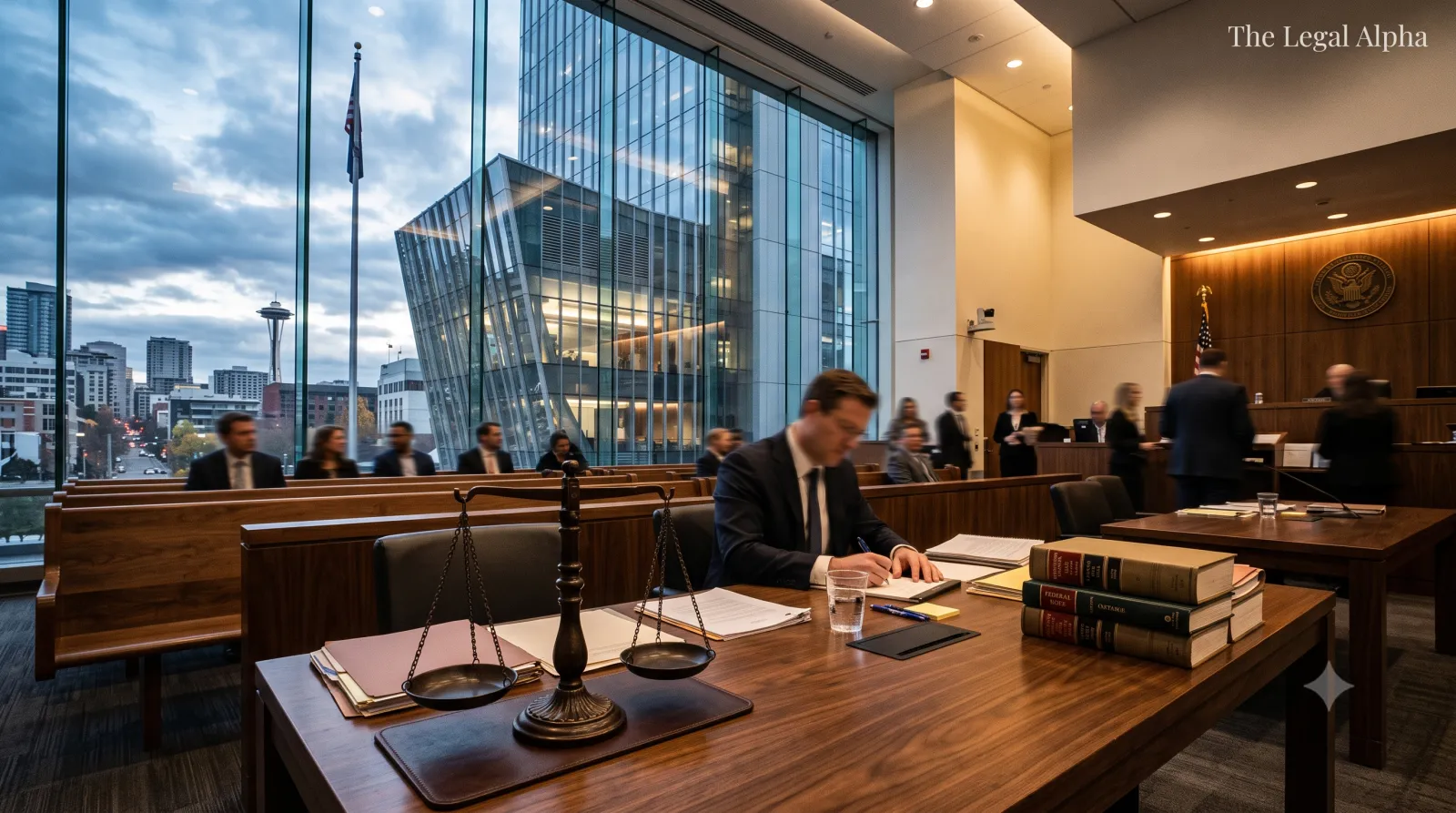
A federal appellate court has temporarily blocked the reinstatement of Roger Rogoff as the United States Attorney for the Western District of Washington, freezing a trial court ruling that had invalidated his summary termination by the Trump administration.
The confrontation began in July 2026 when federal district judges in Washington exercised their statutory authority to name Rogoff as interim top prosecutor to fill an existing vacancy. Less than an hour after the judicial panel appointed him, the administration fired him via email, prompting Rogoff to file a lawsuit directly contesting the dismissal. Chief US District Judge Stanley Bastian ruled in Rogoff's favor, granting a preliminary injunction that required the government to reinstate him. However, the US Court of Appeals for the Ninth Circuit intervened by entering an administrative stay, pausing that reinstatement order while federal judges consider the Department of Justice’s formal appeal.
Legal Topic
-
Area of Law: Constitutional & Administrative Law
-
Sub-topic: Executive Removal Power / Appointments Clause / Federal Judiciary Authority
Core Legal Issue
The dispute centers on whether the President’s Article II executive removal authority extends to interim United States Attorneys appointed directly by federal district judges under statutory vacancy provisions.
At stake is the constitutional tension between the Appointments Clause—which permits Congress to vest the appointment of inferior officers in the courts—and the Executive Branch's claim to an untrammeled power to dismiss any officer exercising sovereign prosecutorial authority on behalf of the United States.
What Did the Court / Authority Decide?
The Ninth Circuit issued an unsigned order granting the Justice Department’s request for an administrative stay. The appellate order does not resolve the merits of the executive power dispute; instead, it preserves the existing status quo, meaning Rogoff is barred from resuming control of the Seattle US Attorney’s Office while expedited briefing and appellate review proceed.
Chief Judge Bastian’s underlying district court injunction—which enjoined federal officials from obstructing Rogoff’s official prosecutorial functions—remains suspended until the Ninth Circuit either dissolves the stay or rules on the government's motion for an emergency stay pending appeal.
Key Legal Points
-
Preservation of the Status Quo: The Ninth Circuit’s administrative stay operates strictly as a procedural pause rather than a substantive holding on executive removal authority.
-
Scope of Presidential Removal: The trial court concluded that statutory removal protections apply differently to judicially appointed interim prosecutors than to presidential nominees confirmed by the Senate.
-
Separation of Powers Balance: The district court reasoned that allowing the Executive Branch to unilaterally fire a court-appointed interim attorney disrupts the statutory mechanism established by Congress to prevent long-term prosecutorial vacancies.
-
Executive Primacy Argument: The Justice Department maintains that prosecutorial discretion is a core Article II power requiring complete presidential oversight, regardless of how an inferior officer was initially seated.
Relevant Law
-
Appointments Clause of the US Constitution (Article II, Section 2, Clause 2): Authorizes Congress to vest the appointment of inferior officers in the President alone, the courts of law, or the heads of departments.
-
Article II Executive Power (Take Care Clause): Provides that the President shall take care that the laws be faithfully executed, forming the bedrock of modern presidential removal jurisprudence.
-
28 U.S.C. § 546: The federal statutory scheme governing interim US Attorney appointments, permitting district courts to appoint a prosecutor when an executive appointment expires or remains unfilled.
-
28 U.S.C. § 541: The statutory provision governing presidential appointment and removal of Senate-confirmed US Attorneys.
Arguments of the Parties
Appellant / Department of Justice
The federal government contended that the President holds absolute authority under Article II of the US Constitution to dismiss any officer wielding federal executive power. Justice Department attorneys argued that forcing the executive branch to retain a chief prosecutor in whom the President lacks confidence undermines constitutional governance and flouts the unified structure of federal law enforcement.
Appellee / Roger Rogoff
Rogoff submitted that court-appointed interim US Attorneys are distinct from Senate-confirmed appointees and cannot be summarily removed at will by the President without frustrating congressional design. His counsel maintained that permitting the executive to immediately terminate court appointees nullifies the statutory system created by Congress under the Appointments Clause and destroys the incentive for the White House to submit formal nominations to the Senate.
Why Does It Matter?
This litigation represents a direct constitutional showdown between the federal judiciary and the executive branch over the boundaries of prosecutorial appointments. If the President is held to possess unchecked authority to instantly dismiss any court-selected interim prosecutor, the statutory fallback designed by Congress to keep local federal prosecutor offices functional becomes effectively unenforceable.
Conversely, restricting presidential dismissal of interim prosecutors raises novel constitutional hurdles under Article II, potentially shielding law enforcement officials from White House supervision. The outcome will define the balance of operational control over federal litigation across the country whenever executive appointments lapse.
Legal Takeaway
While federal law explicitly empowers district judges to install interim US Attorneys during prolonged vacancies, the question of whether the President can immediately fire them remains unresolved. The Ninth Circuit's administrative stay leaves the office under Department of Justice control until the courts rule on the constitutional limits of executive removal power.
Sources
Primary Source:
-
Rogoff v. Department of Justice et al., Order Granting Administrative Stay, US Court of Appeals for the Ninth Circuit (October 4, 2026); Memorandum Decision & Injunction, US District Court for the Eastern District of Washington (Chief Judge Stanley A. Bastian presiding).
Additional Sources:
-
28 U.S. Code § 546 (Vacancies in the Office of United States Attorney).
-
US Constitution, Article II, Section 2, Clause 2 (Appointments Clause).