Federal Court Authorises Alternative Service of BBC Subpoenas on Trump Family Members in Defamation Action
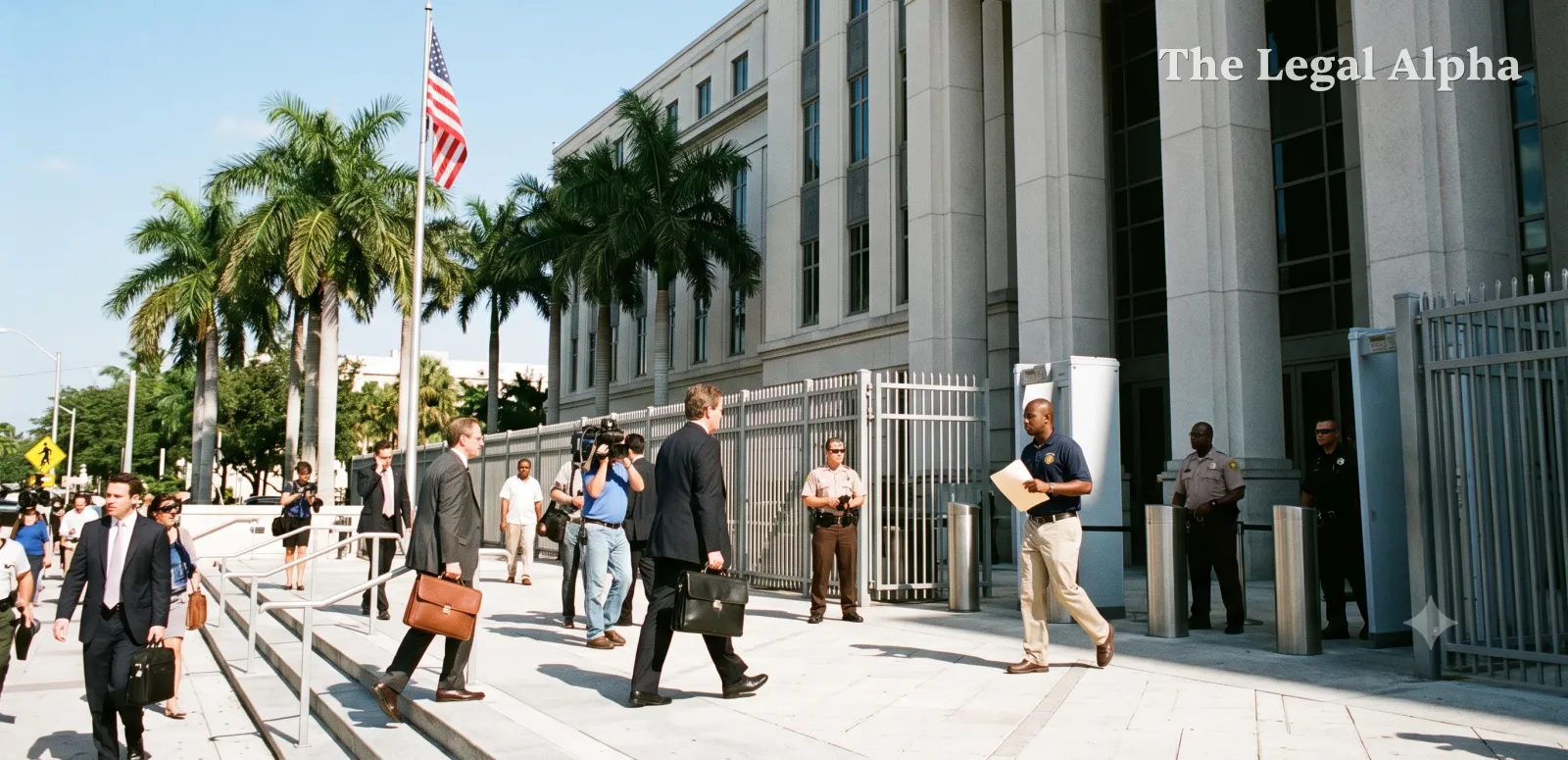
A federal magistrate court in Florida has authorised the British Broadcasting Corporation (BBC) to use alternative methods to serve deposition subpoenas on Donald Trump Jr., Ivanka Trump, and Jared Kushner. The ruling arises in a pending multi-billion-dollar defamation lawsuit initiated by former U.S. President Donald Trump against the British broadcaster over the editing of his speech in a Panorama documentary covering the events of January 6, 2021.
The broadcaster moved for substitute service after conventional, in-person delivery by process servers was repeatedly thwarted—partly due to protective perimeters maintained by the U.S. Secret Service. Donald Trump’s counsel opposed the broadcaster's discovery attempts, contending the requests were intrusive, irrelevant, and designed to harass the former president's inner circle. The court rejected those procedural roadblocks, permitting the BBC to complete service via certified mail and electronic delivery to legal representatives.
Legal Topic
-
Area of Law: Civil Litigation / Media & Defamation Law
-
Sub-topic: Pre-trial Discovery / Third-Party Subpoenas and Alternative Service of Process
Core Legal Issue
The procedural question before the court was whether a litigant facing security barricades and failed in-person delivery may deviate from personal hand-delivery to effectuate valid subpoenas on non-party witnesses under the Federal Rules of Civil Procedure.
Underlying that inquiry is the substantive scope of civil discovery in high-profile defamation actions: namely, whether the defensive inquiry into a public figure’s state of mind, real-time communications, and actions during a disputed historical event justifies compelling deposition testimony from close advisors and family members who were physically present.
What Did the Court Decide?
U.S. Magistrate Judge Enjoliqué Lett granted the BBC’s motion for alternative service.
The court permitted the broadcaster to formally execute service of its third-party deposition subpoenas by sending copies via certified mail to the witnesses' residential and business addresses, alongside electronic service to Trump’s attorneys of record. The order strictly resolves the procedural mechanism of service, establishing that high-profile security details cannot serve as a de facto shield against lawful civil process. The substantive depositions and any prospective motions to quash or narrow the inquiry remain subject to ongoing pre-trial management.
Key Legal Points
-
Security protocols cannot insulate witnesses from process: Secret Service security perimeters, while legally mandated for protectees, cannot be deployed by private litigants or non-party witnesses to permanently evade civil subpoenas.
-
Judicial flexibility under Rule 45: While personal in-hand delivery has traditionally been preferred for subpoenas, federal courts increasingly permit substitute or alternative service when a party demonstrates diligent, good-faith attempts that were frustrated by external impediments.
-
Expansive pre-trial discovery in defamation suits: Plaintiffs pursuing massive damage claims open themselves up to comprehensive discovery, enabling defendants to seek evidence regarding what transpired behind the scenes to test allegations of reputational harm, falsity, and malice.
Relevant Law
-
Federal Rules of Civil Procedure (FRCP), Rule 45: Governs the issuance, form, and service of subpoenas upon parties and non-parties in federal civil litigation.
-
Federal Rules of Civil Procedure (FRCP), Rule 4(e): Provides standards governing service of process and state-law alternative methods often applied analogously to non-party subpoenas.
-
New York Times Co. v. Sullivan (1964): U.S. Supreme Court precedent establishing that a public figure plaintiff must prove "actual malice," rendering contemporaneous conversations and surrounding factual contexts highly relevant during pre-trial fact-finding.
Arguments of the Parties
Plaintiff (Donald Trump) Counsel for Donald Trump argued that the BBC’s demands for depositions from his children and son-in-law were disproportionate, burdensome, and an abuse of the discovery process. The plaintiff contended that non-party family members should not be subjected to subpoenas over editorial disputes regarding broadcast footage, characterizing the requests as an effort to harass and intimidate the former president's family.
Defendant (The BBC) The BBC submitted that testimony from Donald Trump Jr., Ivanka Trump, and Jared Kushner is directly relevant to establishing the complete factual context of January 6, 2021, and evaluating the credibility and damages claims asserted in the complaint. The broadcaster demonstrated that process servers had made repeated, diligent attempts to deliver the subpoenas in person but were obstructed by private estate gates and Secret Service security barriers, necessitating court-ordered alternative service.
Why Does It Matter?
This development highlights the double-edged nature of civil defamation litigation for high-profile figures. Initiating a mega-damages suit inevitably invites extensive discovery; the plaintiff cannot selectively open court doors to claim reputational injury while shutting out standard pre-trial scrutiny into what their closest circle saw, heard, and communicated during the relevant events.
From a broader procedural perspective, the ruling reinforces that federal courts will not permit protective details or private estate perimeters to block the administration of justice. By authorizing certified mail and service through attorneys of record, the decision gives litigators a clear roadmap for serving process on individuals under federal protective details or private high-security custody.
Legal Takeaway
When a public figure initiates a defamation action, pre-trial discovery grants the defense broad latitude to subpoena key eyewitnesses, including immediate family and close advisors. Where government security details or gated security prevent hand-delivery, federal courts will readily authorize alternative service to ensure civil discovery proceeds.
Sources
Primary Source:
-
Order Granting Motion for Alternative Service, Trump v. British Broadcasting Corporation, U.S. District Court for the Southern District of Florida (Magistrate Judge Enjoliqué Lett presiding).
Additional Sources:
-
Docket entries and filings, U.S. District Court for the Southern District of Florida.
-
Federal Rules of Civil Procedure (Rules 4 and 45).
-
CBS News & India Today reporting on pre-trial proceedings in Trump v. BBC.