Delhi Protest Curbs and Detentions: Supreme Court Defers Hearing to October 15 Due to Judge's Ill-Health
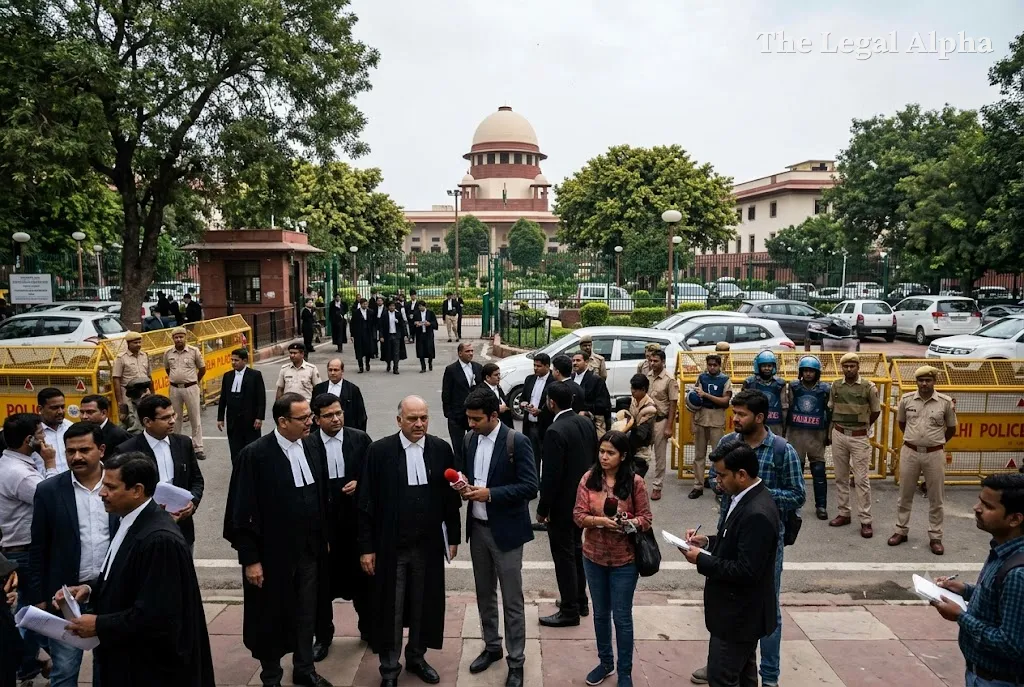
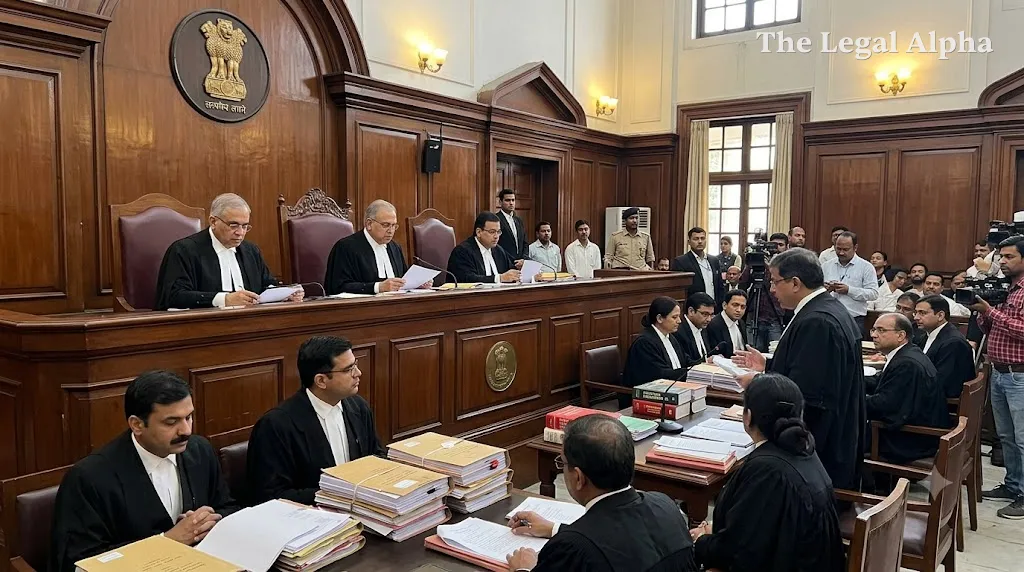
A three-judge bench of the Supreme Court deferred hearings until October 15, 2026, on a batch of petitions challenging large-scale police detentions, public transit curbs, and prohibitory orders across the national capital. The proceedings could not go forward on Tuesday because Justice V. Mohana, one of the members of the special bench, was indisposed. With the mutual consent of both the petitioners and the government, the court pushed the matter to Thursday while granting authorities an extension to file their formal replies to contempt notices.
The legal dispute stems from high-handed measures deployed by law enforcement during ongoing demonstrations demanding the resignation of Chief Election Commissioner Gyanesh Kumar over electoral roll revisions. Several lawyers, political figures, journalists, and civic groups approached the apex court, arguing that sweeping transit closures, mobile internet blackouts, and indiscriminate detentions violated fundamental democratic freedoms and flouted prior judicial directions.
Legal Topic
Area of Law: Constitutional Law & Criminal Procedure
Sub-topic: Preventive Detention, Right to Peaceful Assembly, and Contempt of Court
Core Legal Issue
The controversy centres on the constitutional boundaries of preventive state action during public demonstrations. Specifically, the court is addressing whether law enforcement agencies exceeded their powers under Section 163 of the Bharatiya Nagarik Suraksha Sanhita (BNSS) by imposing blanket prohibitory orders, arbitrarily detaining demonstrators outside designated protest zones, and restricting public movement.
A secondary legal issue is whether the police and administrative authorities willfully disobeyed earlier interim orders of the Supreme Court—which directed the normalization of transit and barred unlawful detentions—thereby attracting contempt of court.
What Did the Court Decide?
The Supreme Court did not adjudicate on the merits of the challenges, adjourning the entire batch of approximately a dozen petitions to October 15, 2026, due to Justice Mohana’s health.
Procedurally, the bench extended the deadline for the Delhi Police and administrative authorities to submit their responses to the pending contempt notices until Wednesday evening. The court also noted that fresh petitions raising related grievances over police action may be tagged and heard on Thursday, provided all procedural filing defects are cured in time.
Key Legal Points
-
Procedural Adjournment on Bench Availability: The substantive review of administrative police powers was deferred due to the indisposition of a bench member, preserving status-quo procedural timelines without entering findings on merit.
-
Scrutiny of Emergency Prohibitory Measures: The petitions bring executive orders issued under Section 163 of the BNSS under sharp constitutional scrutiny, testing whether public safety measures crossed into disproportionate suppression.
-
Compliance and Contempt Obligations: The extension granted to authorities underscores that state instrumentalities must account for compliance with court-mandated safeguards regarding transit and unlawful detentions.
-
Protection of Access to Justice: The proceedings carry forward prior judicial concerns that curbs around court complexes and the detention of advocates, journalists, and citizens interfere directly with access to justice and institutional functioning.
Relevant Law
-
Articles 19(1)(a), 19(1)(b), and 19(1)(d) of the Constitution of India: Safeguarding freedom of speech and expression, the right to assemble peaceably without arms, and the right to move freely throughout the territory of India.
-
Article 21 of the Constitution of India: Protection of personal liberty and the requirement of adherence to procedure established by law.
-
Article 129 of the Constitution of India & Contempt of Courts Act, 1971: Powers of the Supreme Court to punish for contempt regarding non-compliance with judicial directions.
-
Section 163 of the Bharatiya Nagarik Suraksha Sanhita, 2023 (BNSS): Executive power to issue prohibitory orders in urgent cases of nuisance or apprehended danger.
Arguments of the Parties
Petitioners Senior advocates representing bar associations, journalists, civil rights activists, and opposition parties submitted that the state’s response amounted to an undeclared shutdown. They argued that citizens, including lawyers and media personnel, were subjected to unlawful detentions at undisclosed locations and outside restricted zones. The petitioners contended that massive transit curbs and arbitrary internet disruptions directly violated prior court instructions to keep public movement unhampered.
Respondent / State Appearing for the Centre and Delhi Police, the Solicitor General refuted allegations of an indiscriminate crackdown. The state maintained that metro and transit systems operated with targeted restrictions at specific stations purely to preserve public order and avoid administrative disruption. The administration sought adequate time to file detailed affidavits explaining the legal justifications, procedural protocols, and circumstances surrounding the security arrangements.
Why Does It Matter?
This litigation directly tests the doctrine of proportionality in modern crowd-control and public administration. If authorities rely on broad prohibitory provisions like Section 163 of the BNSS to shut down transit networks and hold demonstrators preemptively, it creates a concerning precedent for constitutional assemblies across India.
Furthermore, the involvement of bar associations and journalists highlights the systemic necessity of safeguarding access to the courts. When transit shutdowns and police perimeters impede litigants and legal professionals from reaching the courtroom, the administration of justice itself is threatened. The outcome on October 15 is poised to define clear operational boundaries for executive action during large-scale political demonstrations.
Legal Takeaway
While the court’s postponement is strictly procedural due to a judge’s illness, the ongoing case places executive crowd-control powers under intense constitutional review. State authorities cannot deploy preventive detention or public transit shutdowns without demonstrating clear statutory justification and strict adherence to established legal procedure.
Sources
Primary Source:
-
Proceedings and Orders in Shailendra Mani Tripathi v. Govind Mohan (Diary No. 63858-2026), Supreme Court of India.
Additional Sources:
-
Reports on Supreme Court proceedings concerning Delhi protest restrictions, October 11–13, 2026.