Urging Religious Conversion Does Not Amount to Outraging Faith: Bombay High Court Quashes FIR Against Four in Amravati
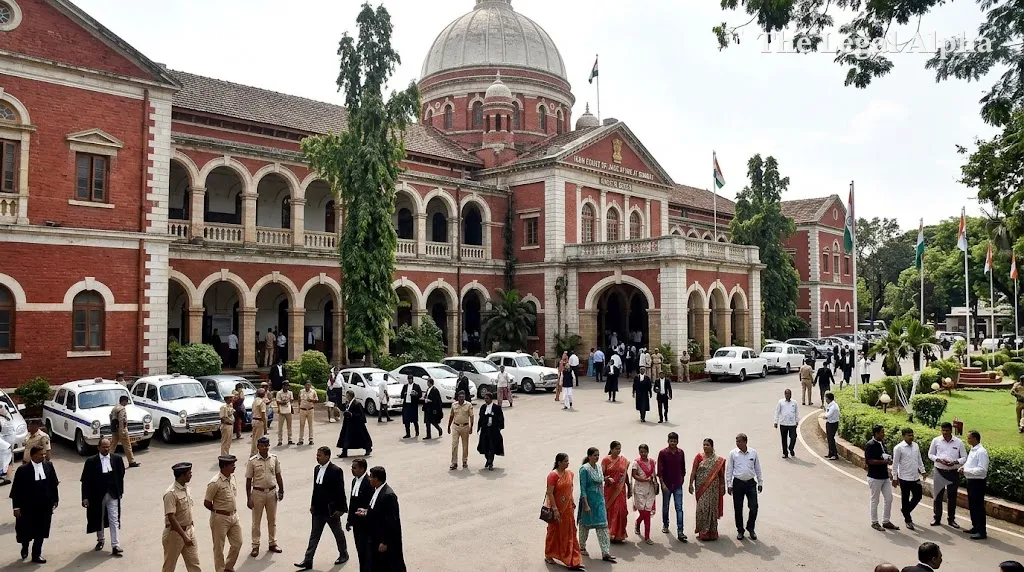
The Nagpur Bench of the Bombay High Court has quashed a First Information Report (FIR) and a subsequent chargesheet against four individuals who were accused of pressuring a married couple to convert to Christianity.
The case originated in Amravati, where police booked Joseph Khudawant, his son Victor, daughter-in-law Elvina, and social worker Anant Mankar following allegations that they insisted the complainant and his wife renounce Hinduism. The police had registered criminal proceedings against them for allegedly committing deliberate and malicious acts intended to outrage religious feelings and insult religious beliefs. Setting aside the proceedings, the High Court determined that simply advocating for one’s faith or urging another person to convert does not establish an intent to insult or demean another religion.
Legal Topic
Area of Law: Criminal Law / Constitutional Law
Sub-topic: Religious Offences / Freedom of Religion and Quashing of Criminal Proceedings
Core Legal Issue
The primary question before the court was whether the act of insisting upon or urging an individual to convert to a different faith meets the statutory threshold of deliberate and malicious acts intended to outrage religious feelings under Indian penal law.
Specifically, the court examined whether an attempt to persuade or pressure individuals into religious conversion can be equated with denigrating or insulting their existing religious beliefs in the absence of explicit derogatory acts or slurs targeting that religion.
What Did the Court / Authority Decide?
Justice M. W. Chandwani allowed the criminal application and set aside both the FIR and the chargesheet pending against all four petitioners.
The court held that the allegations, taken at their face value, demonstrated at most that the applicants were promoting their own religious faith. The bench emphasized that promoting a religion does not automatically imply malice or an intent to insult another faith.
The court further noted that the alleged incident occurred in 2025, prior to the enforcement of Maharashtra’s specific statute governing unlawful religious conversion—which came into force on August 28, 2026. Because criminal liability cannot be created retroactively, the general penal provisions concerning insults to religion could not be stretched to penalize uncoerced or promotional speech that lacked malicious intent. Applying the quashing standards established by the Supreme Court in State of Haryana v. Bhajan Lal, the High Court held that continuing the prosecution would constitute an abuse of judicial process.
Key Legal Points
-
Promotion vs. Denigration: Persuading or urging someone to adopt a religion constitutes propagation of faith and cannot inherently be treated as an insult to the religious beliefs of another class.
-
Absence of Malicious Intent: To attract penal provisions governing outrages against religious feelings, the prosecution must establish a deliberate and malicious intent directed at insulting a religion or its followers, rather than mere advocacy.
-
Rule Against Retroactive Application: Actions preceding the enactment of state-specific anti-conversion legislation cannot be re-characterized under general penal offences to impose retrospective criminal liability.
-
Invocation of Bhajan Lal Principles: Where uncontroverted allegations in an FIR or chargesheet do not disclose the essential ingredients of the alleged offence, the High Court must exercise its inherent jurisdiction to prevent an abuse of process.
Relevant Law
-
Section 295A of the Indian Penal Code, 1860 (and corresponding Section 299 of the Bharatiya Nyaya Sanhita, 2023): Penalizes deliberate and malicious acts intended to outrage religious feelings of any class by insulting its religion or religious beliefs.
-
Section 482 of the Code of Criminal Procedure, 1973 (and corresponding Section 528 of the Bharatiya Nagarik Suraksha Sanhita, 2023): Inherent powers of the High Court to prevent abuse of the process of any court and secure the ends of justice.
-
Article 25 of the Constitution of India: Guarantees freedom of conscience and the right freely to profess, practice, and propagate religion.
-
State of Haryana v. Bhajan Lal (1992 Supp (1) SCC 335): Landmark Supreme Court precedent delineating categories where criminal proceedings and FIRs ought to be quashed.
Arguments of the Parties
Petitioners
The applicants submitted that they harbored no malicious intent to hurt or outrage the religious beliefs of any community. They argued that the allegations against them did not show any abusive, derogatory, or defamatory statements directed toward Hinduism. They further maintained that the criminal process was being improperly weaponized to penalize peaceful religious propagation.
Respondent / State
The prosecution and the complainant contended that the accused had exerted persistent pressure on the couple to renounce their faith and convert to Christianity. The State argued that coercing individuals to change their faith inherently interferes with their religious beliefs and amounts to an insult warranting a full criminal trial.
Why Does It Matter?
This ruling reinforces the constitutional distinction between proselytization or religious outreach and criminalized hate speech or religious insults. Police authorities frequently invoke provisions intended for malicious religious insults in disputes involving alleged conversions, even when no derogatory conduct took place.
By setting a clear evidentiary threshold, the decision limits the potential overreach of general criminal provisions where specific statutory requirements are not satisfied. It also serves as an important reminder to trial courts and investigating agencies that statutes penalizing religious insults require strict proof of deliberate malice, ensuring that normal religious interaction or advocacy is not erroneously subjected to criminal prosecution.
Legal Takeaway
Advocating for a faith or urging someone to convert does not by itself satisfy the legal threshold of intentionally outraging religious feelings or insulting another religion. In the absence of deliberate malice and derogatory acts targeting another faith, criminal charges alleging religious insults cannot be sustained.
Sources
Primary Source:
-
Joseph Khudawant & Ors. v. State of Maharashtra, High Court of Judicature at Bombay (Nagpur Bench), Criminal Application (APL), Order dated October 6, 2026 (Justice M. W. Chandwani).
Additional Sources:
-
State of Haryana & Ors. v. Bhajan Lal & Ors. (1992 Supp (1) SCC 335).
-
Indian Penal Code, 1860 / Bharatiya Nyaya Sanhita, 2023.