An Adult Woman Who Chooses Her Own Partner Cannot Be Forced Back to Her Parents, Rules High Court of Jammu & Kashmir and Ladakh
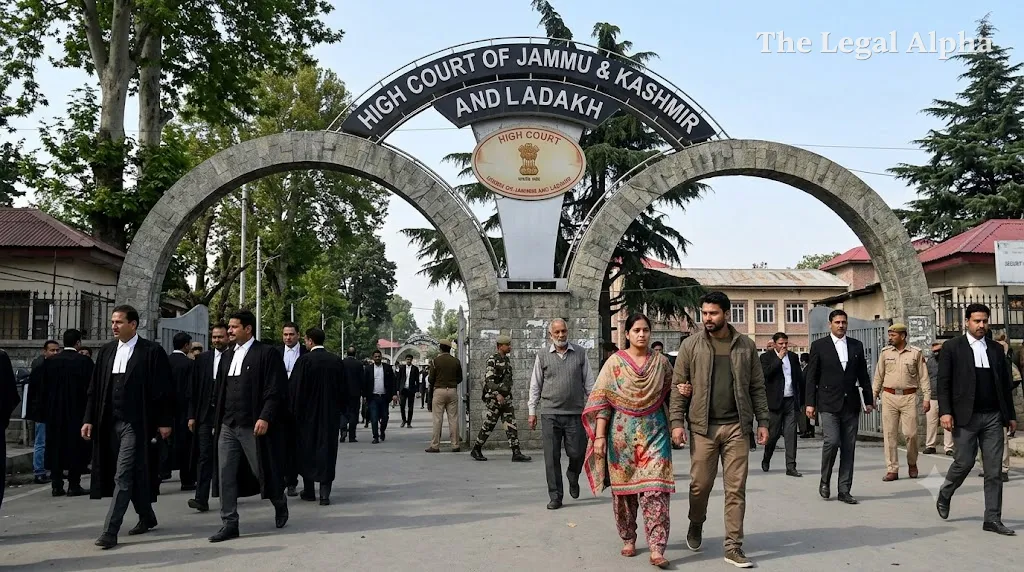
The High Court of Jammu & Kashmir and Ladakh rejected a father’s habeas corpus petition that sought to recover his adult daughter from her husband. The father had approached the court claiming his daughter had been unlawfully detained. However, upon examining the facts, the court found that the daughter is an adult who had voluntarily solemnised marriage with a partner of her own choosing. Because she explicitly stated her intention to reside with her spouse rather than return to her parental home, the court held that her custody could not be treated as illegal or wrongful restraint.
Legal Topic
Area of Law: Constitutional Law / Family Law
Sub-topic: Habeas Corpus / Personal Liberty and Right to Choose a Life Partner
Core Legal Issue
The primary question before the court was whether a writ of habeas corpus can be issued at the instance of parents to compel an adult individual to return home when that individual has exercised autonomy to marry and live with a partner of their own choice.
The court had to consider whether an adult daughter exercising her fundamental right to self-determination could be viewed as being under unlawful custody merely because her marriage took place against parental wishes.
What Did the Court / Authority Decide?
The High Court dismissed the father’s habeas corpus petition.
The court ruled that once an individual reaches the age of majority, they possess the full legal and constitutional right to choose their spouse and determine where and with whom they wish to live. Finding that the woman was neither under illegal detention nor restrained against her will, the court declined to issue any directive compelling her to return to her parental custody, confirming that parents cannot override an adult child's voluntary matrimonial choice through extraordinary constitutional remedies.
Key Legal Points
-
An adult individual has an absolute right to make personal decisions regarding marriage and cohabitation without parental coercion.
-
The extraordinary writ of habeas corpus is strictly maintainable to relieve a person from illegal confinement or unlawful custody, not to police personal relationships.
-
Parental disapproval of an inter-personal relationship or marriage does not render the daughter's voluntary residence with her spouse unlawful.
-
The autonomy of an adult woman to select her life partner is an integral dimension of personal liberty protected by the Constitution.
Relevant Law
-
Constitution of India: Article 21 (Protection of life and personal liberty) and Article 226 (Power of High Courts to issue certain writs, including habeas corpus).
-
Indian Majority Act, 1875: Age of majority and legal capacity to make self-governing choices.
-
Relevant Precedents: Shafin Jahan v. Asokan K.M. (affirming the right of an adult to choose a life partner as an essential facet of liberty and dignity).
Arguments of the Parties
Petitioner (Father)
The father argued that his daughter had been improperly taken or detained and sought her production and custody through a habeas corpus petition, submitting that she ought to be recovered and restored to her family.
Respondent / Daughter
It was maintained that the daughter is a major who exercised her own free will to enter into marriage. Having voluntarily left her parents' residence to live with her chosen spouse, she submitted that she was residing with her husband entirely by choice and was not subjected to any illegal confinement.
Why Does It Matter?
This ruling reinforces established constitutional safeguards against the misuse of habeas corpus petitions in domestic disputes. Across various jurisdictions, families frequently invoke writ jurisdictions or criminal processes when an adult child enters into an inter-caste, inter-faith, or self-arranged marriage contrary to family expectations. By reiterating that parental authority ceases to mandate personal decisions once an individual attains adulthood, the decision provides critical legal clarity for law enforcement authorities and lower courts to ensure they do not treat consensual adult unions as criminal abductions or wrongful detentions.
Legal Takeaway
A writ of habeas corpus lies only against unlawful confinement, not against an adult’s voluntary choice to marry and live independently. Parents cannot use constitutional courts to compel an adult daughter to return home against her wishes.
Sources
Primary Source:
Order / Judgment of the High Court of Jammu & Kashmir and Ladakh in the habeas corpus petition concerning the recovery and custody of an adult daughter.
Additional Sources:
High Court of Jammu & Kashmir and Ladakh Case Records and Public Repository; Supreme Court of India precedents on personal autonomy and habeas corpus jurisprudence (Shafin Jahan v. Asokan K.M.).