Delhi Police Summoned by Supreme Court Over Allegations of Assault on Women Journalists During Protest Coverage
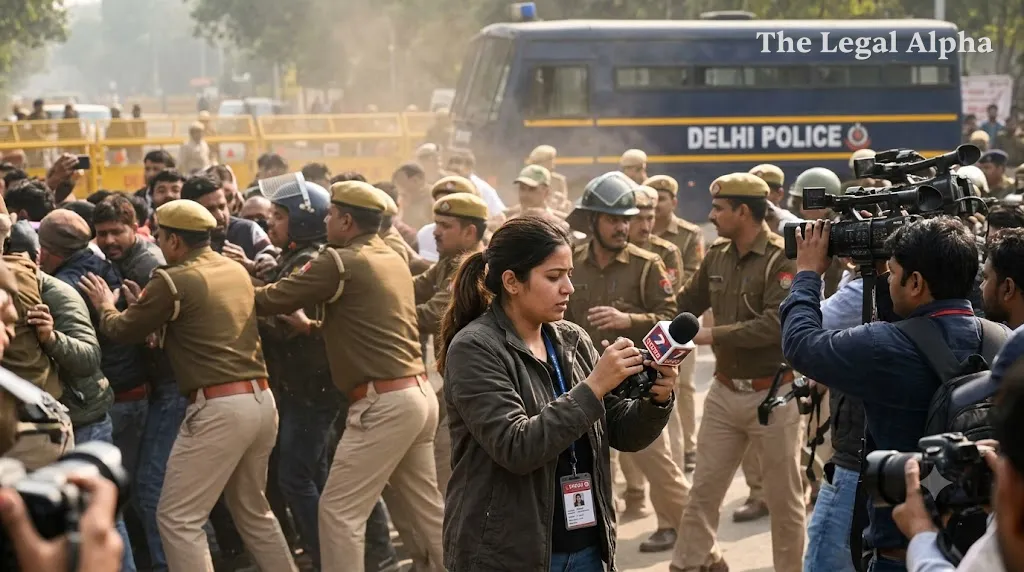
The Supreme Court of India has summoned a senior official of the Delhi Police to personally explain allegations regarding the physical assault and mistreatment of women journalists covering a public demonstration. The proceedings follow complaints that media personnel, particularly female reporters, were manhandled and obstructed by law enforcement personnel while reporting on the ground. Emphasizing the constitutional protection afforded to press freedom, the court directed the police administration to provide an immediate account of the incident and detail the steps taken to ensure the safety of working journalists.
Legal Topic
Area of Law: Constitutional Law / Criminal Procedure
Sub-topic: Freedom of the Press / Police Accountability and Conduct
Core Legal Issue
The primary legal issue before the bench concerns the extent to which the state and law enforcement agencies are constitutionally bound to protect working journalists from harassment and force during the execution of their professional duties. It examines whether excessive police action during crowd control violates the fundamental freedom of expression and the press guaranteed under the Constitution.
What Did the Court / Authority Decide?
The Supreme Court directed an officer of appropriate senior rank from the Delhi Police to appear and assist the bench with a factual explanation of the incident. Rather than issuing a conclusive finding on the merits at this preliminary stage, the court mandated that the agency clarify its standard operating procedures regarding media personnel during public demonstrations and state what accountability mechanisms or inquiries have been initiated against the personnel involved.
Key Legal Points
-
Constitutional Protection for Field Reporting: The bench underscored that reporters covering public events and protests exercise their fundamental right to free expression, which law enforcement must respect rather than hinder.
-
Accountability for Police Excess: Directing the personal presence of a senior supervisory official highlights judicial scrutiny over lower-level police conduct and institutional discipline.
-
Proportionality in Crowd Control: Law enforcement agencies are required to draw clear distinctions between violent protestors and accredited media personnel documenting public events.
-
State Duty of Care: The state bears an affirmative responsibility to guarantee safe operating environments for journalists, with heightened vigilance required regarding the security and dignity of women reporters.
Relevant Law
-
Article 19(1)(a) of the Constitution of India: Guarantees freedom of speech and expression, which encompasses the freedom of the press.
-
Article 21 of the Constitution of India: Protects the right to life, personal liberty, and human dignity against arbitrary state action.
-
Code of Criminal Procedure, 1973 / Bharatiya Nagarik Suraksha Sanhita, 2023: Statutory provisions governing regulatory police powers, lawful dispersal of assemblies, and acceptable limits of force.
Arguments of the Parties
Petitioner / Aggrieved Journalists
The petitioners submitted that women journalists were deliberately targeted, physically assaulted, and unlawfully obstructed by police personnel while visibly carrying out legitimate reporting duties. They contended that such state conduct intimidates field reporters and directly undermines journalistic freedom.
Respondent / Delhi Police / State
The state administration indicated that police personnel were managing a volatile law-and-order situation involving crowd control and dispersal. It was submitted that there was no institutional intent to target media personnel and that any procedural lapses or individual excesses would be examined in accordance with service rules.
Why Does It Matter?
This intervention reinforces the judiciary's supervisory role over police conduct during public protests, setting a strict standard for transparency when journalists report on civil demonstrations. For media organizations and field reporters, the order affirms that law enforcement cannot treat the press as hostile entities during unrest. Furthermore, it signals to police departments nationwide that crowd-management protocols must include clear, enforceable guidelines to protect working journalists from unlawful force and intimidation.
Legal Takeaway
Law enforcement agencies cannot bypass constitutional safeguards or use unjustified force against media personnel under the guise of crowd control. The Supreme Court's direct summons establishes that institutional leadership will be held accountable for ensuring that field reporters can work freely and safely.
Sources
Primary Source:
Supreme Court of India Proceedings / Order in the matter concerning alleged assault of women journalists during protest coverage.
Additional Sources:
LiveLaw News Report (October 2026); Records of Supreme Court oral observations on police accountability and press freedom.