Appeals Court Upholds Jury Verdict Backing State Farm in Tornado Damage Dispute
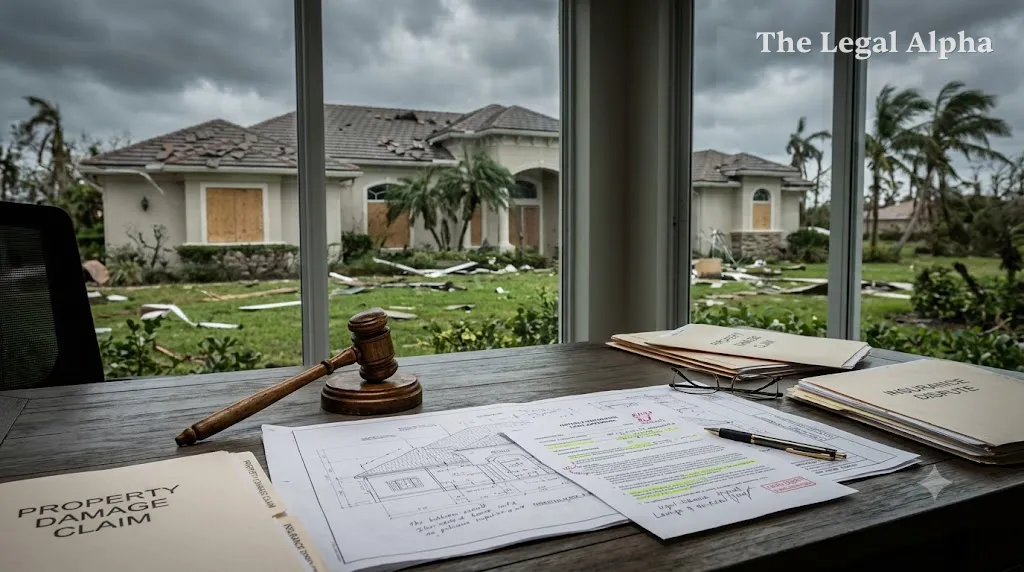
In 2019, a severe tornado tore through the Texas home of a couple, the Smiths, causing substantial structural and property damage. The property insurer, State Farm, paid out roughly $293,000 to cover the documented losses. Disputing the sufficiency of the settlement, the homeowners filed a lawsuit alleging bad faith claim handling and seeking staggering financial and punitive damages ranging from $25 million to $250 million during closing arguments.
Following a five-day trial featuring testimony from eight witnesses and hundreds of evidentiary exhibits, the jury ruled entirely in favor of State Farm, dismissing the policyholders' claims. The homeowners appealed the verdict, citing an evidentiary procedural error involving late expert photo disclosures by the insurer. The appellate court recently affirmed the trial jury's decision, keeping the defense verdict intact.
Legal Topic
Area of Law: Insurance Law
Sub-topic: Bad Faith Claims & Property Casualty Dispute Litigation
Core Legal Issue
The fundamental legal question centered on whether an insurer can be held liable for bad faith when it has already disbursed substantial claim settlements, and whether a procedural delay in disclosing expert technical exhibits warrants setting aside a jury verdict.
The court examined whether sufficient evidence proved the insurer denied or delayed policy benefits without a reasonable legal basis, and whether the eleventh-hour disclosure of inspection photographs prejudiced the trial sufficiently to justify vacating the judgment.
What Did the Court Decide?
The Court of Appeals affirmed the jury verdict in its entirety, rejecting the homeowners' appeal.
The court determined that:
-
The bad faith claim lacked evidentiary merit, given that State Farm had affirmatively settled the primary covered damages with payouts totaling around $293,000.
-
The procedural disclosure issue—namely, the production of 993 engineer photos on the eve of trial—did not cause incurable prejudice or compromise the trial's core fairness enough to warrant a reversal or new trial.
-
The trial court and jury reached an informed, lawful determination grounded in comprehensive examination of live testimony and physical evidence.
Key Legal Points
-
Evidentiary Threshold for Bad Faith: Paying substantial policy compensation severely undermines bad-faith claims, requiring policyholders to affirmatively prove that the insurer had no reasonable basis for its adjustment positions.
-
Deference to Jury Findings: Appellate courts afford significant deference to jury verdicts reached after direct evaluation of witness credibility and competing factual proof.
-
Procedural Violations vs. Harm Standards: Technical breaches of pretrial scheduling orders do not trigger automatic reversals unless the complaining party demonstrates clear, material harm that affected the trial's outcome.
Relevant Law
-
Texas Insurance Code: Statutes governing statutory bad faith and unfair claim settlement practices.
-
Texas Rules of Civil Procedure (TRCP): Rules directing pretrial discovery obligations and timely disclosure of expert materials.
-
Common Law Precedents on Extra-Contractual Liability: Established standards evaluating insurer reasonableness and bad faith in severe weather adjustments.
Arguments of the Parties
Appellants (The Smiths)
-
The homeowners argued that the insurer's damage evaluations substantially understated the true cost of rebuilding the tornado-damaged property.
-
They contended that the insurer engaged in bad faith and delay tactics, justifying severe punitive and statutory damages.
-
The appeal asserted that the insurer prejudiced their trial strategy by withholding 993 technical inspection photos until the eve of the proceedings, creating an unfair trial dynamic.
Appellee (State Farm)
-
The insurer maintained that it fully satisfied its contractual obligations by issuing approximately $293,000 in covered repairs.
-
It refuted bad faith allegations, pointing out that its claim handling relied on reasonable, certified engineering and damage appraisals.
-
The company established that the late transmission of supplementary photographs did not alter the core issues presented to the jury or compromise substantive justice.
Why Does It Matter?
This ruling reinforces the high legal threshold required to sustain bad faith and punitive claims against property insurers. Where an insurer demonstrates timely investigation and pays out primary coverage, policyholders face an uphill battle trying to turn valuation disagreements into multi-million-dollar bad faith windfalls.
The judgment also signals to trial litigators that late-stage procedural discovery disputes cannot easily overturn a jury verdict on appeal without proof of direct, outcome-determinative prejudice.
Legal Takeaway
Disagreement over the final scope of property repairs does not equate to bad faith when an insurer investigates and tenders substantial policy proceeds. Furthermore, appellate courts will safeguard trial jury verdicts against procedural technicalities unless severe, incurable harm is demonstrated.
Sources
-
Primary Source: Appellate Judgment & Jury Verdict, Texas Appellate Court (Insurance Litigation / Bad Faith Review).
-
Additional Sources: Legal reporting and coverage via Times of India / MSN Legal News.