Federal Court Pressured to Unseal Ilhan Omar Raid Records as Justice Department Claims Warrant Remains Active
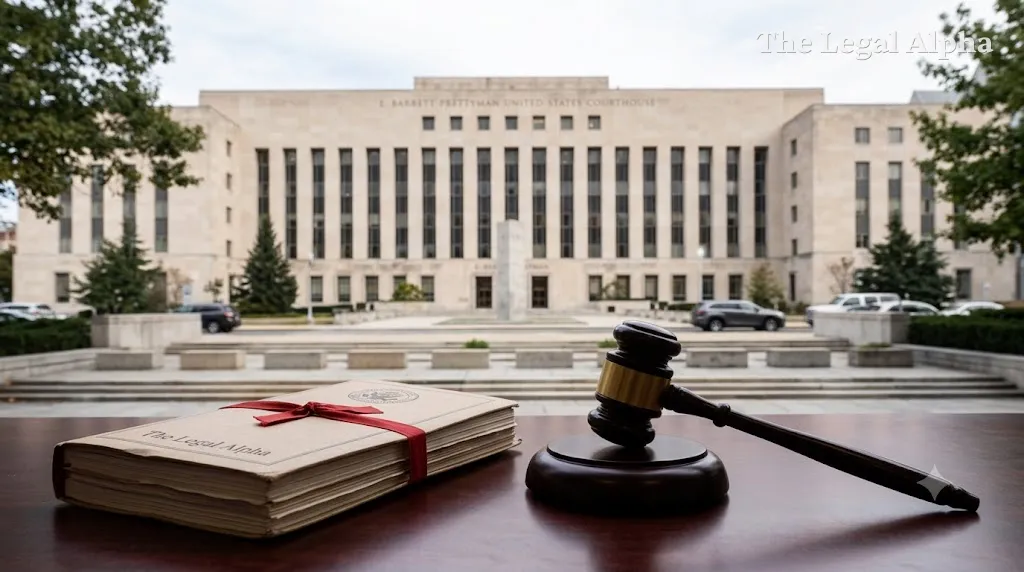
The United States Department of Justice has asked a federal court in Washington, D.C., to delay resolving public requests to unseal search warrant materials tied to a recent law enforcement search of Representative Ilhan Omar’s residence. In formal proceedings before Chief Judge James E. Boasberg of the U.S. District Court for the District of Columbia, federal prosecutors stated that the search warrant has not yet been "fully executed," urging the bench to defer public disclosure.
The move follows separate legal motions brought by a coalition of major media organizations, The New York Times, and public interest groups seeking the immediate unsealing of the search warrant, supporting affidavits, and property returns. Law enforcement searched the Minnesota lawmaker’s Capitol Hill home on October 12, taking documents and digital electronic devices. Omar has demanded the prompt return of seized personal property and condemned the investigation as a politically motivated inquiry.
Legal Topic
Area of Law: Criminal Procedure / Constitutional Law
Sub-topic: Fourth Amendment Search Warrants / Public Right of Access to Judicial Records / Speech or Debate Clause Protections
Core Legal Issue
The primary issue is whether the public and press have a common law and First Amendment right of access to search warrant affidavits and returns before government investigators finish executing the warrant process, particularly when the target is an active member of Congress and materials may be subject to legislative privilege.
A related legal problem concerns the limits of the government’s operational discretion: can prosecutors keep investigative materials sealed indefinitely by stating that a warrant execution is technically incomplete—such as during pending electronic device examinations or privilege filter reviews—or does the execution of the physical search require an accounting to the court and the public?
What Did the Court / Authority Decide?
Chief Judge James E. Boasberg previously set an order requiring the government to formalize its position regarding the media motions to unseal. In response, prosecutors from the U.S. Attorney’s Office for the District of Columbia moved for an extension of all unsealing deadlines.
The government specifically requested:
-
That consideration of public disclosure be postponed until the warrant has been fully executed.
-
A 30-day window following the conclusion of warrant execution before beginning formal conferrals or briefing on potential redactions.
-
Permission to submit a sealed, ex parte memorandum to Chief Judge Boasberg detailing the sensitive investigative justifications behind their request without disclosing them to the news organizations or the public.
Chief Judge Boasberg has demanded clarity regarding the timeline and operational posture of the search. The court must now rule on whether to grant the government's delay, evaluate the government’s ex parte filing, or mandate the release of a redacted warrant package.
Key Legal Points
-
Common Law Presumption of Access: Federal courts recognize a qualified common law right for the public and press to inspect judicial records, a standard routinely applied to executed search warrants and inventories unless the government demonstrates a compelling interest in continued secrecy.
-
The "Fully Executed" Standard in Digital Evidence: While physical premises searches conclude in hours or days, federal search warrants involving encrypted phones, computers, and digital media often bifurcate the on-site seizure from subsequent data forensic extraction, creating legal ambiguity over when an execution is formally complete under Federal Rule of Criminal Procedure 41.
-
Separation of Powers and Lawmaker Devices: Under the U.S. Constitution's Speech or Debate Clause and binding D.C. Circuit precedent, electronic devices belonging to federal legislators cannot be casually perused by executive branch agents without specialized filter protocols or secondary judicial authorizations to protect legislative speech and correspondence.
-
Use of Sealed, Ex Parte Submissions: When justifying ongoing secrecy in high-profile criminal inquiries, the government frequently relies on ex parte filings to prevent compromising active witness tracks, grand jury secrecy under Rule 6(e), or sensitive investigative methods.
Relevant Law
-
Rule 41 of the Federal Rules of Criminal Procedure: Governs the issuance, execution, and return of federal search and seizure warrants, including provisions regarding tracking devices and data storage media.
-
First Amendment to the United States Constitution: Protects the freedom of the press and underpins constitutional arguments favoring access to court proceedings and records of significant public concern.
-
Speech or Debate Clause (Article I, Section 6, Clause 1 of the U.S. Constitution): Shields members of Congress from executive branch interference and inquiry regarding legislative acts, extending protections against search warrants aimed at official communications.
-
In re Search Warrant For Secretarial Area Outside Office of Gunn, 855 F.2d 569 (8th Cir. 1988): Influential precedent balancing the qualified common law right of public access to search warrant materials against legitimate law enforcement needs in sealed ongoing inquiries.
Arguments of the Parties
Media Coalitions and Public Interest Intervenors
The press organizations argued that the execution of a federal search warrant on the private residence of an elected, sitting member of Congress is an extraordinary law enforcement act that commands an immediate public accounting. Citing established district precedent, the media coalitions submitted that once a search has occurred on the ground, the routine practice of the federal judiciary is to unseal the warrant and inventory return. They argued that continued complete sealing undermines judicial transparency and fuels public distrust.
Department of Justice
The government contended that good cause exists to maintain the seal and postpone any public unsealing process. Prosecutors argued that the warrant remains active and has not been "fully executed," meaning prematurely unsealing affidavits or itemized records could compromise an active criminal inquiry. The Department asked to submit its underlying reasons in a sealed, ex parte brief exclusively for the judge’s review, maintaining that any public discussion of redactions should wait until 30 days after investigative steps are concluded.
Why Does It Matter?
This procedural clash touches on the intersection of media transparency, executive investigative reach, and constitutional protections for elected lawmakers.
When federal law enforcement enters the home of an active member of Congress weeks before national elections, public interest in the underlying probable-cause basis reaches its highest peak. If the Justice Department can successfully freeze unsealing motions by asserting that an executed warrant remains ongoing—often on the grounds that forensic phone extractions or privilege sifting protocols remain unfinished—it establishes a potent mechanism for the executive branch to withhold search justifications from public scrutiny indefinitely.
Furthermore, because electronic devices belonging to federal lawmakers routinely contain constitutionally protected legislative exchanges, this case underscores the tension between criminal law enforcement authority and legislative branch autonomy under the Speech or Debate Clause.
Legal Takeaway
A physical search on the ground does not automatically trigger the immediate release of warrant documents if prosecutors assert that digital forensics, privilege filter reviews, or investigative stages remain unfinished. Until Chief Judge Boasberg decides whether the government's secret justifications outweigh the public's presumptive right of access, the core affidavits that authorized the search of Representative Omar's home will remain under court seal.
Sources
Primary Source:
-
In re Search of Rep. Ilhan Omar’s D.C. Residence / Media Applications to Unseal Search Warrant Materials, Case No. 1:26-mc-00123 / D.C. District Court Docket No. 24-mc-00297666, U.S. District Court for the District of Columbia (Chief Judge James E. Boasberg presiding).
Additional Sources:
-
Filings and Memoranda in Support of Applications to Unseal Warrant Records by Press Coalition and The New York Times Company (Oct. 15, 2026).
-
Department of Justice Motion for Extension of Time and Leave to File Ex Parte Memorandum (U.S. Attorney’s Office for the District of Columbia, filed Oct. 22, 2026).
-
Federal Rules of Criminal Procedure, Rule 41 (Search and Seizure).