Plea Before Supreme Court Urges Independent Judicial Committee to Review Election Commission’s Internal Functioning and Electoral Roll Management
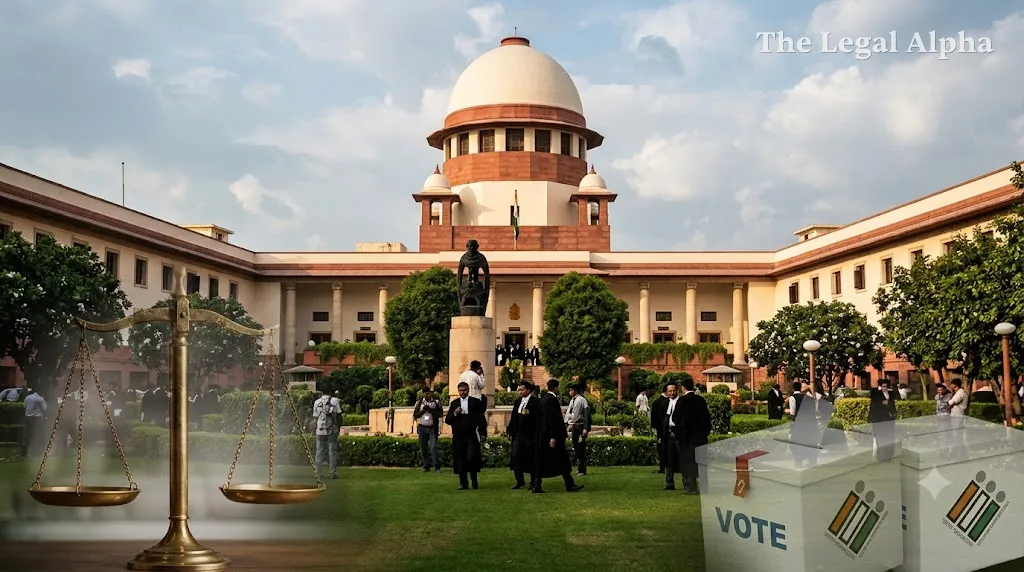
Advocate Vishal Tiwari has approached the Supreme Court of India through a Public Interest Litigation seeking comprehensive structural oversight of the Election Commission of India. The petition urges the apex court to establish an independent expert committee, headed by a former Chief Justice of India or a retired Supreme Court judge, to investigate alleged administrative irregularities, technological defects, and procedural governance failures within the poll body.
The plea specifically draws attention to reported internal dissents among Election Commissioners over unilateral decision-making, wide-scale anomalies in draft voter rolls across states, and massive backlogs in electoral revision appeals. Additionally, the petition seeks strict enforcement of a complete bar on communal appeals and hate speech during electoral campaigns.
Legal Topic
Area of Law: Constitutional & Election Law
Sub-topic: Institutional Autonomy, Electoral Roll Integrity, and Administrative Governance
Core Legal Issue
The petition raises fundamental questions regarding intra-institutional accountability under Article 324 of the Constitution of India. Specifically, it questions whether the Chief Election Commissioner can take unilateral executive and procedural decisions without institutional consensus, and whether persistent technological glitches and procedural logjams in voter revision violate the constitutional mandate to maintain accurate electoral rolls and safeguard adult suffrage.
What Did the Court / Authority Decide?
The matter has been freshly instituted before the Supreme Court and is pending formal listing and preliminary hearing. The court has not yet issued notice, passed interim directions, or delivered an order on the admissibility of the plea.
Key Legal Points
-
Constitutional Collegiality vs. Unilateral Authority: The petition questions the multi-member Commission's consultative process, arguing that statutory and procedural amendments require collective deliberation rather than unilateral administrative action.
-
Integrity of the Electoral Database: The plea contends that systemic software defaults—such as erroneous age entries—and unexplained revisions to statutory voter registration forms jeopardize the accuracy of electoral rolls under the Representation of the People Act, 1950.
-
Effective Remedy for Disenfranchised Voters: Citing vast pendencies in disposal of voter deletion appeals, the plea flags the risk of de facto disenfranchisement without prompt appellate redressal.
-
Enforcement of Campaign Conduct: The petition seeks judicial intervention to hold the Commission accountable for strictly curbing religious, communal, and sectarian rhetoric during election campaigns under statutory and constitutional standards.
Relevant Law
-
Constitution of India:
-
Article 32 (Remedies for enforcement of fundamental rights)
-
Article 324 (Superintendence, direction, and control of elections vested in an Election Commission)
-
Article 326 (Elections to the House of the People and to the Legislative Assemblies of States to be on the basis of adult suffrage)
-
-
Statutory Framework:
-
Representation of the People Act, 1950 (Statutory guidelines for voter registration and preparation of electoral rolls, including Form 6)
-
Representation of the People Act, 1951 (Section 123 relating to corrupt electoral practices, including appeals on grounds of religion or caste)
-
Chief Election Commissioner and other Election Commissioners (Conditions of Service) Act, 2023
-
Arguments of the Parties
Petitioner
The petitioner submitted that the PIL is prospective and non-partisan, aimed solely at preserving institutional integrity rather than challenging any specific past election outcome. Citing internal records, the plea argued that Election Commissioners had