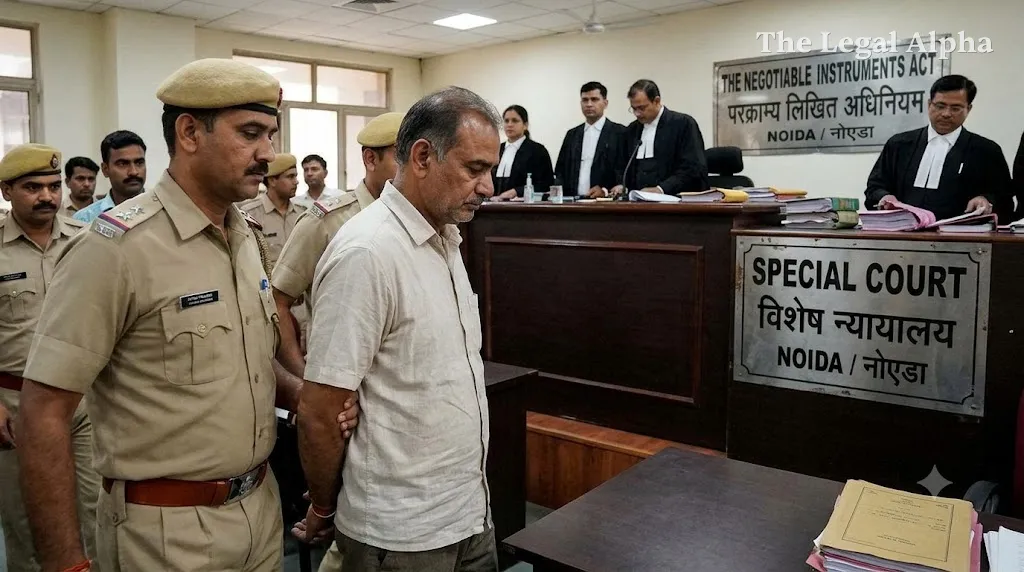
Practising Law Without Clearing AIBE Is an Offence Against Society: Karnataka High Court Declines to Quash Criminal Case Against Advocate

The Karnataka High Court has refused to quash criminal proceedings against a legal practitioner who allegedly continued representing clients and appearing before courts for over a decade without passing the All India Bar Examination (AIBE).
Sitting as a single judge, Justice H.P. Sandesh declined to exercise inherent powers under Section 482 of the Code of Criminal Procedure to halt the trial. The court made strong observations regarding unauthorized legal practice, describing the act of appearing in courts without the requisite statutory qualifications as an offence against society at large. In addition to allowing the criminal trial against the individual to proceed, the court mandated sweeping regulatory oversight, directing the Karnataka State Bar Council (KSBC) to build a robust digital monitoring architecture to detect and debar lawyers who continue practising after their provisional licences lapse.
Legal Topic
-
Area of Law: Legal Profession & Criminal Law
-
Sub-topic: Professional Qualification / Unauthorized Practice / Inherent Powers of High Court
Core Legal Issue
The controversy centres on whether an enrolled law graduate whose provisional licence has lapsed due to failure to clear the All India Bar Examination within the statutory two-year period can be subjected to criminal trial for impersonation, cheating, and illegal practice, or whether such lapses are purely a disciplinary concern under Bar Council domestic rules.
The High Court was tasked with deciding whether continuing to appear before courts and represent litigants after the lapse of a provisional enrolment constitutes penal offences under the Indian Penal Code and Section 45 of the Advocates Act, 1961, thereby precluding judicial intervention at the pre-trial stage.
What Did the Court Decide?
Justice H.P. Sandesh dismissed the practitioner's plea under Section 482 of the CrPC, holding that the allegations disclosed a prima facie case that required a full-fledged trial. The court ruled that when an individual fails to clear the mandatory qualifying examination, their right to audience and practice automatically ceases upon the expiry of the provisional period.
Beyond the individual criminal prosecution, the court issued mandatory administrative directions to the Karnataka State Bar Council:
-
Create and maintain an exhaustive digital tracking system recording the provisional enrolment date and the exact expiry of the two-year qualification period for every enrollee.
-
Implement an automated alert system to flag enrolments reaching their statutory expiration.
-
Coordinate directly with the Bar Council of India to reconcile and cross-verify examination pass records.
-
Formulate an official register of suspended or unqualified practitioners, with built-in procedural safeguards permitting lawyers a hearing to clarify clerical discrepancies before action is enforced.
The Bar Council has been granted 45 days to file a formal compliance report detailing this implementation.
Key Legal Points
-
Public Harm: Unqualified or unlicensed practice strikes at the administration of justice and constitutes a public offence against society, rather than a mere procedural irregularity.
-
Automatic Cessation of Licence: Provisional enrolment under Bar Council regulations confers only a conditional, time-bound permission to practice that automatically terminates if the AIBE is not cleared within two years.
-
Criminal Liability for Illegal Practice: Advocates practising past the validity of their provisional licence face prosecution under Section 45 of the Advocates Act as well as relevant provisions of the Indian Penal Code governing cheating and misrepresentation.
-
Strict Digital Scrutiny: State Bar Councils are legally obligated to maintain proactive institutional mechanisms to monitor and purge unqualified practitioners rather than relying solely on post-facto complaints.
Relevant Law
-
Section 482 of the Code of Criminal Procedure, 1973: Inherent powers of the High Court to prevent abuse of the judicial process or secure the ends of justice.
-
Section 45 of the Advocates Act, 1961: Penalty for unauthorized practice, prescribing up to six months of imprisonment for anyone practising before courts or tribunals without statutory entitlement.
-
Sections 419 and 420 of the Indian Penal Code, 1860: Cheating by personation and dishonestly inducing delivery of property/services.
-
All India Bar Examination Rules: Mandatory clearing of the qualifying exam within two years of state enrolment to convert provisional status into a regular licence.
Arguments of the Parties
Petitioner
The petitioner argued that criminal proceedings were unwarranted and constituted an abuse of judicial process. It was contended that enrolment had originally been secured in accordance with law and that questions surrounding continuing qualification and examination clearance fell under the domestic disciplinary domain of the State Bar Council rather than the criminal courts.
Respondent and State
The State and the complainant submitted that the petitioner had engaged in prolonged deception by holding himself out as a qualified advocate entitled to practice before judicial forums. Counsel argued that representing unsuspecting litigants for over a decade without having passed the mandatory qualifying exam satisfied the ingredients of fraud, misrepresentation, and unauthorized practice under the Advocates Act, making a criminal trial necessary.
Why Does It Matter?
This ruling sharpens the consequences for non-compliance with Bar Council qualifying norms across India. While the Bar Council of India has enforced the AIBE requirement for years, regulatory oversight has often suffered from enforcement gaps, allowing individuals with lapsed provisional enrolments to blend into trial court registries unnoticed.
By treating unlicensed advocacy not merely as an internal bar disciplinary matter but as an actionable criminal offence, the decision establishes substantial exposure to trial and incarceration for delinquent practitioners. It also protects clients, ensuring that citizens entrusting their liberty and property to legal counsel receive representation from verified, duly credentialed officers of the court. The mandate for automated digital tracking marks a structural step toward ending informal, unverified courtroom practice.
Legal Takeaway
Provisional bar enrolment is a conditional license that automatically expires if the All India Bar Examination is not passed within two years. Continuing to appear before courts or charge legal fees after that window closes amounts to unauthorized practice under Section 45 of the Advocates Act and exposes the practitioner to criminal prosecution for fraud and cheating.
Sources
Primary Source:
-
M. Prasanna Kumar v. State of Karnataka and Others [Criminal Petition No. 633 of 2020], Karnataka High Court (Single Bench of Justice H.P. Sandesh, Order dated October 17, 2026).
Additional Sources:
-
High Court of Karnataka Official Case Disposition Reports.
-
The Advocates Act, 1961 (Act No. 25 of 1961), Section 45.
-
Bar Council of India Training and Examination Regulations.