Noida Special Court Jails Borrower for Two Years Over Dishonoured Cheques, Rejects Plea on Demonetised Currency
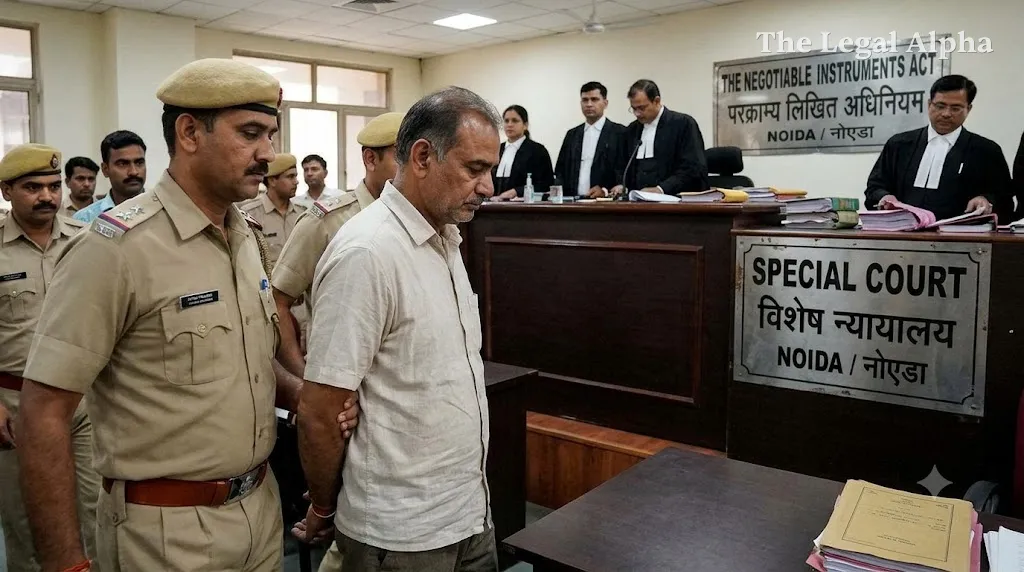
A special court in Noida adjudicated a dispute over an unpaid financial debt by convicting a borrower from Hapur in a cheque bounce matter. Manoj Kumar Kashyap had secured a cash loan of ₹9.2 lakh from a local tailor, Rajpal, in November 2016 and issued five cheques against the liability.
When the complainant presented the instruments after the agreed repayment timeline, the bank returned them unpaid because the drawer had instructed a payment stop. Kashyap avoided repayment despite statutory legal notices and attempted to evade liability during trial by contending that the loan was purportedly advanced in cash immediately following the 2016 currency demonetisation announcement. Special Judge Suresh Chandra rejected the defence as unsubstantiated, handing down a two-year prison sentence alongside heavy financial penalties.
Legal Topic
-
Area of Law: Banking and Negotiable Instruments Law
-
Sub-topic: Cheque Dishonour / Statutory Presumption under Section 138 NI Act
Core Legal Issue
The principal question before the court was whether an accused can rebut the statutory presumption of an enforceable debt under the Negotiable Instruments Act merely by raising oral allegations—such as asserting that the underlying transaction occurred in demonetised bank notes or that the cheques were stolen—without adducing cogent documentary or contemporaneous evidence.
The court had to examine whether bare assertions without a police report, bank correspondence, or contradictory evidence can displace the legal burden placed on the drawer once the execution and issuance of negotiable instruments are established on record.
What Did the Court Decide?
Special Judge Suresh Chandra held the accused guilty under Section 138 of the Negotiable Instruments Act, 1881.
The court imposed the following terms:
-
A sentence of two years of imprisonment.
-
A total monetary penalty of ₹15 lakh, directing that ₹14.75 lakh be disbursed directly to the complainant as compensation to cover the debt and associated litigation delay, with the remaining ₹25,000 to be deposited into the state treasury.
-
Outright rejection of the accused's theft plea, citing an absolute absence of proof showing any timely complaint or official notice to the bank regarding stolen cheque leaves.
Key Legal Points
-
Presumption of Enforceable Debt: Once the complainant presents the dishonoured instrument, return memos, and proof of statutory notice, the burden firmly shifts to the drawer to establish a probable defence.
-
Evidentiary Threshold for Stolen Cheques: A bald claim that signed cheques were stolen requires corroborating contemporaneous action, such as an immediate formal police complaint or written stop-payment instructions clearly alleging theft to the branch manager.
-
Failed Equitable Defences: Attempting to invalidate a documented cash loan by referencing macroeconomic events (such as currency demonetisation) cannot stand in place of concrete evidence when written loan agreements and executed instruments exist.
-
Compensatory Sentencing: Courts under the NI Act routinely utilise powers to impose fines up to double the cheque amount to adequately make whole the payee who suffered financial loss over multiple years of litigation.
Relevant Law
-
Section 138, Negotiable Instruments Act, 1881: Dishonour of cheque for insufficiency of funds or where the amount exceeds arrangement/payment stopped.
-
Section 139, Negotiable Instruments Act, 1881: Statutory presumption in favour of the holder that the cheque was issued for the discharge of a whole or partial debt or liability.
-
Section 357(3), Code of Criminal Procedure, 1973 (now under BNSS): Power of the court to award compensation to the victim out of the fine imposed.
Arguments of the Parties
Complainant
The complainant submitted that he advanced ₹9.2 lakh in cash to the accused on November 9, 2016, supported by an agreement specifying a return date. As collateral and repayment assurance, five cheques were handed over. When deposited upon request in May 2017, the instruments bounced with the endorsement "payment stopped by drawer". He established that the accused refused settlement even after receiving formal statutory demand notices, substantiating the claim with the loan agreement, return memos, bank records, and postal receipts.
Accused
The accused argued that he had neither borrowed the funds nor deliberately issued cheques towards any liability. He claimed that several cheque leaves had been stolen from his business premises and that he would have had no reason to accept demonetised high-denomination currency immediately following the government's demonetisation declaration.
Why Does It Matter?
This ruling reinforces the commercial integrity of negotiable instruments in day-to-day transactions. It underscores that trial courts under the NI Act will not entertain afterthought defences or claims of stolen instruments unless supported by immediate, verifiable action.
For individual lenders and small business owners, the verdict demonstrates that combining a written agreement with cheques provides solid evidential footing to withstand common evasion tactics, ensuring penal accountability alongside monetary recovery.
Legal Takeaway
Unsubstantiated defences and bare assertions cannot dismantle the statutory presumption that a dishonoured cheque was issued against a legally enforceable liability. Drawers who stop payment without immediate, documented proof of fraud or theft face both full monetary restitution and maximum custodial sentences.
Sources
Primary Source
-
Rajpal v. Manoj Kumar Kashyap, Complaint Case under Section 138 Negotiable Instruments Act, Court of Special Judge Suresh Chandra, Gautam Buddha Nagar / Noida (Order dated October 2026).
Additional Sources
-
Direct reportage and courtroom proceedings documented by The Times of India, October 23, 2026.