U.S. Supreme Court Disbars Conservative Litigator Larry Klayman from Practice
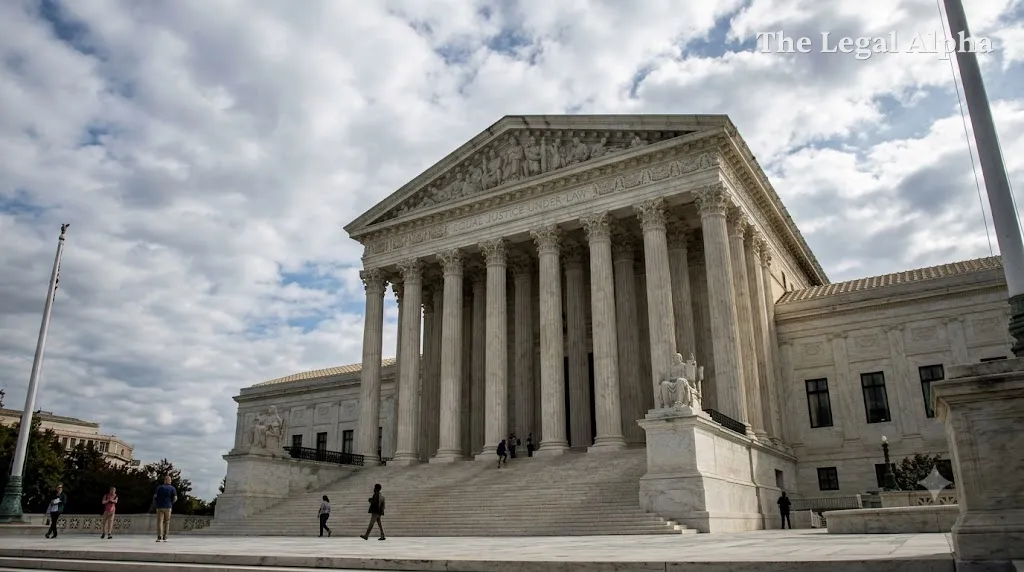
The Supreme Court of the United States formally disbarred conservative litigator and Judicial Watch founder Larry Klayman from practicing law before the nation's highest bench.
The decision follows an interim suspension issued by the Court earlier this year. In June, the justices suspended Klayman and ordered him to show cause why he should not be permanently disbarred, an administrative and disciplinary process triggered after state and local bar authorities—most notably in Washington, D.C., and Florida—sanctioned and suspended him for ethics violations. After reviewing his response to the show-cause directive, the Court entered an order terminating his bar membership.
Legal Topic
-
Area of Law: Legal Ethics & Professional Responsibility
-
Sub-topic: Attorney Disbarment / Reciprocal Discipline / Bar Admission Standards
Core Legal Issue
The legal question before the Supreme Court was whether an attorney who has faced disciplinary suspensions and adverse ethics findings in state and territorial jurisdictions should be subject to reciprocal disbarment under Supreme Court Rule 8.
At its foundation, the issue addresses the inherent authority of federal courts to police the integrity of their own bar, evaluating whether an attorney's repeated conduct and underlying state sanctions justify an order stripping them of the privilege to appear and advocate before the nation's highest tribunal.
What Did the Court Decide?
In an entry on its orders list (In the Matter of Disbarment of Larry Elliot Klayman, Docket No. D-3165), the Court finalized Klayman’s removal.
The justices discharged the order to show cause against Klayman, determined that his response failed to demonstrate why discipline should not be imposed, and ordered him disbarred from the practice of law before the Supreme Court bar. As is customary in standard attorney disciplinary proceedings on the Court's motion docket, the order did not include an extensive signed opinion.
Key Legal Points
-
Reciprocal Discipline Under Supreme Court Rules: When an attorney admitted to practice before the Supreme Court is suspended or disbarred by another court of record, Supreme Court Rule 8 authorizes the Court to suspend the attorney and issue an order to show cause why reciprocal discipline or disbarment should not follow.
-
High Burden on the Show-Cause Respondent: To avoid reciprocal disciplinary action, an attorney bears the burden of demonstrating that the underlying foreign proceedings lacked fundamental due process, suffered an infirmity of proof, or resulted in grave injustice.
-
Independent Bar Governance: While the Supreme Court often acts upon disciplinary orders forwarded from state licensing bodies, the high court maintains independent jurisdiction over its bar roster and applies disbarment where sustained ethics violations undermine professional fitness.
Relevant Law
-
Rules of the Supreme Court of the United States, Rule 8: Governs the admission, disbarment, suspension, and disciplinary procedures for attorneys practicing before the Supreme Court.
-
District of Columbia Rules of Professional Conduct (notably Rule 1.9 & Rule 8.4): Provisions addressing successive conflicts of interest and conduct prejudicial to the administration of justice, which formed the basis of earlier state-level suspensions against Klayman.
-
Rules Regulating The Florida Bar, Rule 3-4.6: Provides for reciprocal discipline based upon findings of professional misconduct in another jurisdiction.
-
Selling v. Radford, 243 U.S. 46 (1917): Foundational precedent establishing that while state disbarment does not automatically disbar an attorney from the Supreme Court, it operates as severe and persuasive cause for removal unless the attorney shows procedural unfairness or lack of evidentiary proof.
Arguments of the Parties
-
The Bar / Disciplinary Record: Disciplinary findings in Washington, D.C., and Florida established a pattern of professional conduct violations. These included improper successive representation against former clients without consent, misleading statements, and failing to maintain professional boundaries required of officers of the court. These prior final rulings formed the conclusive factual baseline for the high court's order.
-
Larry Klayman: In his challenges to reciprocal proceedings across multiple courts, Klayman argued that his disciplinary cases were tainted by political retaliation and bias stemming from his advocacy, asserted that the underlying state proceedings violated his due process rights, and contended that reciprocal sanctions were unwarranted.
Why Does It Matter?
This action underscores that admission to practice before the Supreme Court is an elite privilege dependent on good standing and strict ethical conformity across lower jurisdictions.
High-profile litigators frequently engage in contentious public and political battles, but the Court's order illustrates that political standing provides no insulation against the procedural consequences of professional discipline. For legal practitioners, the ruling serves as a clear warning that unresolved ethics violations and suspensions at the state level can trigger a domino effect that culminates in the loss of federal appellate practice rights at the highest level.
Legal Takeaway
State-level suspensions create an evidentiary presumption of misconduct that can swiftly lead to reciprocal disbarment before federal appellate courts, including the U.S. Supreme Court. Lawyers cannot treat local bar disciplinary proceedings lightly, as failure to defend one's license locally can permanently revoke the privilege to practice nationwide.
Sources
-
Primary Source: Supreme Court of the United States, Order List (In the Matter of Disbarment of Larry Elliot Klayman, No. D-3165).
-
Additional Sources: Orders and records from the District of Columbia Court of Appeals, the Supreme Court of Florida (The Florida Bar v. Klayman), and the U.S. District Court for the Middle District of Florida (In re Larry Klayman).