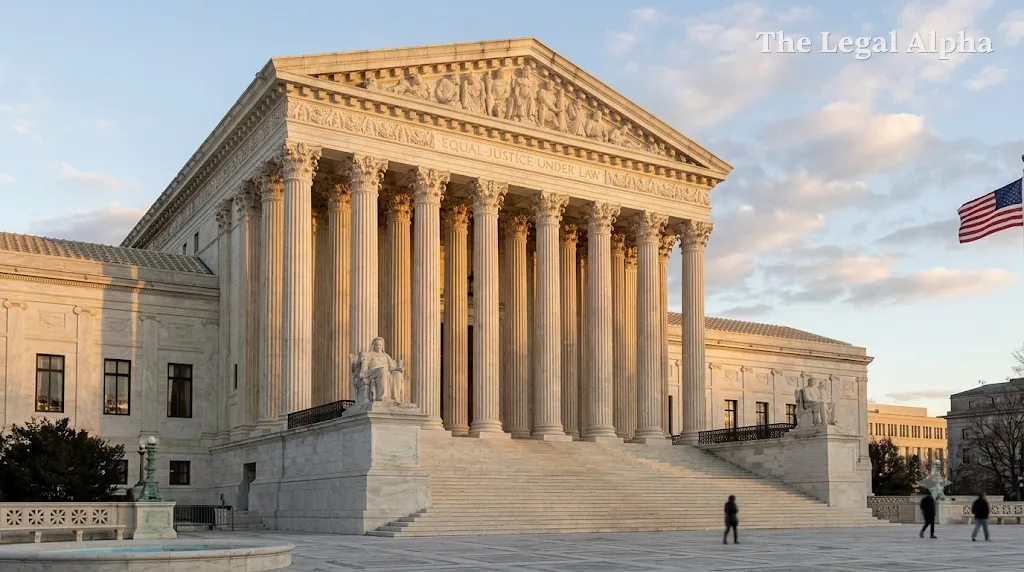
Federal Court Halts 15-Month Closure of Historic D.C. Public Park Ahead of Planned Golf Course Overhaul
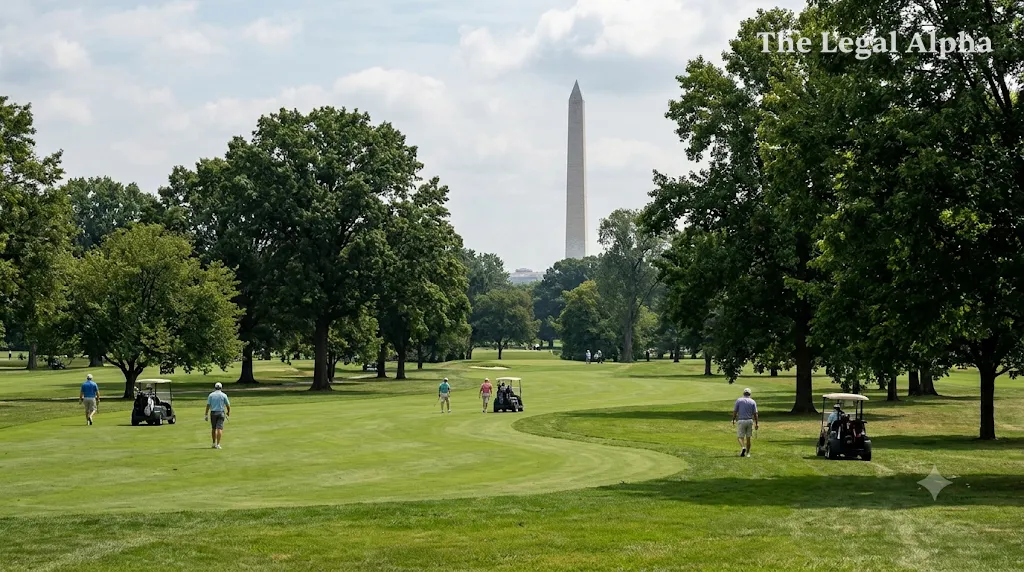
On Saturday, November 14, 2026, U.S. District Judge Ana C. Reyes issued a temporary restraining order blocking the federal government from shutting down East Potomac Park and the East Potomac Golf Links in Washington, D.C. The order came just hours before the National Park Service (NPS) and Department of the Interior were scheduled to close the site on November 15 for a planned 15-month redevelopment.
The dispute involves the D.C. Preservation League and two local golfers, Dave Roberts and Alex Dickson, who filed suit in February 2026 against the Department of the Interior, Secretary Doug Burgum, the National Park Service, and Acting NPS Director Jessica Bowron. The plaintiffs are challenging the administration's plan—referred to in court filings as the "Washington National Plan"—to replace the existing 36-hole municipal golf facilities with a single 18-hole championship course designed for major professional tournaments.
The ruling marks the latest flashpoint in a contentious litigation marked by earlier injunctions against tree removal and a separate judicial inquiry into whether government lawyers misled the court regarding the project's timeline.
Legal Topic
Area of Law: Administrative and Environmental Law Sub-topic: Agency Rulemaking, Public Lands Management, and Injunctive Relief
Core Legal Issue
The central legal question before the U.S. District Court for the District of Columbia was whether the Department of the Interior and the National Park Service could indefinitely close a congressionally designated public park to facilitate a major physical redevelopment without first completing mandatory environmental reviews, historic preservation consultations, and public notice-and-comment rulemaking.
Additionally, the court had to determine whether the executive branch's directive to close the park constituted a reviewable "final agency action" under the Administrative Procedure Act, particularly when statements from President Donald Trump indicated the project was finalized while Department of Justice attorneys maintained in court that plans were merely conceptual.
What Did the Court / Authority Decide?
In a 30-page ruling issued following a five-hour hearing on Friday, November 13, Judge Reyes granted the plaintiffs' request for a temporary restraining order, pausing the park closure and redevelopment work for two weeks.
-
Closure Blocked: The federal government is barred from closing East Potomac Park and its golf links as scheduled on November 15, keeping the park open to golfers, cyclists, and runners.
-
Judicial Findings on Finality: Judge Reyes rejected the government's claim that the project was still tentative, noting that official announcements and social media posts by the President demonstrated that the plan was final and that the park closure was directly intended to implement it.
-
Procedural Requirements: The court ruled that administrative convenience or a desire to meet an executive deadline does not exempt federal agencies from statutory notice-and-comment procedures.
-
Ongoing Proceedings: The temporary restraining order maintains the status quo while the court considers broader preliminary injunctive relief. Meanwhile, the National Capital Planning Commission (NCPC) is scheduled to review the course proposal on December 3, and a separate ethics investigation led by appointed Special Master Jessie K. Liu into potential government misrepresentations remains ongoing.
Key Legal Points
-
Irreparable Recreational Harm: Courts recognize that depriving the public of access to historic recreational land constitutes a concrete, irreparable injury sufficient to justify emergency injunctive relief.
-
Final Agency Action Under the APA: Public statements by the Chief Executive confirming an immediate project timeline can be used by a court as evidence that an agency decision is final and subject to judicial review, undermining agency claims that a proposal is merely preliminary.
-
Limits on Administrative Exceptions: An agency cannot bypass the Administrative Procedure Act's notice-and-comment requirements by invoking "good cause" or impracticability simply to meet a self-imposed political or executive deadline.
-
Statutory Environmental Prerequisites: Under federal environmental and preservation statutes, agencies must take a "hard look" at environmental impacts and consult preservation authorities before taking irreversible steps to alter historic public landscapes.
Relevant Law
-
Administrative Procedure Act (APA), 5 U.S.C. § 551 et seq.: Governs the process by which federal agencies develop and issue regulations, requiring notice-and-comment rulemaking and prohibiting arbitrary or capricious final agency actions.
-
National Environmental Policy Act (NEPA), 42 U.S.C. § 4321 et seq.: Requires federal agencies to assess the environmental effects of proposed major federal actions prior to making decisions.
-
National Historic Preservation Act (NHPA), Section 106, 54 U.S.C. § 306108: Mandates that federal agencies consider the effects of their undertakings on historic properties and afford advisory bodies a reasonable opportunity to comment.
-
Act of March 3, 1897 (East Potomac Park Enabling Act): Congressional legislation establishing Potomac Park to be "forever held and used as a park for the recreation and pleasure of the people."
Arguments of the Parties
Plaintiffs (D.C. Preservation League, Dave Roberts, and Alex Dickson) The plaintiffs argued that shutting down the park for 15 months would cause immediate and irreparable harm to residents who rely on the public greenspace and municipal golf courses. They contended that the administration was actively executing a finalized overhaul—evidenced by the prior removal of hundreds of trees and the termination of the longtime operator's lease—while unlawfully bypassing mandatory environmental assessments under NEPA, historic reviews under the NHPA, and public rulemaking procedures.
Defendants (Department of the Interior and National Park Service) The government submitted that the court lacked jurisdiction under the Administrative Procedure Act because no "final agency action" had occurred, asserting that the golf course redesign remained a conceptual proposal subject to ongoing environmental and planning reviews. Government counsel further contended that the National Park Service possesses broad statutory authority to close park facilities to address deteriorating infrastructure, seawall flooding, and public safety concerns, and maintained that planning processes should be allowed to continue unimpeded.
Why Does It Matter?
Beyond the fate of a historic Washington landmark, this litigation underscores the judiciary's role in enforcing procedural guardrails on executive branch infrastructure and land-use initiatives. Federal agencies frequently seek to accelerate high-priority projects by staging closures or preparatory site work—such as clearing trees or erecting fencing—before formal environmental and historic reviews conclude.
Judge Reyes's ruling signals that federal courts will look past formalistic agency disclaimers and examine the real-world effect of government actions, including public directives from the White House, when determining whether an agency has prematurely committed to a project. Furthermore, the parallel ethics probe into whether administration lawyers accurately represented project timelines to the court highlights the strict duty of candor government attorneys owe to the bench during fast-moving injunction proceedings.
Legal Takeaway
Federal agencies cannot sidestep statutory environmental reviews, historic preservation consultations, or public notice rules by framing a major redevelopment as routine maintenance or a temporary safety closure. When executive actions threaten irreversible changes to public lands, courts will intervene to preserve public access until the government proves it has followed every step required by law.
Sources
Primary Source:
-
D.C. Preservation League et al. v. Department of the Interior et al., Case No. 1:26-cv-00477-ACR (U.S. District Court for the District of Columbia), Temporary Restraining Order and Memorandum Opinion issued by Judge Ana C. Reyes (November 14, 2026).
Additional Sources:
-
Case Docket and Prior Preliminary Injunction Rulings in D.C. Preservation League v. Department of the Interior, No. 1:26-cv-00477 (D.D.C. Oct. 2026 – Nov. 2026).
-
Associated Press, Reuters, and CBS News court reporting on the November 13, 2026 evidentiary hearing and November 14, 2026 order.