U.S. Supreme Court Agrees to Hear Kentucky Church’s Zoning Clash Over Proposed Marian Shrine
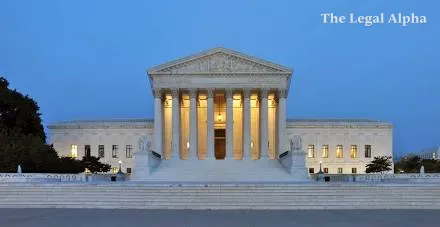
The Supreme Court of the United States has agreed to take up a land-use dispute between a Roman Catholic religious group and local residents in northern Kentucky. The controversy stems from a plan by the Missionaries of Saint John the Baptist, Inc., a nonprofit organization formed by Roman Catholic priests, to construct an outdoor grotto and shrine dedicated to the Virgin Mary.
The organization purchased a residential parcel adjacent to its existing church property in Park Hills, Kentucky, to carry out the project. While a local board initially granted zoning relief to allow the construction, neighboring homeowners successfully challenged that authorization in state court, raising neighborhood traffic concerns and arguing that the board lacked legal authority to issue the variance. After the Kentucky Supreme Court ruled against the religious group, the organization petitioned the U.S. Supreme Court, which granted certiorari on October 1, 2026.
Legal Topic
Area of Law: Constitutional Law / Religious Freedom
Sub-topic: Land Use Regulation / RLUIPA
Core Legal Issue
The fundamental legal question before the Court centers on the interpretation of the federal Religious Land Use and Institutionalized Persons Act (RLUIPA).
Specifically, the Court must determine whether a local municipal land-use regulation prohibiting a religious institution from constructing a religious structure on residential land it owns constitutes a "substantial burden" on religious exercise under 42 U.S.C. § 2000cc(a).
What Did the Court / Authority Decide?
The U.S. Supreme Court has agreed to hear the appeal by granting a writ of certiorari in Missionaries of Saint John the Baptist, Inc. v. Frederic.
The high court has not yet ruled on the substantive merits of the dispute. The decision to grant review overturns no state rulings yet; instead, it places the Kentucky Supreme Court’s judgment under federal scrutiny. The case will proceed to briefing and oral arguments before the justices, with an eventual merits decision expected later in the term. Until then, construction of the shrine remains halted under state-level zoning restrictions.
Key Legal Points
-
Circuit and State Split over "Substantial Burden": Federal appeals courts and state supreme courts have developed divergent standards for what qualifies as a "substantial burden" when zoning regulations impede a religious entity's property use.
-
Applicability to Pre-Existing Zoning: The case examines whether a religious group can claim a substantial burden under federal law when it voluntarily purchases property with full knowledge of pre-existing residential zoning prohibitions.
-
Alternative Land Availability: A central consideration is whether the existence of alternative church-owned property capable of housing the proposed religious structure negates the claim of a substantial burden.
-
Scope of Federal Statutory Preemption: The eventual ruling will clarify how far RLUIPA can reach in overriding traditional local municipal zoning powers and residential density controls.
Relevant Law
-
Religious Land Use and Institutionalized Persons Act of 2000 (RLUIPA): 42 U.S.C. § 2000cc(a) (Substantial Burden Provision).
-
First Amendment to the United States Constitution: Free Exercise Clause.
-
Local Planning & Zoning Authority: Kentucky Revised Statutes (KRS) governing local boards of adjustment and zoning variances.
Arguments of the Parties
Petitioner (Missionaries of Saint John the Baptist, Inc.)
The petitioner argued that municipal zoning rules prohibiting it from erecting a religious shrine on land it owns impose an impermissible substantial burden on its religious exercise in violation of RLUIPA. Counsel for the organization maintained that the Kentucky Supreme Court’s narrow reading of federal protection conflicts with rulings from federal appellate circuits and earlier U.S. Supreme Court precedent, creating an entrenched division that warrants nationwide uniformity.
Respondents (Neighbouring Property Owners)
The respondents submitted that the dispute is fundamentally a local land-use matter that does not justify federal intervention. They contended that the religious organization acquired the property knowing it was subject to restrictive residential zoning. Furthermore, the respondents pointed out that the church group has failed to demonstrate why the shrine could not be situated on its existing, properly zoned church grounds rather than encroaching upon a residential neighborhood and generating traffic issues.
Why Does It Matter?
This development extends well beyond a single neighborhood grotto in Kentucky. Under RLUIPA, federal courts have long struggled to articulate a clear, uniform standard for what constitutes a "substantial burden" versus an ordinary inconvenience caused by neutral municipal zoning laws.
If the U.S. Supreme Court adopts an expansive view of RLUIPA, religious organizations nationwide may gain broader leeway to expand facilities into residentially zoned areas, even when zoning limitations existed prior to purchase. Conversely, a narrower interpretation would preserve the discretionary authority of local zoning boards to enforce residential boundaries, manage neighborhood traffic, and protect residential planning without risking federal liability.
Legal Takeaway
The Supreme Court's impending review of RLUIPA's "substantial burden" provision will determine the boundary between local zoning authority and federal protections for religious property. The final judgment will provide much-needed clarity on whether religious organizations can override pre-existing residential zoning rules when adequate alternative space is available on their own property.
Sources
Primary Source:
-
Missionaries of Saint John the Baptist, Inc. v. Frederic, Docket No. 25-1131, Certiorari Granted October 1, 2026 (Supreme Court of the United States).
Additional Sources:
-
Kentucky Supreme Court Judgment (December 2025) reviewing Park Hills Board of Adjustment variance authority.
-
Associated Press legal reporting and state court record proceedings.