Indiana Court Refuses to Order Pre-Election Commission Hearing on Campaign Finance Grievances
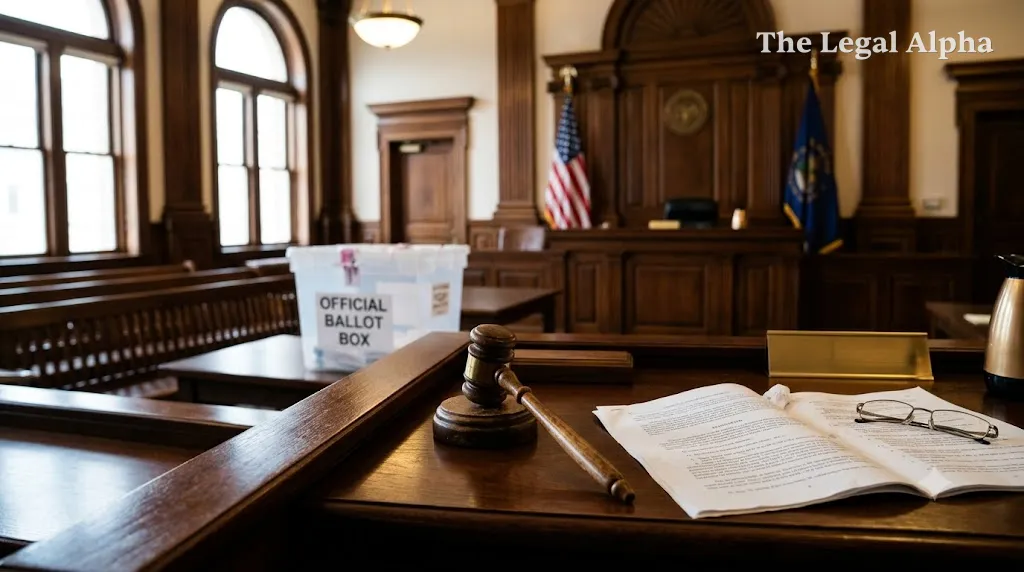
A state court in Indiana has turned down an emergency petition seeking to compel the Indiana Election Commission to adjudicate pending campaign finance grievances prior to the upcoming general election.
Third-party Secretary of State candidate Greg Ballard, running on the Lincoln Party ticket, brought legal action demanding that the four-member regulatory panel convene ahead of the November 3 election. Ballard sought immediate inquiry into administrative complaints lodged against his primary rivals, Republican nominee Max Engling and Democratic contender Beau Bayh.
Marion County Superior Court Judge Jennifer Harrison denied the request on October 26, holding that the judiciary cannot mandate an expedited meeting schedule where the governing statutes prescribe no specific pre-balloting deadline. Consequently, the regulatory body will proceed with its pre-scheduled calendar, taking up the contested filings on November 20—weeks after electors cast their votes.
Legal Topic
Area of Law: Election Law / Administrative Law
Sub-topic: Campaign Finance Enforcement / Judicial Mandamus & Timing of Regulatory Hearings
Core Legal Issue
The primary legal controversy centers on whether courts can compel an administrative election authority to hear regulatory violation claims before an election when state law leaves scheduling authority within the agency's discretion.
The dispute required the court to decide whether an electoral candidate can establish cognizable, non-speculative injury sufficient to obtain an injunction or order of mandamus forcing an accelerated administrative hearing simply because unreviewed campaign finance allegations concerning opponents might influence public voting decisions.
What Did the Court Decide?
Judge Jennifer Harrison dismissed the petitioner’s motion to compel an earlier assembly of the state election authority.
The court ruled that the plaintiff failed to establish concrete legal injury. Judge Harrison observed that asserting that an earlier commission session would reshape or assist voter decision-making amounted to hypothetical harm rather than an actionable statutory or constitutional wrong.
The ruling preserves the commission's pre-arranged timeline, leaving all substantive campaign finance challenges against Engling and Bayh formally pending until the scheduled November 20 session.
Key Legal Points
-
Discretionary Regulatory Scheduling: Indiana election statutes do not dictate an expedited calendar or fixed pre-election timeline for the Indiana Election Commission to dispose of campaign finance grievances.
-
Rejection of Speculative Electoral Injury: A candidate’s claim that public ignorance of opponents’ alleged infractions impedes the electorate is legally speculative and insufficient to justify emergency judicial interference.
-
Separation of Administrative Discretion: Courts will hesitate to manage the internal docketing and meeting agendas of regulatory agencies absent an express statutory mandate.
-
Post-Election Administrative Review: Campaign finance enforcement operates as an independent statutory compliance regime, which does not legally depend on resolving disputes prior to balloting.
Relevant Law
-
Indiana Code Title 3 (Elections): Governing statutes regulating the Indiana Election Commission’s powers, meeting convenings, and administrative oversight of campaign expenditures and disclosures.
-
Indiana Rules of Trial Procedure (Preliminary Injunctions): Standards governing the requisite demonstration of immediate irreparable harm, likelihood of success, and balancing of equities.
-
Judicial Mandamus Principles: Legal rules governing when a court may direct an administrative body to execute a non-discretionary statutory duty.
Arguments of the Parties
The Petitioner (Greg Ballard): Ballard argued that the commission has an administrative obligation to address integrity issues and that deferring review until after voting injures candidates and deprives voters of critical transparency. He contended that permitting claims regarding an improper $60,000 contribution involving Engling and unreported event expenditures regarding Bayh to sit unresolved until after the election shielded political actors from accountability and harmed the public’s ability to make fully informed decisions.
The Respondent (State of Indiana / Indiana Election Commission): Counsel representing the state, via the Indiana Attorney General’s Office, submitted that statutory law does not assign a mandatory timeline requiring the commission to examine finance complaints before general elections. The state argued that the litigation amounted to an improper effort to employ judicial process to manipulate regulatory timing for political advantage and influence voter perceptions right before Election Day.
Why Does It Matter?
This ruling underscores the significant hurdles third-party and rival candidates face when attempting to weaponize or accelerate regulatory enforcement procedures through the courts during the final stretch of an election cycle.
By declining to force an agency session, the decision reaffirms that campaign finance enforcement boards retain control over their procedural dockets unless lawmakers expressly mandate otherwise. It provides clarity that intangible electoral harm—such as an opponent not facing an official public reprimand prior to voting—does not constitute immediate legal damage that courts will step in to redress.
Legal Takeaway
Administrative agencies cannot be judicially forced to accelerate campaign finance investigations ahead of an election unless the legislature has explicitly imposed a strict statutory deadline. Generalized voter awareness and speculative political impact do not satisfy the evidentiary threshold of concrete legal injury required for emergency court intervention.
Sources
-
Primary Source: Ruling of Marion County Superior Court (Judge Jennifer Harrison), Ballard v. Indiana Election Commission (October 26, 2026).
-
Additional Sources: Indiana Capital Chronicle / Indiana Public Radio / WFYI Public Media reporting on Indiana Election Commission proceedings.