CAT Chandigarh Quashes Rejection of PGIMER Professor’s Resignation, Rules Decision Must Be Taken by Institute President
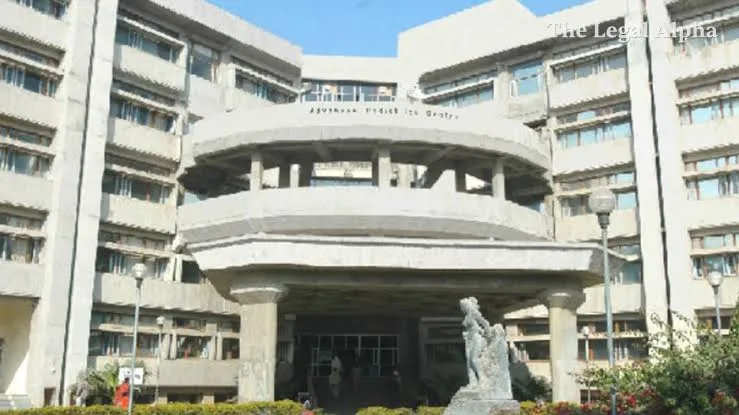
The Chandigarh Bench of the Central Administrative Tribunal has set aside administrative orders that turned down the resignation request of Dr. Sandeep Grover, a senior professor at the Postgraduate Institute of Medical Education and Research (PGIMER), Chandigarh.
A single-member bench comprising Member (Judicial) Ramesh Singh Thakur found that the institute’s internal administration had rejected the professor's plea without placing the matter before the competent statutory authority. Under PGIMER’s governing framework, the authority empowered to accept or decide upon the resignation of faculty members of professorial rank is the President of the institute—a position held ex-officio by the Union Minister of Health and Family Welfare. Because the rejection letters had been issued at a subordinate level without presidential consideration, the tribunal invalidated the decisions and remitted the matter for a fresh determination.
Legal Topic
-
Area of Law: Service Law / Administrative Law
-
Sub-topic: Exercise of Discretionary Powers / Competent Authority Jurisdiction / Faculty Resignation
Core Legal Issue
The dispute centered on whether an administrative head—such as the Director or senior administrative personnel of an autonomous statutory institute—has the authority to unilaterally reject a professor's resignation, or whether such power resides exclusively with the designated appointing authority.
Specifically, the tribunal had to determine whether the orders dated March 10 and May 9, 2026, which rejected Dr. Grover’s application without placing it before the President of PGIMER, suffered from jurisdictional infirmity and non-adherence to statutory service regulations.
What Did the Court / Authority Decide?
The Central Administrative Tribunal allowed the application in part and quashed the rejection orders dated March 10, 2026, and May 9, 2026:
-
Quashing of Subordinate Orders: The tribunal held that the impugned decisions were legally unsustainable because they were rendered without the approval of the President of PGIMER, who is the sole competent authority to decide upon the resignation of professors.
-
Directions for Fresh Consideration: The tribunal directed PGIMER’s Senior Administrative Officer to submit Dr. Grover’s resignation dossier directly to the President of the institute.
-
Time-Bound Speaking Order: The competent authority has been directed to issue a reasoned, speaking order addressing the issues raised by the applicant within three weeks of receiving a certified copy of the tribunal’s decision.
-
Merits Left Open: The tribunal expressly clarified that it did not express an opinion on whether the resignation ought to be accepted or rejected, leaving the final substantive assessment entirely to the discretion of the competent authority in accordance with law.
Key Legal Points
-
Doctrine of Competent Authority: An administrative action affecting the tenure or voluntary exit of a public servant must be exercised strictly by the authority prescribed under statutory rules; action taken by a lower authority without statutory delegation is void ab initio.
-
Institutional Hierarchies in Autonomous Bodies: In premier statutory institutes like PGIMER, the administrative division between the executive directorate and the governing presidency cannot be blurred to bypass high-level statutory oversight.
-
Requirement of a Speaking Order: When deciding an employee’s application to sever the employment relationship, the competent authority is obligated to pass a reasoned order demonstrating application of mind rather than issuing mechanical administrative rejections.
-
Non-Interference on Merits during Remand: Where an administrative decision is vitiated by procedural irregularity or lack of jurisdiction, judicial review typically warrants remitting the matter to the correct authority rather than substituting judicial discretion for administrative choice.
Relevant Law
-
Postgraduate Institute of Medical Education and Research, Chandigarh, Act, 1966: Governs institutional governance, administrative functions, and appointing authorities.
-
PGIMER Regulations & Service Rules: Provisions governing faculty appointments, disciplinary oversight, and resignation/voluntary exit protocols.
-
Administrative Law Principles of Sub-Delegation: The fundamental legal rule that delegated statutory authority cannot be assumed or exercised by a subordinate official without explicit legal authorization (delegatus non potest delegare).
Arguments of the Parties
Applicant (Dr. Sandeep Grover) Counsel for the applicant submitted that under the applicable PGIMER rules, the President of the institute is the designated competent authority to consider and accept a professor’s resignation. It was argued that the applicant’s case was never forwarded to or placed before the President and had instead been dealt with at a lower administrative level, rendering the rejection orders unlawful and jurisdictionally defective. (The applicant’s ancillary pleas concerning voluntary retirement and pension benefits were withdrawn during the hearing, confining the challenge to the validity of the resignation rejections).
Respondent (PGIMER Administration) The institute sought to justify the rejection of the professor's request within its administrative framework, contending that institutional requirements and internal processes warranted the refusal. However, official records produced before the tribunal confirmed that the resignation file had been processed only up to the level of the Director and had omitted submission to the President for final approval.
Why Does It Matter?
This decision underscores a crucial administrative safeguard within premier autonomous public institutions and government health bodies. Senior faculty members and specialized public servants are governed by specific statutory covenants, and their appointment and exit cannot be managed arbitrarily by mid-tier bureaucratic administrators.
The ruling reinforces that statutory authorities must operate strictly within the boundaries of delegated powers. For public institutions, the judgment serves as a reminder that procedural regularities—specifically routing sensitive personnel files through the statutorily designated authority—are essential to withstand judicial scrutiny. It prevents executive leadership from short-circuiting the administrative protections intended to shield senior professionals from unauthorized administrative actions.
Legal Takeaway
An administrative decision rejecting an employee's resignation is legally invalid if issued by an authority lower than the one statutorily empowered to make that call. Autonomous institutions must place faculty exit requests before their designated competent authority to ensure that any decision is rendered through a lawful, reasoned speaking order.
Sources
-
Primary Source: Order of the Central Administrative Tribunal (Chandigarh Bench), passed by Member (Judicial) Ramesh Singh Thakur in the matter of Dr. Sandeep Grover v. Postgraduate Institute of Medical Education and Research (PGIMER), Chandigarh (decided October 2026).
-
Additional Sources: Case proceedings, institutional records, and administrative reporting from The Tribune and Hindustan Times.