Madras High Court Denies Pre-Arrest Bail to Former Tamil Nadu Minister in ₹400-Crore School Approval Bribery Case, Ruling Custodial Interrogation Necessary to Trace Proceeds
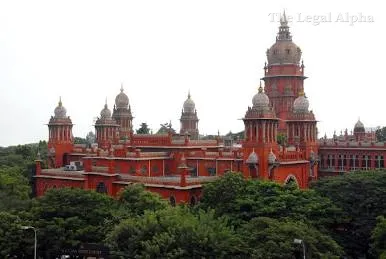
The Madras High Court dismissed an anticipatory bail petition filed by former Tamil Nadu School Education Minister and DMK leader Anbil Mahesh Poyyamozhi in connection with an alleged multi-crore bribery operation involving private school recognitions. Hours after the dismissal, the Central Crime Branch (CCB) of the Chennai Police took the former minister into custody.
The case stems from allegations that substantial sums running into crores of rupees were systematically collected from private school managements across Tamil Nadu in exchange for regulatory approvals, renewals, and government recognition during his tenure, purportedly camouflaged as political donations or "party funds." The High Court concluded that granting pre-arrest protection would severely undermine the ongoing investigation, particularly given evidence indicating that the former minister aided an absconding co-accused in evading law enforcement.
Legal Topic
Area of Law: Criminal Law / Anti-Corruption Law
Sub-topic: Anticipatory Bail, Custodial Interrogation, and Investigating Agency Jurisdiction
Core Legal Issue
The primary legal issue before the High Court was whether an influential public figure facing serious allegations of systematic corruption and economic misconduct is entitled to discretionary anticipatory bail when key co-accused remain at large and the prosecution establishes a prima facie necessity for custodial interrogation to uncover an unmapped financial trail.
A secondary jurisdictional issue was whether allegations under anti-corruption frameworks must exclusively be investigated by specialized statutory bodies—such as the Directorate of Vigilance and Anti-Corruption (DVAC)—or whether general investigative wings of the state police, like the Central Crime Branch, possess concurrent statutory authority to investigate such offences in the absence of an express jurisdictional bar.
What Did the Court Decide?
Justice V. Lakshminarayanan dismissed the anticipatory bail application, declining to shield the petitioner from arrest.
The Court observed that:
-
Relieving the petitioner from custodial questioning at this preliminary juncture would effectively paralyse the investigation.
-
Case records prima facie indicated that the petitioner had shielded an absconding co-accused (A2, Muthukumar) from police custody, directly hampering investigative efforts.
-
Unearthing the actual beneficiaries and the ultimate end destination of the funds collected under the nomenclature of "party funds" requires confronting the primary accused with other individuals involved.
-
The argument that the Directorate of Vigilance and Anti-Corruption (DVAC) holds exclusive jurisdiction over corruption matters was rejected. The Court ruled that internal division of work within the police force does not amount to an inherent lack of statutory jurisdiction for the Central Crime Branch.
The High Court clarified that its findings were strictly confined to assessing the merits of the pre-arrest bail plea, leaving the substantive allegations to be tested through investigation and regular trial proceedings.
Key Legal Points
-
Custodial Interrogation in Complex Financial Offences: Anticipatory bail is an extraordinary discretionary remedy. In grave economic and corruption offences with unrecovered money trails, effective probe mechanics often demand custodial interrogation and confrontations with witnesses or co-accused.
-
Shielding Co-Accused Precludes Discretionary Relief: An applicant who prima facie attempts to conceal or assist an absconding co-accused undermines the investigative process, which disentitles them to equitable pre-arrest relief.
-
Absence of Exclusive Monopoly for Specialized Wings: Administrative allocation of tasks within a police establishment does not confer an exclusive jurisdictional monopoly on specialized wings (such as the DVAC) to the exclusion of regular police crime branches, unless mandated by express statutory bar.
-
Scrutiny of Political Contributions: Labelling kickbacks or illicit collections as "party funds" cannot serve as a protective shield against anti-corruption statutes or forestall tracing the ultimate destination of proceeds of crime.
Relevant Law
-
Section 438, Code of Criminal Procedure, 1973 (CrPC) / Section 482, Bharatiya Nagarik Suraksha Sanhita, 2023 (BNSS): Governs the high prerogative discretion of Sessions Courts and High Courts to grant pre-arrest bail.
-
Prevention of Corruption Act, 1988: Statutory provisions concerning public servants obtaining undue advantage and illicit remuneration for official acts.
-
Indian Penal Code, 1860 / Bharatiya Nyaya Sanhita, 2023: Provisions relating to cheating, criminal breach of trust, and criminal conspiracy.
-
Police Act, 1861 & State Police Regulations: Governing internal administrative division of work among distinct departmental branches.
Arguments of the Parties
Petitioner
Senior counsel representing Anbil Mahesh Poyyamozhi submitted that:
-
The accusations were politically motivated and lacked foundational documentary evidence showing direct receipt of illicit funds.
-
The Central Crime Branch lacked the jurisdiction to investigate offences of this nature, arguing that allegations of corruption against a former minister fall exclusively within the domain of the Directorate of Vigilance and Anti-Corruption (DVAC).
-
The petitioner is a prominent public figure with deep societal roots, poses no flight risk, and had cooperated with summons, rendering custodial detention unnecessary.
Respondent / State
The State Public Prosecutor, appearing on behalf of the Central Crime Branch, contended that:
-
Large-scale extortion and bribery occurred under the guise of routine administrative licensing and approvals for private educational institutions.
-
Financial contributions were collected under the pretext of "party funds," and tracing the actual flow and end recipients of these funds is impossible without custodial interrogation.
-
The petitioner had actively shielded key absconding co-accused, intentionally stalling the investigative agency from connecting essential links in the conspiracy.
-
The CCB possesses full statutory police powers to investigate cognizable offences, and no rule of law vests sole, exclusive investigative monopoly in the DVAC.
Why Does It Matter?
This ruling reinforces key principles in white-collar and anti-corruption jurisprudence across several fronts:
-
Limits on Anticipatory Bail in Institutional Extortion: It reaffirms the established principle that economic offences constitute a distinct class of crimes where the courts are reluctant to grant anticipatory bail if doing so would frustrate the discovery of evidence or prevent tracing financial flows.
-
Scrutiny of Informal "Party Funds": The order signals that political contributions cannot be used as an evidentiary shield against corruption probes when institutional licenses and approvals coincide with substantial cash or fund movements.
-
Jurisdictional Clarity for Police Units: By rejecting the notion that only anti-corruption directorates can register and investigate bribery matters, the decision preserves procedural flexibility for state police departments, preventing procedural dismissals where regular crime branches uncover corrupt practices during wider criminal investigations.
Legal Takeaway
Anticipatory bail cannot be invoked to shield influential public officials when custodial interrogation is demonstrably essential to unearth complex money trails and locate absconding conspirators. Courts will not allow administrative distributions of police work to derail active corruption probes, nor will they treat claims of political donations as a bar to examining alleged kickback mechanisms.
Sources
Primary Source:
-
Order of the Madras High Court in Criminal Original Petition (Anticipatory Bail), coram Justice V. Lakshminarayanan, pronounced on October 26, 2026.
Additional Sources:
-
Central Crime Branch (CCB), Chennai Police Investigation Records and Remand Reports (October 2026).
-
Case coverage and official hearing reports from legal reporting desks (Times of India, The Indian Express, DT Next, The News Minute).