Surveillance Cannot Trump Dignity: Haryana Child Rights Panel Issues Strict Protocols on CCTV Access Across Child Care Institutions
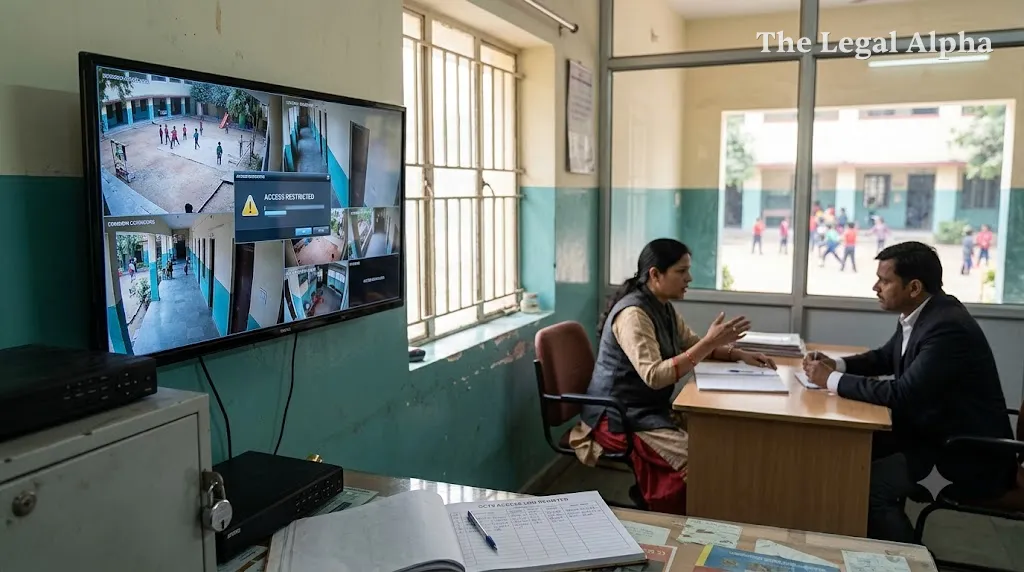
The Haryana State Commission for Protection of Child Rights (HSCPCR) has stepped in to curb intrusive electronic monitoring in Child Care Institutions (CCIs) throughout the state. During surprise inspections, the commission uncovered significant digital vulnerabilities, finding that CCTV feeds were frequently routed directly to staff members' personal mobile phones and laptops.
Reacting to the potential risks of data exploitation and breach of confidentiality, HSCPCR Chairperson Tripti Sheoran issued a binding statutory advisory. The directive establishes strict access controls for electronic surveillance systems inside all juvenile institutions—mandating that institutional security measures cannot operate at the expense of a child’s fundamental dignity and privacy.
Legal Topic
-
Area of Law: Child Welfare Law / Privacy and Surveillance Law
-
Sub-topic: Institutional Safeguards / Juvenile Justice Model Rules / Digital Data Protection
Core Legal Issue
The controversy centres on the constitutional and statutory limits of physical surveillance in state-regulated juvenile homes: Where does the legal mandate for physical protection cross into an unlawful violation of a minor's informational and bodily privacy?
Specifically, the statutory body addressed whether administrators of care facilities possess unilateral discretion to route surveillance streams across personal smart devices and shared networks, or if child protection statutes require structural digital perimeters to shield minors from non-consensual tracking and data exposure.
What Did the Authority Decide?
The statutory panel directed immediate operational reforms across all child care institutions in Haryana, setting enforceable red lines on data storage and access:
-
Prohibition on Personal Device Streaming: Connecting camera systems to personal mobile phones, tablets, or laptops is strictly forbidden. Remote network streaming must remain disabled by default.
-
Strict Privacy Zones: Cameras are completely barred from toilets, washrooms, bathrooms, and dressing or changing areas.
-
Ban on Data Sharing and Recording: Staff and management are barred from photographing monitor screens, taking screen recordings, downloading files onto external media, or circulating footage through WhatsApp, social media networks, or email.
-
Access Control and Physical Security: Digital Video Recorders (DVRs) and Network Video Recorders (NVRs) must be kept under lock and key, with access restricted solely to designated institutional heads. Shared operational passwords are banned, and administrative credentials must be rotated regularly.
-
Auditing and Logging: Every facility must maintain a formal physical register detailing the retrieval of footage, identifying the exact timestamp, justification, and recipient of the requested data.
-
Enforcement Deadline: The Department of Women and Child Development, alongside all Deputy Commissioners and District Child Protection Officers (DCPOs), has been ordered to enforce the protocol and submit compliance verification reports within 15 days.
Key Legal Points
-
The Primacy of Child Dignity: Physical protection in state-regulated shelters cannot swallow a child’s inherent right to bodily and situational privacy.
-
Proportionality in Surveillance: While electronic recording serves as legitimate evidence against maltreatment, unfettered remote streaming on unvetted personal devices fails the standard of necessity and data minimization.
-
Rigid Spatial Restrictions: Statutory design strictly insulates sensitive hygiene spaces from monitoring, preserving inviolable spatial sanctuaries inside juvenile institutions.
-
Evidentiary Integrity and Custody Chains: Regulating recording hardware and tracking access via physical registers prevents data tampering and secures admissible electronic evidence under child welfare statutes.
Relevant Law
-
The Commissions for Protection of Child Rights (CPCR) Act, 2005: Section 13 and Section 14 (Powers to inquire, monitor safeguard implementation, and issue statutory directives to state authorities).
-
The Juvenile Justice (Care and Protection of Children) Model Rules, 2016: Rule 67(12) (Mandating security infrastructure and perimeter monitoring in child care institutions while preserving the privacy and dignity of residents).
-
The Constitution of India: Article 21 (Right to life, dignity, and informational privacy, as settled in Justice K.S. Puttaswamy (Retd.) v. Union of India).
-
The Digital Personal Data Protection Act, 2023: General standards governing heightened duties of care and data processing concerning minors.
Arguments of the Parties
-
The Commission’s Findings: The HSCPCR observed that unmonitored digital setups create unacceptable vulnerabilities. Allowing employees to access live feeds via mobile devices creates a systemic hazard where minor wards can be tracked off-duty, footage can be downloaded or shared illicitly, and private moments could leak onto digital platforms without accountability.
-
The Operational Defense of Child Care Institutions: Facility managements historically maintained that remote feeds and live phone notifications were intended to maintain uninterrupted vigilance against internal indiscipline, absconding, peer violence, or external intrusion, particularly during night shifts or periods with skeletal staff.
Why Does It Matter?
The advisory marks a regulatory shift against the creeping, unchecked deployment of surveillance tech inside custodial and social welfare environments. For years, institutions across India have installed networked cameras under the broad banner of security without establishing basic cybersecurity protocols or access boundaries.
By setting explicit boundaries on personal devices, shared credentials, and off-site data routing, the commission makes clear that institutional security does not grant administrators a license to operate unmonitored digital Panopticons. The directive creates concrete operational liabilities for facility administrators and child welfare personnel: unauthorized sharing or casual circulation of CCTV recordings can now trigger immediate disciplinary proceedings and regulatory prosecution.
Legal Takeaway
Surveillance in juvenile welfare institutions must function as a localized security safeguard, not an invasive, all-hours digital broadcast. Institutional authorities must decouple electronic camera systems from private devices, restrict access exclusively to authorized custody chains, and uphold spatial privacy boundaries as statutory imperatives.
Sources
-
Primary Source: Statutory Advisory issued by the Haryana State Commission for Protection of Child Rights (HSCPCR) under the Commissions for Protection of Child Rights Act, 2005, read with Rule 67(12) of the Juvenile Justice (Care and Protection of Children) Model Rules, 2016.
-
Additional Sources: Operational compliance notifications, Department of Women and Child Development (Haryana); Official monitoring briefs from the District Child Protection Units.