Supreme Court Examines Need for Statutory Guardrails to Shield Minors from Social Media Harms

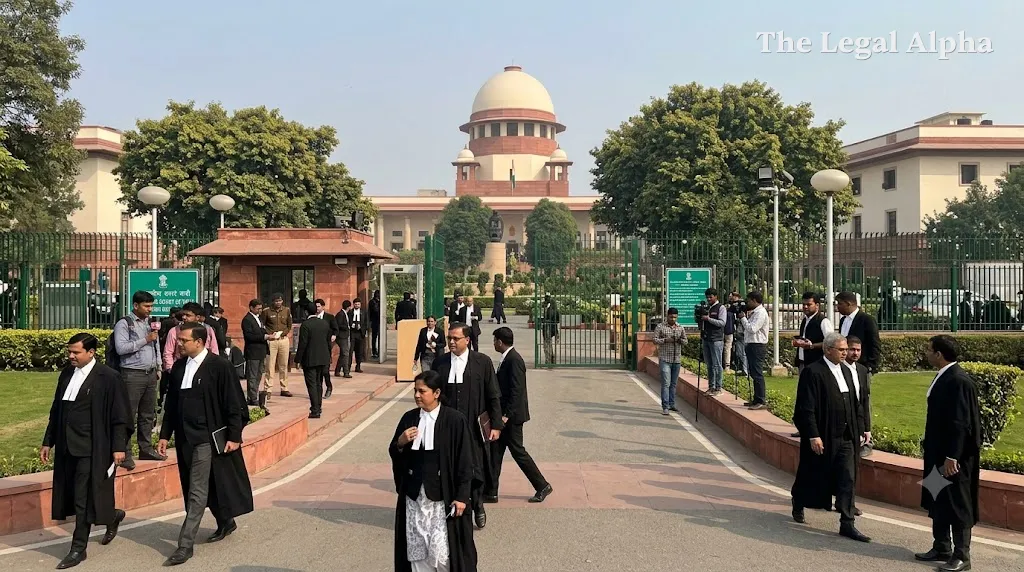
The Supreme Court of India agreed to examine whether the Union Government must formulate a mandatory national framework to regulate and restrict children's access to social media networks. A public interest litigation filed by an educational institution brought attention to the systemic risks minors face online, ranging from cyberbullying and sexual exploitation to addictive interface designs.
Recognising the gravity of the child safety concerns raised, the apex court issued formal notices to the Centre and child welfare authorities, initiating judicial scrutiny into the adequacy of India's prevailing digital and child protection regulations.
Legal Topic
Area of Law: Information Technology & Constitutional Law
Sub-topic: Child Online Safety / Digital Rights & Platform Governance
Core Legal Issue
The petition places a critical question before the court: Does the State bear a positive constitutional duty under Article 21 and international child rights conventions to establish enforceable, age-appropriate digital safety regimes for commercial internet platforms?
The core inquiry revolves around whether voluntary industry guidelines and existing intermediary due-diligence mechanisms are sufficient to safeguard minors from addictive design features, algorithmic tracking, and online grooming, or whether mandatory statutory safeguards—including verified age authentication and platform-use thresholds—must be enforced by the Union Government.
What Did the Court Decide?
A Bench comprising Chief Justice Surya Kant and Justice Joymalya Bagchi issued notice to the Union Government and the National Commission for Protection of Child Rights (NCPCR).
The court did not impose immediate interim bans or restrictions on social media platforms, maintaining the status quo while formal pleadings are exchanged. The matter has been listed for further hearing on December 7, 2026, by which time the respondents are expected to place their preliminary responses on record regarding existing regulatory measures and future policy roadmaps.
Key Legal Points
-
Positive State Obligations: The plea invokes Article 21 of the Constitution, arguing that the fundamental right to life, dignity, and bodily integrity entails an affirmative duty on the State to shield vulnerable children from exploitative digital environments.
-
Architecture-Level Accountability: The legal challenge targets platform architecture—such as infinite scrolls, targeted engagement algorithms, and unverified direct messaging—asserting that harms stem directly from commercial design rather than isolated user conduct.
-
Proportionate Age Verification: The litigation seeks the implementation of privacy-preserving, tiered age verification mechanisms without compromising adult digital privacy or fostering pervasive surveillance.
-
International Treaty Obligations: Reliance has been placed on the United Nations Convention on the Rights of the Child (UNCRC), which mandates signatory states to protect minors from mental violence, sexual exploitation, and materials detrimental to their well-being.
Relevant Law
-
Constitution of India: Article 21 (Right to Life and Personal Liberty) and Article 39(e)–(f) (Directive Principles concerning the health, strength, and protection of children against exploitation).
-
Information Technology Act, 2000 & IT (Intermediary Guidelines and Digital Media Ethics Code) Rules, 2021: Governing the due-diligence obligations of social media intermediaries.
-
Digital Personal Data Protection Act, 2023: Specifically Section 9, which mandates parental consent for processing children's personal data and bars behavioural tracking or targeted ads directed at children.
-
United Nations Convention on the Rights of the Child (UNCRC): Articles 3, 17, and 19 concerning the best interests of the child and protection against physical or psychological harm.
Arguments of the Parties
Petitioner (The Emerald Heights International School & Anr.) The petitioner argued that schools and parents alone cannot mitigate digital risks because platform designs are engineered to drive prolonged engagement and dependency. It submitted that minors are exposed to grave dangers, including cyberbullying, grooming, unsolicited contact by strangers, sextortion, and mental health crises such as chronic sleep deprivation and anxiety. Counsel contended that without enforceable central regulations mandating verifiable parental consent, default maximum privacy settings, and graded access curbs, children's fundamental rights remain routinely compromised.
Respondent (Union of India & NCPCR) As the proceedings are at the threshold stage of notice, the Centre's formal counter-affidavit has not yet been placed on record. The Union Government is expected to outline its existing statutory safeguards under the IT Rules and the enforcement readiness of the Digital Personal Data Protection Act, 2023, while delineating executive policy initiatives versus judicial intervention in digital economy regulation.
Why Does It Matter?
This litigation joins a growing global wave of regulatory reckoning over minors' digital welfare, aligning India's judicial landscape with debates underway in jurisdictions like the United Kingdom (Online Safety Act) and Australia (underage social media bans).
Domestically, the outcome could hold direct compliance implications for global social media conglomerates operating in India, potentially compelling them to overhaul their onboarding processes, disable targeted recommendation engines for young users, and adopt robust age-gating infrastructure. Beyond tech platforms, the matter will shape the legal threshold of institutional accountability, determining how the law balances minors' access to information with state-mandated digital protection.
Legal Takeaway
The Supreme Court's notice marks the start of a critical judicial assessment into whether self-regulation by social media giants is adequate to protect young users. The case establishes that algorithmic designs and digital exposure affecting children's well-being are justiciable matters under constitutional guarantees of safety and privacy.
Sources
Primary Source:
-
Proceedings before the Supreme Court of India in The Emerald Heights International School & Anr. v. Union of India & Ors. (Writ Petition / Public Interest Litigation, order dated October 16, 2026, Bench of Chief Justice Surya Kant and Justice Joymalya Bagchi).
Additional Sources:
-
Information Technology (Intermediary Guidelines and Digital Media Ethics Code) Rules, 2021.
-
Digital Personal Data Protection Act, 2023 (Section 9: Obligations of Data Fiduciary in Processing Children's Personal Data).
-
United Nations Convention on the Rights of the Child (General Comment No. 25 on children's rights in relation to the digital environment).