Livelihood Versus Protest: Supreme Court Cites Constitutional Tort Power to Protect Small Traders and Street Vendors
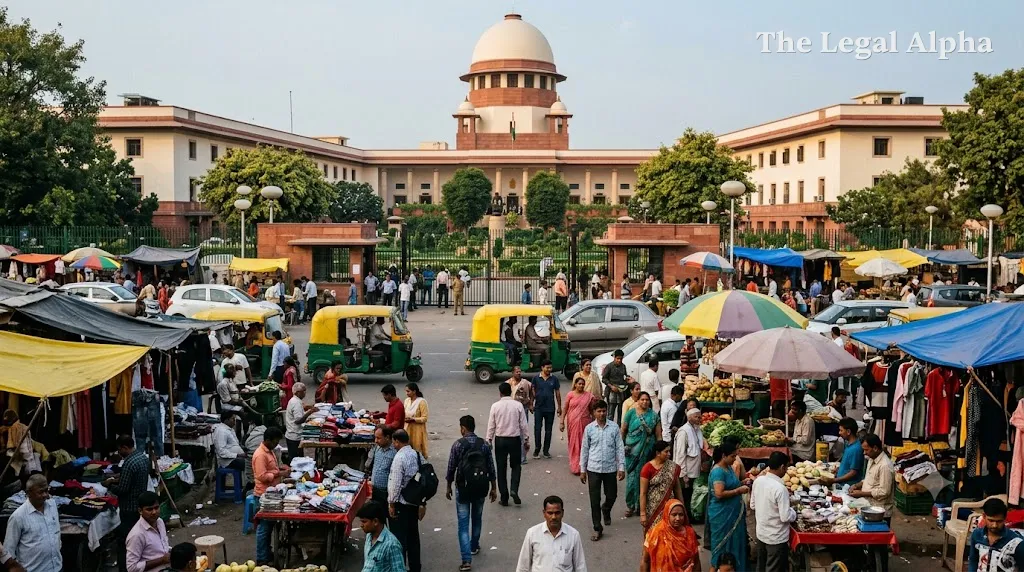
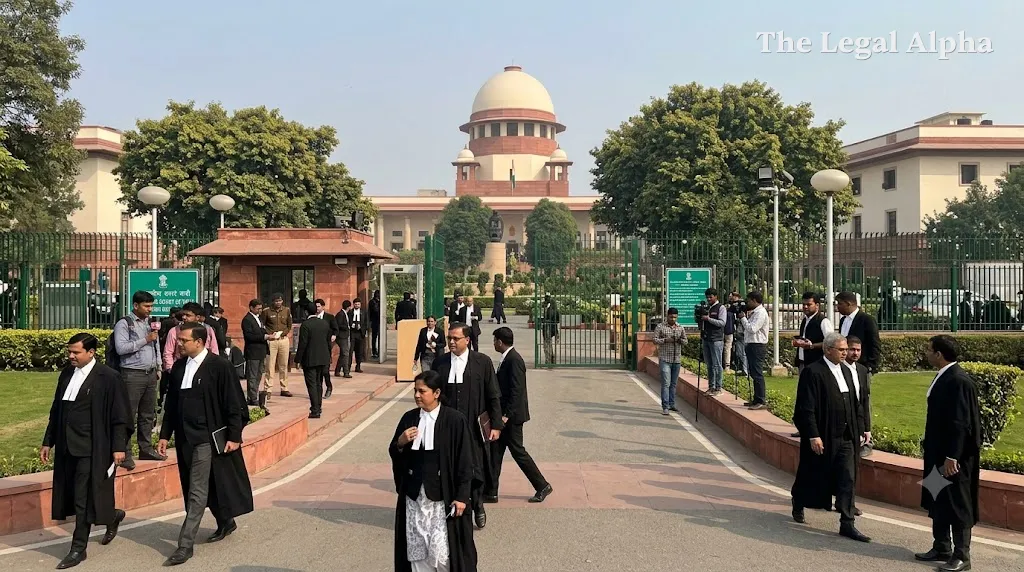
The Supreme Court of India addressed concerns regarding economic disruptions caused by public demonstrations in central Delhi. When a traders' representative approached the bench seeking urgent intervention against planned protests in the Connaught Place area, the court declined to issue an immediate stop-order. However, the bench observed that if public restrictions or unlawful protests inflict business losses on street hawkers, daily wagers, and local shopkeepers, the judiciary will not hesitate to invoke its constitutional tort jurisdiction to award compensation. The court emphasized that the right to assemble must be carefully balanced with the fundamental right of ordinary citizens to earn a livelihood.
Legal Topic
Area of Law: Constitutional Law
Sub-topic: Public Law Writs, Fundamental Freedoms, and Constitutional Tort
Core Legal Issue
The matter centers on the friction between competing fundamental rights guaranteed under Part III of the Constitution of India: the collective right to assemble peacefully without arms versus the individual right of local traders and daily wage earners to carry on trade and secure their livelihood.
The primary legal question is whether the state or agitating groups can be held liable under constitutional tort principles to compensate micro-enterprises and vendors when protest-induced blockades, closures, and security measures curtail their economic survival.
What Did the Court Decide?
The Supreme Court declined to pass emergency directions or pre-emptively shut down the demonstrations, remarking that it would address the situation if actual unlawful harm manifests.
-
The bench posted the petition for hearing in regular course after a week, declining immediate interim restraint.
-
The court explicitly cautioned that should shopkeepers and vendors face unlawful business disruptions, the bench will exercise powers under constitutional tort jurisdiction to grant compensatory relief.
-
The judges observed that authorities and citizens alike must act with restraint, noting that festival-season trade is vital for daily wage earners and small retailers.
Key Legal Points
-
Public Law Remedy: The court reaffirmed that constitutional tort allows writ courts to grant financial restitution where state omissions or unauthorized actions violate citizens' fundamental rights.
-
Competing Rights: Peaceful assembly cannot be exercised in complete disregard of the public's right to move freely and conduct legitimate trade.
-
No Premature Injunctions: Courts will avoid imposing speculative prohibitions before an event occurs, choosing instead to step in when demonstrable, actionable illegality arises.
-
Duty of State Regulation: Law enforcement must manage protest venues without unnecessarily shutting down public thoroughfares and surrounding commercial hubs.
Relevant Law
-
Article 19(1)(b) of the Constitution of India (Protection of the right to assemble peaceably and without arms)
-
Article 19(1)(g) of the Constitution of India (Right to practice any profession, or to carry on any occupation, trade, or business)
-
Article 21 of the Constitution of India (Protection of life and personal liberty, which encompasses the right to livelihood)
-
Article 32 of the Constitution of India (Remedies for enforcement of fundamental rights and constitutional tort jurisdiction)
-
Himmat Lal K. Shah v. Commissioner of Police (1973) and Anita Thakur v. State of J&K (2016) (Governing regulation of public protests and balance with public order)
Arguments of the Parties
Traders and Commercial Associations
The applicants submitted that recurrent demonstrations and administrative lockdowns in commercial hubs cause severe daily financial distress, paralyzing business operations and depriving daily wagers of basic earnings. They argued that the state's security measures, including barricading and access restrictions, disproportionately violate their right to trade.
The State and Organizers' Stance
Organizers maintained that peaceful assembly and holding public demonstrations are legitimate democratic exercises that do not directly seek to curb commerce. For their part, administrative authorities submitted that precautionary closures and zoning measures are necessary police steps taken strictly to preserve civic safety and maintain law and order.
Why Does It Matter?
This development signals a shift in judicial oversight regarding public protests in urban centers. While Indian courts have traditionally treated protest-induced disruptions as routine administrative inconveniences, invoking "constitutional tort" changes the risk framework.
If public authorities or protest organizers face financial exposure for paralyzing economic transit corridors, municipalities will have to rethink how they manage crowd permits and security cordons. For street vendors, hawkers, and small shopkeepers—who rarely have insurance coverage against bandhs or security lockouts—this expands their legal avenues to demand accountability when civic disruptions strip away their daily income.
Legal Takeaway
The right to protest is neither absolute nor insulated from the economic freedoms of fellow citizens. By putting the constitutional tort doctrine on the table, the Supreme Court has made it clear that civic actions causing severe, unlawful collateral damage to vendors and daily earners can attract court-ordered financial compensation.
Sources
Primary Source:
Supreme Court of India, Mentioning proceedings before the Bench concerning traders' petitions over Connaught Place protests.
Additional Sources:
Proceedings before the High Court of Delhi and administrative notifications issued by the Delhi Police and New Delhi Municipal Council (NDMC).