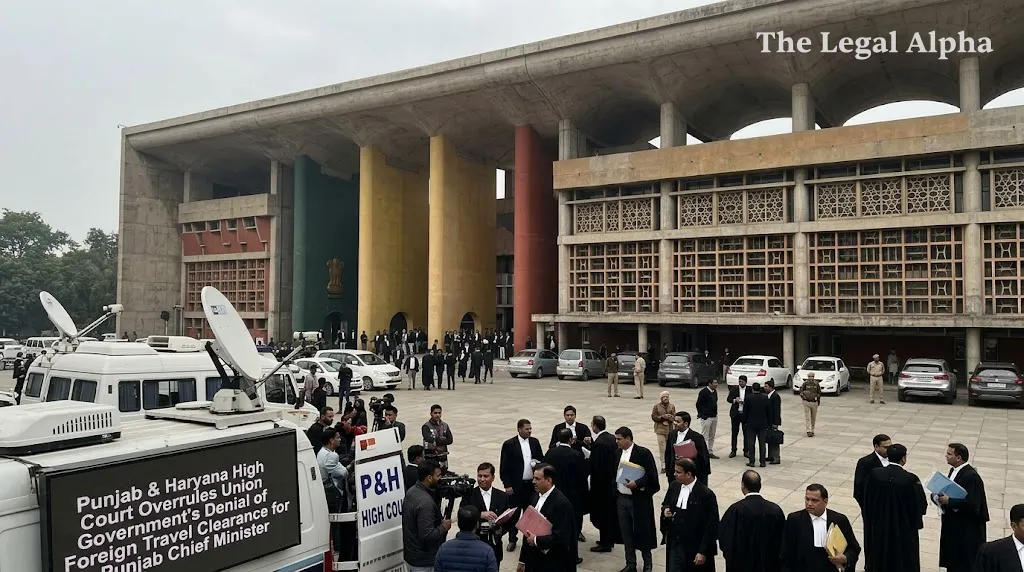
PMLA Bail Denied: Punjab & Haryana High Court Dismisses Relief for Sanjeev Arora Over ₹102.50-Crore Export Probe
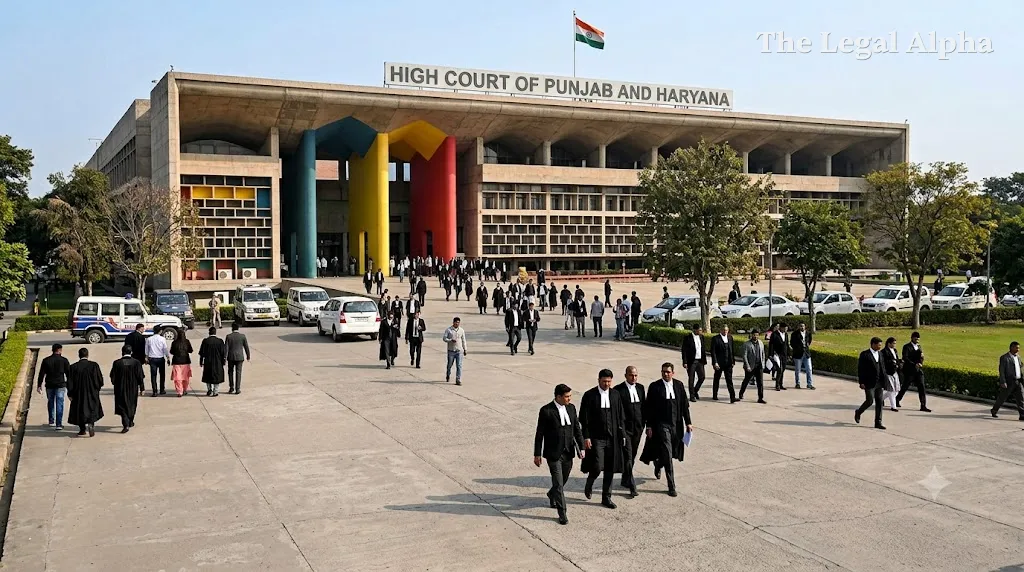
The Punjab and Haryana High Court dismissed the regular bail plea of Punjab Cabinet Minister Sanjeev Arora in a money laundering probe initiated by the Enforcement Directorate (ED). Arora, who was taken into custody by the central financial probe agency in May 2026 under the Prevention of Money Laundering Act (PMLA), 2002, sought regular bail after the Special Court at Gurugram turned down his request. The investigation focuses on alleged illicit transactions masked as mobile phone exports valued at approximately ₹102.50 crore routed through Hampton Sky Realty Limited to overseas shell entities in the United Arab Emirates.
Legal Topic
-
Area of Law: Criminal Law / Financial Crimes
-
Sub-topic: Prevention of Money Laundering Act (PMLA) / Twin Conditions for Bail
Core Legal Issue
The primary legal issue before the High Court was whether the accused satisfied the mandatory twin conditions for regular bail under Section 45(1) of the Prevention of Money Laundering Act, 2002.
Specifically, the court had to evaluate whether the petitioner established reasonable grounds to believe he was not prima facie guilty of generating, concealing, or projecting proceeds of crime through commercial export fronts, and whether judicial custody remained warranted given the documentary and cross-border nature of the investigative record.
What Did the Court / Authority Decide?
Justice Kuldeep Tiwari of the Punjab and Haryana High Court pronounced the order dismissing Arora's regular bail petition.
The court determined that the petitioner failed to meet the rigorous threshold required for release under PMLA provisions. Upon inspecting the investigative dossier submitted by the ED—detailing transaction trails, supply chains, and export arrangements between the real estate firm and UAE-based counterparties—the bench held that a prima facie case against the accused remains intact. Consequently, the petitioner remains in judicial custody while trial court proceedings continue.
Key Legal Points
-
Section 45 PMLA Rigour: The statutory presumption and dual restrictions under Section 45(1) continue to impose a reverse burden on the applicant to establish reasonable grounds of innocence prior to the granting of bail.
-
Commercial Facades and Money Trails: Shifting business domains—such as a real estate firm abruptly engaging in high-value, short-lived international electronics export transactions—was treated as a material factual factor supporting the agency's theory of artificial turnover and round-tripping.
-
Documentary Weight vs. Substantive Authenticity: Regulatory clearances, such as GST filings and shipping export orders, do not automatically eclipse an enforcement agency's prima facie evidence showing round-tripping or non-genuine end-destination entities.
-
Status of Accused: Holding a senior public or ministerial post does not dilute the evidentiary parameters or statutory barriers governing economic offences involving alleged proceeds of crime.
Relevant Law
-
Prevention of Money Laundering Act, 2002:
-
Section 3 (Offence of money laundering)
-
Section 4 (Punishment for money laundering)
-
Section 45 (Offences to be cognizable and non-bailable; twin conditions for bail)
-
-
Code of Criminal Procedure, 1973 / Bharatiya Nagarik Suraksha Sanhita, 2023: General provisions governing regular bail applications before High Courts.
-
Judicial Precedents: Supreme Court rulings governing Section 45 PMLA thresholds, notably Vijay Madanlal Choudhary v. Union of India (affirming the constitutionality and strictness of the twin conditions).
Arguments of the Parties
Petitioner / Applicant
-
The petitioner contended that the transactions were genuine commercial sales backed by verifiable documents, including purchase invoices, e-way bills, statutory GST filings, airway bills, customs inspection clearances, and Bank Realisation Certificates (BRCs).
-
Counsel argued that the business received payments strictly through legitimate banking channels and that Let Export Orders (LEOs) were properly granted by competent customs authorities.
-
It was further submitted that search operations yielded no unaccounted assets or concealed digital records, the entire investigation relies on seized documentation, and the petitioner's age and health conditions did not warrant ongoing pre-trial incarceration.
Respondent / Enforcement Directorate
-
The ED submitted that the applicant utilised Hampton Sky Realty Limited as an operational front to create paper trails and route tainted funds under the guise of electronics exports.
-
The agency argued that the company, historically rooted in real estate, engaged in mobile phone trading for a brief window solely to facilitate transactions worth approximately ₹102.50 crore to suspicious entities in the UAE (Fortbel Telecom FZCO and Dragon Global FZCO).
-
It was maintained that the twin conditions under Section 45 remained unfulfilled, and granting liberty at this juncture would compromise the tracing of cross-border financial conduits.
Why Does It Matter?
This decision underscores the high legal barrier litigants face when contesting bail under special statutes like the PMLA, even when transactions possess external markers of formal compliance, such as export bills and tax declarations. For corporate entities and politically exposed persons alike, the ruling clarifies that formal documentary compliance will not insulate commercial operations from scrutiny if the underlying trade ecosystem—such as counterparty authenticity and Sudden changes in core business lines—points to artificial or layered transactions.
Legal Takeaway
Under Section 45 of the PMLA, obtaining regular bail requires meeting the statutory twin conditions rather than merely demonstrating paper-trail compliance or health-related arguments. Where an enforcement agency produces a credible prima facie trail suggesting that commercial operations were deployed to launder capital, courts will continue to prioritize statutory bail restrictions over standard criminal procedure reliefs.
Sources
-
Primary Source: Order of the High Court of Punjab and Haryana in the regular bail application of Sanjeev Arora (Pronounced by Justice Kuldeep Tiwari, October 16, 2026).
-
Additional Sources: Enforcement Directorate investigation disclosures; proceedings of the Special Court (PMLA), Gurugram.