Supreme Court Calls for Centre’s Stance on Framing Safeguards for Unilateral Muslim Divorce Practices
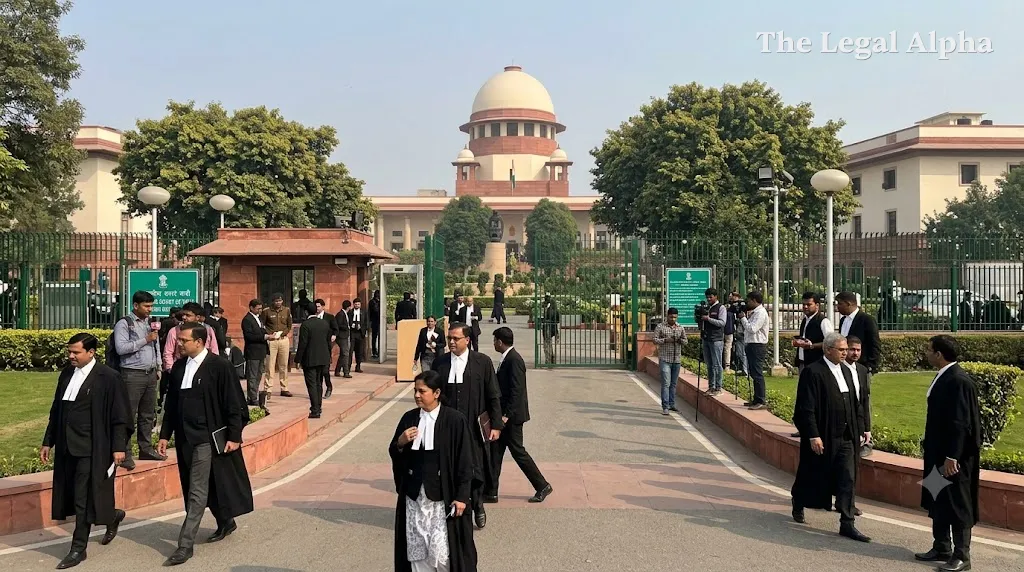
The Supreme Court of India issued formal notices to the Union Government and relevant authorities on a writ petition seeking uniform procedural safeguards across all modes of divorce governed by Muslim personal law. A bench comprising Chief Justice of India Surya Kant and Justice Joymalya Bagchi tagged the petition with existing pending challenges concerning the constitutional validity of Talaq-e-Hasan. The development brings judicial scrutiny back to unilateral extrajudicial forms of marital dissolution, testing whether such procedures align with constitutional protections against gender discrimination and arbitrary desertion.
Legal Topic
-
Area of Law: Constitutional Law / Family Law
-
Sub-topic: Muslim Personal Law / Marital Dissolution & Gender Justice
Core Legal Issue
The primary legal question is whether unilateral, extrajudicial forms of divorce recognized under personal law—specifically Talaq-e-Hasan—violate fundamental rights to equality, non-discrimination, and dignity if practiced without mandatory procedural safeguards.
A secondary question is whether the judiciary can direct the Union Government to establish binding, enforceable guidelines to govern reconciliation, maintenance, and child custody during extrajudicial divorces under personal statutes.
What Did the Court / Authority Decide?
The Supreme Court did not adjudicate on the merits of the practice, nor did it impose a stay or ban on existing customary procedures. Instead, the bench:
-
Issued notices seeking responses from the Central Government and other respondents.
-
Tagged the fresh petition with earlier pending matters challenging Talaq-e-Hasan and related unilateral practices so they can be heard collectively.
-
Left the substantive constitutional questions open for detailed hearing after the respondents file their counter-affidavits.
Key Legal Points
-
Scope Beyond Talaq-e-Biddat: While the 2017 Constitution Bench in Shayara Bano invalidated instant triple talaq (Talaq-e-biddat), non-instant forms such as Talaq-e-Hasan remain operative under personal law frameworks.
-
Statutory Challenge to Section 2: The petition directly targets Section 2 of the Muslim Personal Law (Shariat) Application Act, 1937, arguing that recognizing unilateral talaq without procedural safeguards violates fundamental rights.
-
Demand for Procedural Due Process: The challenge does not merely target dissolution itself; it seeks legally binding mediation, transparent timelines, and financial security mechanisms before any extrajudicial divorce can be finalized.
-
Intersectional Protections: The plea links marital dissolution directly to ancillary protections, including child welfare, post-divorce maintenance, and curbs on subsequent marriages without the informed consent of the first spouse.
Relevant Law
-
The Constitution of India: Article 14 (Equality before law), Article 15 (Prohibition of discrimination on grounds of sex/religion), and Article 21 (Protection of life and personal liberty).
-
Muslim Personal Law (Shariat) Application Act, 1937: Section 2, which governs the application of personal law rules to Muslim marriages, dissolution, and maintenance.
-
Judicial Precedents: Shayara Bano v. Union of India (2017), where a 5-judge bench set aside Talaq-e-biddat as manifestly arbitrary.
Arguments of the Parties
Petitioner
-
The petitioner argued that unilateral extrajudicial divorces leave women vulnerable to arbitrary dissolution without institutional oversight or adequate mediation.
-
It was submitted that recognizing Talaq-e-Hasan under Section 2 of the 1937 Act without mandatory reconciliation mechanisms violates the guarantee of equal protection under Articles 14 and 21.
-
The plea urged the court to mandate uniform, enforceable procedural guidelines ensuring financial restitution, maintenance, and child custody provisions whenever a marriage is terminated outside court.
Respondent / State
-
Because the bench has only issued preliminary notice, the Union Government has not yet submitted its formal counter-affidavit.
-
In previous matters involving personal law codification, authorities have often highlighted the role of legislative discretion versus judicial reform, while supporting constitutional safeguards against gender discrimination.
Why Does It Matter?
This petition addresses a significant post-Shayara Bano question in Indian family jurisprudence: does the invalidation of instant triple talaq leave other extrajudicial divorce modes subject to similar constitutional tests of arbitrariness?
If the Supreme Court intervenes to mandate uniform procedural safeguards, it could alter how personal laws function outside courtroom walls. Imposing structured reconciliation steps, formal notice standards, and interim maintenance obligations would introduce procedural due process into customary practices, directly affecting personal autonomy, religious liberties under Article 25, and gender rights across family law institutions.
Legal Takeaway
Issuing notice in this matter signals that the Supreme Court is prepared to examine whether unilateral personal law divorces must adhere to constitutional procedural standards. Until the court delivers a conclusive ruling, customary forms of divorce like Talaq-e-Hasan remain operative under law.
Sources
-
Primary Source: Supreme Court of India, Proceedings before a Bench comprising Chief Justice Surya Kant and Justice Joymalya Bagchi (Notice issued on October 16, 2026).
-
Additional Sources: Muslim Personal Law (Shariat) Application Act, 1937; Shayara Bano v. Union of India (2017) 9 SCC 1.