Delhi High Court Pauses Immediate Injunction in Kriti Sanon’s Personality Rights Suit to Examine Jurisdictional Scope of Intellectual Property Division
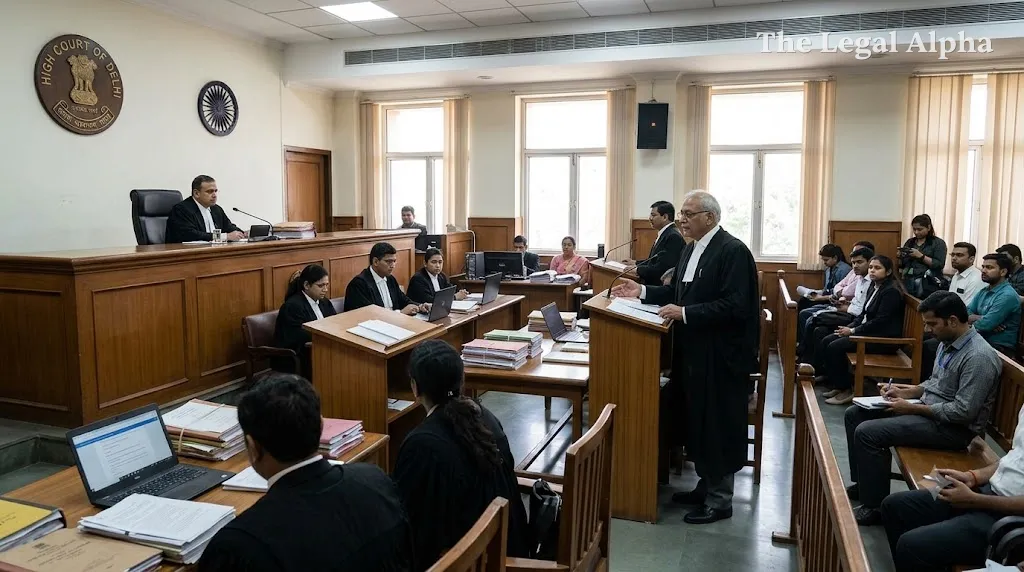
Bollywood actor Kriti Sanon approached the Delhi High Court seeking an injunction to safeguard her personality and publicity rights against unauthorized commercial exploitation. Represented by senior intellectual property counsel Pravin Anand, Sanon sought protective orders restraining rogue websites and third parties from misusing her name, voice, image, likeness, and digital persona.
Rather than issuing a routine interim restraining order, the Single Judge bench of Justice Purushaindra Kumar Kaurav paused to examine the foundational legal boundaries governing personality rights. The court directed Sanon’s counsel to place on record comprehensive legal research and case law demonstrating what specific facets of an individual’s identity qualify for legal protection, and whether such claims fall squarely within the statutory roster of the High Court's Intellectual Property Division (IPD).
Legal Topic
Area of Law: Intellectual Property & Common Law Torts
Sub-topic: Publicity Rights / Jurisdictional Competence of the Intellectual Property Division
Core Legal Issue
The matter calls on the court to resolve two primary legal questions:
-
What constitutes the precise legal framework and permissible scope of "personality rights" under Indian jurisprudence, particularly distinguishing pure commercial misappropriation from common law torts of passing off and privacy?
-
Does an action grounded in personality rights—which lacks a standalone statutory codification—fall within the administrative and subject-matter jurisdiction of the Delhi High Court’s Intellectual Property Division (IPD)?
What Did the Court Decide?
The Delhi High Court declined to grant an immediate ex-parte ad-interim injunction on Friday, October 16, 2026, opting instead to deliberate on the overarching jurisprudence before passing substantive directions.
Justice Purushaindra Kumar Kaurav instructed the plaintiff’s legal team to compile and submit domestic and international precedents, academic research, and comparative statutory frameworks clarifying the contours of personality rights and the IPD's mandate over them. The bench scheduled the matter for detailed hearing on October 29, 2026, indicating that it will issue a comprehensive ruling addressing these foundational questions.
Key Legal Points
-
Uncodified Nature of Personality Rights: India possesses no specific legislative enactment defining publicity or personality rights; courts have conventionally recognized them by stitching together common law passing off, trademark analogies, and the constitutional right to privacy.
-
Jurisdictional Threshold of the IPD: The court questioned whether an uncodified right qualifies as an intellectual property dispute under the Delhi High Court Intellectual Property Rights Division Rules, 2022, or if it must be routed through the ordinary original civil roster.
-
Distinction Between Identity and IP: The court highlighted the necessity to define which identity attributes (e.g., name, voice, digital avatar, biometric traits) can be legally ring-fenced without encroaching upon permissible public domain expression or free speech.
-
Departure from Routine Dynamic Injunctions: The refusal to issue an immediate "John Doe" injunction signals judicial scrutiny over the automatic grant of omnibus takedown orders in celebrity persona cases.
Relevant Law
-
Delhi High Court Intellectual Property Rights Division Rules, 2022: Governing the classification and institution of intellectual property disputes before the IPD.
-
Trade Marks Act, 1999: Common law principles of passing off, reputation, and goodwill in commercial markers.
-
Code of Civil Procedure, 1908 (CPC): Order XXXIX Rules 1 & 2 (Temporary injunctions) and Section 9 (Courts to try all civil suits unless barred).
-
Article 21 of the Constitution of India: Recognition of privacy and autonomy as affirmed in K.S. Puttaswamy v. Union of India.
-
Relevant Precedents: Judicial developments in Titan Industries Ltd. v. M/s Ramkumar Jewellers (2012) and Amitabh Bachchan v. Rajat Nagi (2022).
Arguments of the Parties
Petitioner (Kriti Sanon)
Counsel for the petitioner submitted that a public figure's identity—encompassing their name, likeness, facial features, voice, photographs, and digital persona—holds distinct commercial and endorsement value. It was argued that unauthorized third parties are commercially exploiting these attributes without consent, creating consumer deception and causing irreparable harm to her exclusive brand equity. The petitioner maintained that contemporary jurisprudence treats personality rights as quasi-proprietary rights capable of injunctive protection under the court's intellectual property and commercial jurisdictions.
Opposing Parties / Unnamed Infringers
Because the suit was heard at an ex-parte pre-summons stage seeking urgent dynamic interim relief ("John Doe" orders), respondents were not formally represented. However, the court independently raised concerns regarding overbreadth, procedural maintainability, and the proper judicial forum for claims that combine privacy, publicity, and commercial torts.
Why Does It Matter?
In recent years, the Delhi High Court has seen an influx of suits from high-profile actors, sports figures, and internet personalities seeking omnibus injunctions against AI deepfakes, unauthorized merchandising, and domain cybersquatting. The bench's hesitation to issue immediate relief marks a critical inflection point.
By demanding formal research on whether these claims legally belong before the Intellectual Property Division, the High Court is preparing to establish definitive guidelines. A reasoned order on October 29, 2026, could settle whether personality claims require a showing of traditional commercial "passing off," prevent over-broad gag orders that chill satire or fair commentary, and provide clear jurisdictional instructions for original side civil litigation.
Legal Takeaway
Personality rights in India remain an evolving common law concept rather than a codified intellectual property right. The Delhi High Court’s inquiry demonstrates that public figures cannot assume automated interim relief without first establishing that their claim fits the strict jurisdictional mandate of the Intellectual Property Division and respects boundaries between proprietary rights and fair use.
Sources
Primary Source:
-
Proceedings before the High Court of Delhi in CS(COMM) [Kriti Sanon v. John Doe & Ors.], Coram: Justice Purushaindra Kumar Kaurav, order dated October 16, 2026.
Additional Sources:
-
High Court of Delhi Intellectual Property Rights Division Rules, 2022.
-
K.S. Puttaswamy (Retd.) v. Union of India, (2017) 10 SCC 1.
-
Titan Industries Ltd. v. M/s Ramkumar Jewellers, 2012 SCC OnLine Del 2382.