Supreme Court to Revisit Bail Claims of Umar Khalid and Sharjeel Imam in Delhi Riots Case
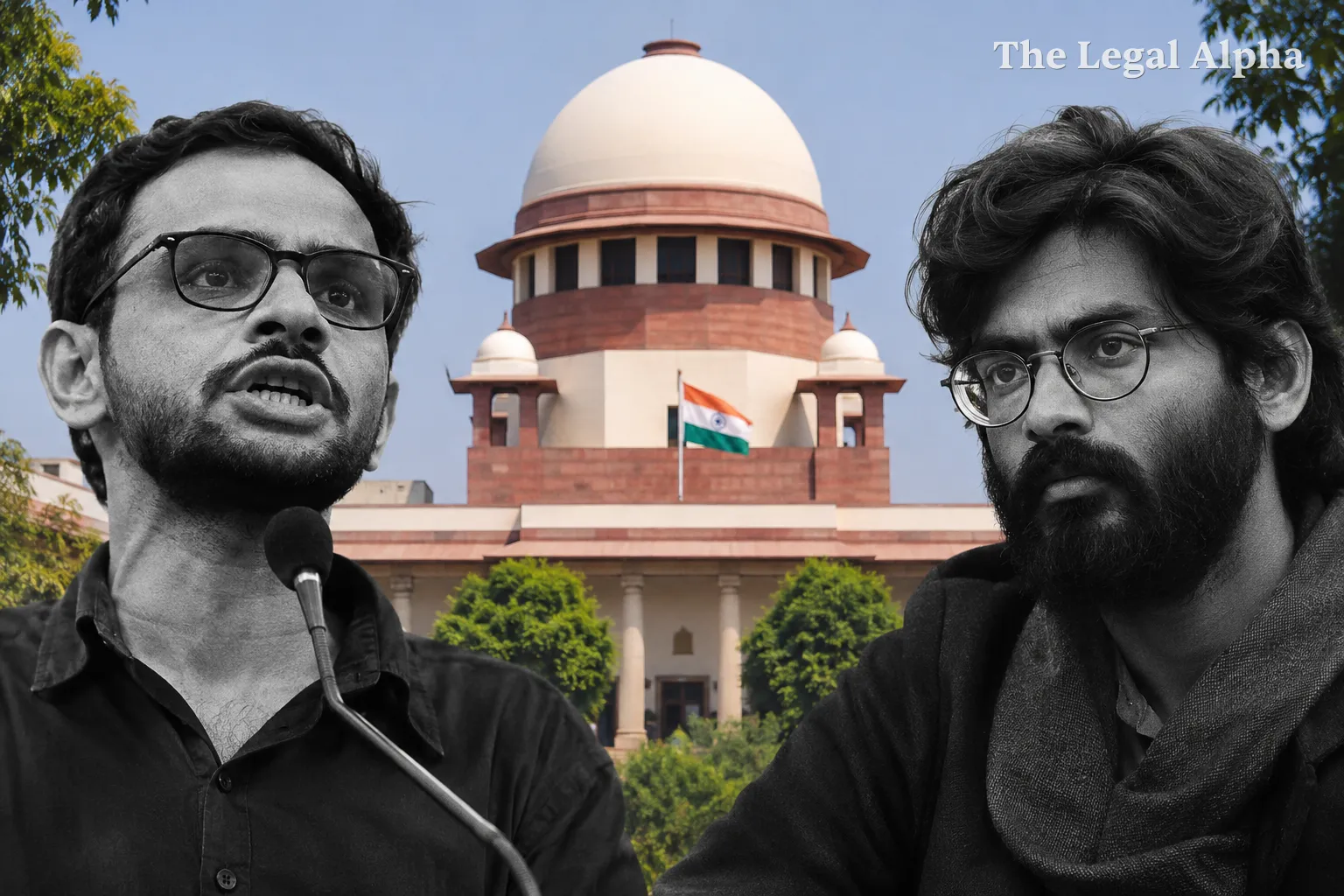
The Supreme Court of India is scheduled to take up fresh bail pleas filed by Umar Khalid and Sharjeel Imam on November 25, 2026, in connection with the alleged larger conspiracy behind the February 2020 Northeast Delhi riots.
The matter is significant as both accused are challenging the Delhi High Court's decision refusing them regular bail despite their prolonged incarceration. The hearing will bring the question of pre-trial detention and the statutory restrictions on bail under the Unlawful Activities (Prevention) Act, 1967 (UAPA), back before the apex court.
What Happened?
A three-judge bench comprising Chief Justice of India Surya Kant, Justice Joymalya Bagchi and Justice V. Mohana is scheduled to hear the separate appeals filed by Khalid and Imam.
Both accused have approached the Supreme Court after the Delhi High Court rejected their fresh bail pleas in a common judgment dated September 30, 2026. Their petitions challenge the refusal of regular bail in the 2020 Delhi riots larger conspiracy case.
The proceedings follow an earlier Supreme Court decision dated January 5, 2026, which rejected their bail pleas while granting relief to five other accused persons. The Court had distinguished their alleged roles from those of the co-accused who were granted bail.
Legal Topic
Area of Law: Criminal Law
Sub-topic: Bail under UAPA, Personal Liberty and Pre-trial Detention
Core Legal Issue
The central legal question is whether Umar Khalid and Sharjeel Imam should be granted regular bail in light of their prolonged incarceration and the stage of the criminal proceedings, notwithstanding the restrictions imposed by Section 43D(5) of the UAPA.
The Supreme Court will also have to consider the effect of its earlier decision, the circumstances surrounding the fresh bail applications and the balance between individual liberty and the statutory restrictions governing bail in cases involving alleged unlawful activities.
What Did the Court Decide?
The Delhi High Court, through its September 30 judgment, dismissed the appeals filed by Khalid and Imam and declined to grant them regular bail.
The High Court relied on the Supreme Court's January 5, 2026 judgment in Gulfisha Fatima v. State (Government of NCT of Delhi), which had rejected their earlier bail applications.
In that judgment, the Supreme Court had permitted the two accused to renew their bail applications upon the completion of examination of protected witnesses or after the expiry of one year from the order, whichever occurred earlier.
The Delhi High Court held that it could not modify these conditions imposed by the Supreme Court. It also rejected the argument that the two accused were entitled to bail on the basis of parity with other co-accused who had received relief.
The fresh appeals before the Supreme Court therefore seek reconsideration of their continued detention. No fresh decision on these appeals has been reported as of November 24, 2026.
Key Legal Points
-
Statutory restrictions on bail: Section 43D(5) of the UAPA imposes additional restrictions on granting bail where the court finds reasonable grounds to believe that accusations are prima facie true.
-
Right to personal liberty: Article 21 of the Constitution protects the right to life and personal liberty, including safeguards against unjustified prolonged pre-trial detention.
-
Parity between accused persons: Bail granted to one accused does not automatically entitle another accused to similar relief. Their individual roles and the material against them remain relevant.
-
Protected witnesses: The earlier Supreme Court order linked the opportunity to renew bail applications to the examination of protected witnesses or the expiry of one year, whichever occurred earlier.
-
Progress of trial: The proceedings raise questions about balancing statutory restrictions with the constitutional requirement that criminal trials progress without unreasonable delay.
Relevant Law
Unlawful Activities (Prevention) Act, 1967
-
Section 43D(5) – Restrictions on granting bail in cases involving offences under the UAPA.
-
Sections 13, 16, 17 and 18 – Provisions relating to unlawful activities, terrorist acts, raising funds for terrorist activities and conspiracy.
Constitution of India
- Article 21 – Protection of life and personal liberty.
National Investigation Agency Act, 2008
- Section 21(4) – Appeal against specified orders of the Special Court.
Arguments of the Parties
Umar Khalid and Sharjeel Imam
The petitioners have challenged the rejection of their fresh bail applications, relying on their prolonged incarceration and the circumstances surrounding the progress of the trial.
Their earlier submissions before the Delhi High Court included arguments concerning the delay in proceedings, the treatment of other co-accused and subsequent judicial developments relating to bail under the UAPA.
State of NCT of Delhi
The State opposed their bail applications, maintaining that the alleged roles of Khalid and Imam were materially different from those of co-accused who had secured bail.
The prosecution also relied on the earlier Supreme Court findings and argued that the conditions imposed in the January 2026 judgment could not be bypassed through fresh applications before the High Court.
Why Does It Matter?
The upcoming hearing is significant for the continuing debate over the relationship between individual liberty and stringent anti-terror legislation.
The case raises an important question about how courts should approach prolonged pre-trial detention when statutory restrictions make securing bail particularly difficult.
It also brings attention to the importance of timely criminal proceedings. Even where detention is permitted under a special statute, the constitutional guarantee under Article 21 remains relevant to the administration of criminal justice.
The Supreme Court's consideration of the fresh appeals could provide further guidance on the application of bail restrictions and the circumstances in which continued incarceration may require reconsideration.
Legal Takeaway
The case highlights the tension between the restrictive bail framework under Section 43D(5) of the UAPA and the constitutional protection of personal liberty under Article 21. The Supreme Court's consideration of the fresh appeals will be important in understanding how prolonged incarceration, trial progress and statutory restrictions are balanced in serious criminal cases.
Sources
Primary Sources:
Additional Sources: