Supreme Court Takes Up Challenge Against High Court Order Directing Vigilance FIR in CMRL–Exalogic Pay-off Probe
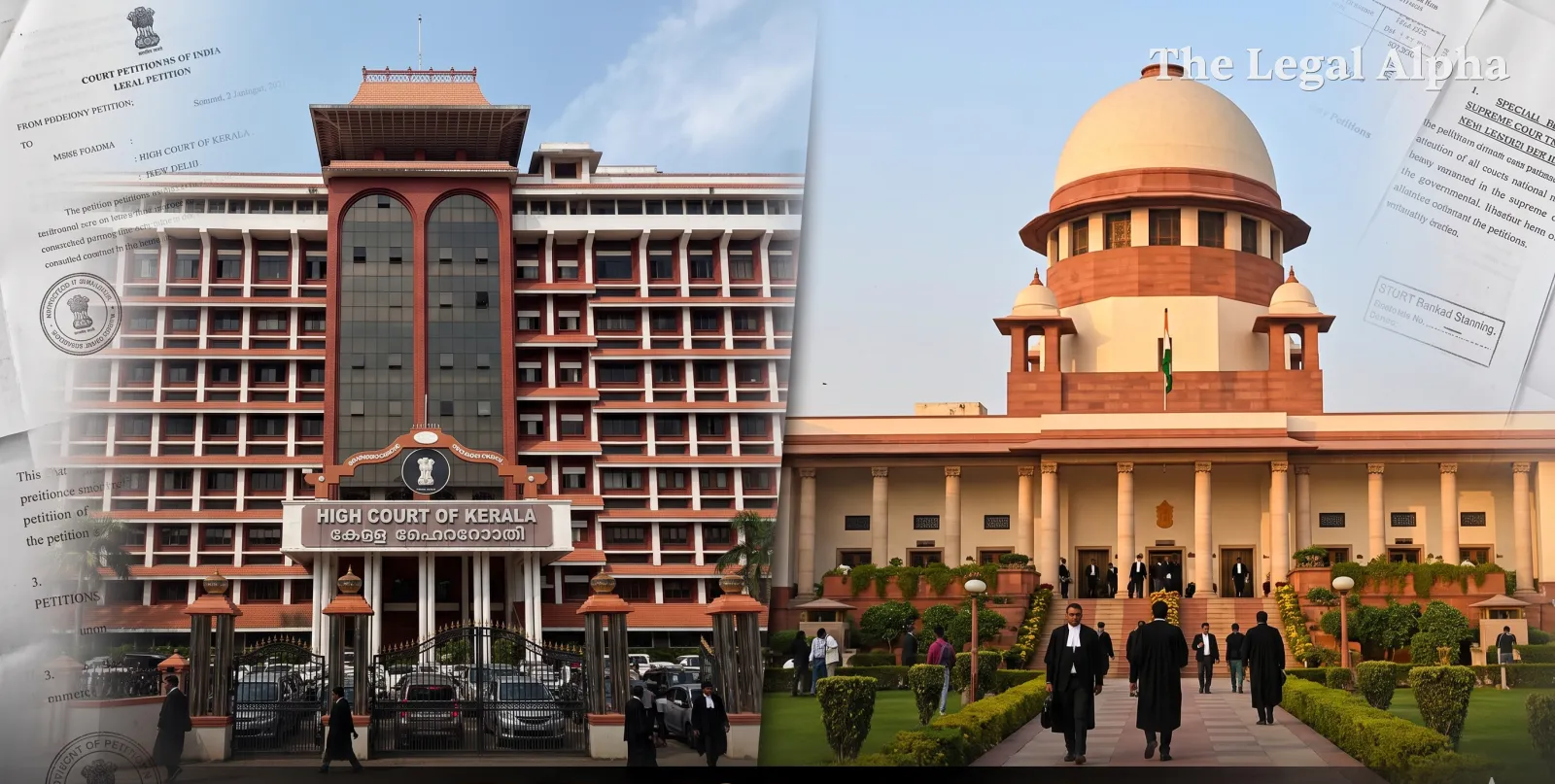
The Supreme Court of India has listed petitions moved by former Kerala Chief Minister Pinarayi Vijayan, his daughter T. Veena, and family members challenging a Kerala High Court verdict that mandated the registration of a corruption First Information Report (FIR) against them.
The controversy stems from financial transactions between private mining company Cochin Minerals and Rutile Limited (CMRL) and Exalogic Solutions, an IT consultancy firm formerly operated by Veena. Following an Enforcement Directorate (ED) recommendation based on material uncovered during money laundering inquiries, a single-judge bench of the Kerala High Court ordered the state's Vigilance and Anti-Corruption Bureau (VACB) to register a criminal case. After a division bench declined to stall the order, holding that prospective accused persons have no pre-FIR right to be heard, the petitioners approached the apex court seeking an urgent stay and protection from coercive steps.
Legal Topic
-
Area of Law: Criminal Law / Anti-Corruption Law
-
Sub-topic: Pre-FIR Rights / Judicial Mandate to Register FIR / Prevention of Corruption Act
Core Legal Issue
The fundamental legal question before the Supreme Court is whether a High Court, exercising constitutional jurisdiction under Article 226 or inherent powers under Section 482 of the Code of Criminal Procedure (now under the Bharatiya Nagarik Suraksha Sanhita framework), can judicially direct the registration of an FIR under the Prevention of Corruption Act without according a preliminary hearing or statutory safeguards to named individuals.
Additionally, the case examines the evidentiary threshold required for superior courts to order a state anti-corruption agency to book high-profile public functionaries based on investigative leads forwarded by an external central agency.
What Did the Court / Authority Decide?
-
A vacation bench comprising Justice Joymalya Bagchi and Justice V. Mohana listed the special leave petitions for hearing on October 21.
-
Senior counsel appearing for the petitioners mentioned the matter for urgent listing citing imminent apprehension of arrest and arbitrary state action following the High Court's direction.
-
The Kerala High Court division bench had earlier rejected appeals against the single-judge order, reiterating the settled principle that a proposed accused possesses no vested right of hearing before the formal registration of an FIR, though clarifying that substantive post-registration statutory remedies remain open.
-
The Supreme Court's listing will determine whether interim protection or a stay on the High Court's mandate is warranted while the larger challenge is deliberated.
Key Legal Points
-
No Pre-Registration Audience: The High Court applied established criminal jurisprudence dictating that individuals do not hold a natural justice right to be heard at the stage of directing or registering an FIR.
-
Judicial Direction vs. Agency Discretion: The petition questions the boundaries of judicial intervention in directing statutory vigilance bodies to lodge FIRs versus leaving the decision to preliminary inquiry mechanisms.
-
Inter-Agency Referral Threshold: The proceedings evaluate the legal weight of communication and material forwarded by the Enforcement Directorate to a state police agency under anti-corruption statutes.
-
Section 17A Protections: Matters involving public servants often pivot on statutory pre-investigation approvals under the Prevention of Corruption Act, an issue directly relevant to directing vigilance action against former state executives.
Relevant Law
-
Prevention of Corruption Act, 1988: Section 7, Section 13 (criminal misconduct), and Section 17A (requirement of prior approval for inquiry or investigation into public servants).
-
Constitution of India: Article 21 (protection of life and personal liberty) and Article 226 (writ jurisdiction of High Courts).
-
Code of Criminal Procedure, 1973 / Bharatiya Nagarik Suraksha Sanhita, 2023: Provisions governing registration of information in cognizable offences and pre-FIR inquiry standards.
-
Lalita Kumari v. Government of Uttar Pradesh (2014): Constitution Bench judgment governing mandatory registration of FIRs and circumstances necessitating preliminary inquiries in corruption matters.
Arguments of the Parties
Petitioners (Pinarayi Vijayan & Family):
-
Argued that the transactions between CMRL and Exalogic Solutions were legitimate commercial software and IT consultancy contracts, rather than illegal kickbacks.
-
Contended that directing a vigilance FIR bypassed mandatory procedural safeguards, including statutory prerequisites intended to shield public officials from vexatious or politically motivated accusations.
-
Submitted that the High Court erred in directing criminal registration without affording them an opportunity to refute the allegations, creating immediate prejudice and apprehension of arrest.
Respondent Authorities & Complainants:
-
Submitted that investigative material compiled by the Enforcement Directorate established a prima facie trail of illicit monetary transfers disguised as professional consultancy fees.
-
Argued that once a cognizable offence disclosing corruption and criminal conspiracy is made out on the face of official records, the registration of an FIR is a ministerial statutory mandate.
-
Contended that accused persons cannot claim a right of audience or assert prejudice prior to the commencement of an investigation, as defenses can only be raised post-investigation or during trial.
Why Does It Matter?
This litigation tests the limits of judicial oversight over investigative agencies. High Court directives ordering vigilance bodies to initiate criminal cases against political leaders often blur the line between judicial remedy and executive investigation.
The outcome will offer clarity on how courts handle intelligence sharing between federal agencies (like the ED) and state vigilance units. If the Supreme Court intervenes, it could reinforce procedural protections—such as mandatory preliminary inquiries and prior sanctions under Section 17A of the Prevention of Corruption Act—before magistrates or constitutional courts can compel the formal booking of public servants. Conversely, an upholding of the High Court's position will reaffirm that no prospective accused can stall the registration of a criminal probe by citing breach of natural justice at the threshold.
Legal Takeaway
A suspect or proposed accused generally has no legal right to be heard before an FIR is lodged, as natural justice only applies once formal proceedings commence. However, when constitutional courts mandate corruption probes against public figures, they must carefully balance this rule against statutory safeguards designed to prevent premature or unwarranted criminal registration.
Sources
-
Primary Source: Records of proceedings and Cause List, Supreme Court of India (Bench of Justice Joymalya Bagchi and Justice V. Mohana, listed October 21); Common Judgment/Orders of the Kerala High Court directing VACB action in the CMRL-Exalogic transaction case.
-
Additional Sources: Filings and listing mentions before the Supreme Court vacation bench; reportage from official legal news dispatches covering High Court Division Bench findings and Enforcement Directorate submissions.