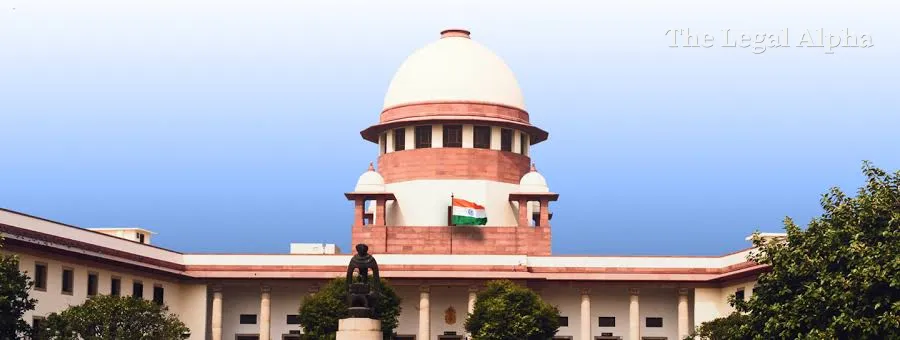
Supreme Court Consolidates Corruption Proceedings Against Former Allahabad High Court Judge, Shifts Disproportionate Assets Trial to Delhi
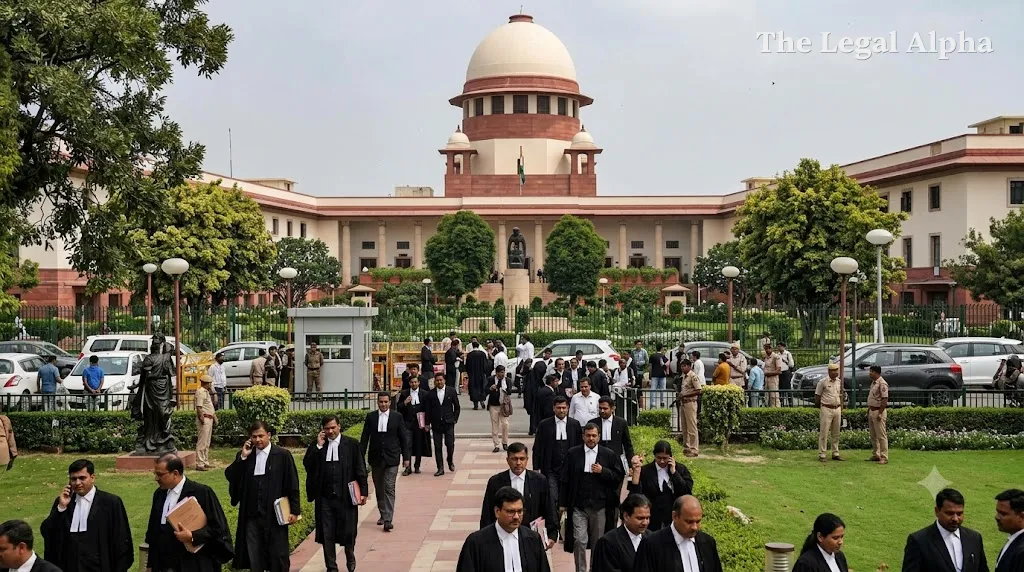
The Supreme Court directed the transfer of a disproportionate assets trial against retired Allahabad High Court judge Shri Narayan Shukla from a Special CBI Court in Lucknow to a designated CBI court in New Delhi.
The proceedings stem from a Central Bureau of Investigation (CBI) probe into allegations that Shukla accepted illegal gratification to pass favourable judicial orders in 2017 for a debarred private medical institution, the Prasad Education Trust. Following the initial bribery investigation, the CBI registered a second case alleging that the former judge and his family accumulated disproportionate assets exceeding ₹2.5 crore during his judicial tenure.
While the primary corruption trial was pending in Delhi, the subsequent assets case had been proceeding in Lucknow. Accepting a transfer petition moved by the retired judge, the apex court ordered that both interconnected trials be handled within the same judicial jurisdiction to ensure administrative coherence and prevent parallel trials arising from the same foundational probe.
Legal Topic
Area of Law: Criminal Procedure & Anti-Corruption Law
Sub-topic: Transfer of Criminal Cases / Interconnected Trials under the Prevention of Corruption Act
Core Legal Issue
The primary question before the court was whether a subsequently registered criminal case alleging disproportionate assets should be transferred to the jurisdiction where the primary predicate bribery trial is already underway, in the interest of justice and procedural efficiency.
The bench examined whether conducting two distinct trials arising out of interrelated investigations in two different states—Uttar Pradesh and Delhi—would lead to unnecessary multiplicity of proceedings, evidentiary overlap, and procedural hardship for both the defence and prosecution.
What Did the Court Decide?
A bench comprising Chief Justice of India Surya Kant and Justice Joymalya Bagchi allowed the transfer petition and directed that Sessions Case No. 737/2026, titled CBI v. Narayan Shukla & Ors., be transmitted from the Lucknow CBI court to the competent Special CBI Court in New Delhi.
The court noted that because the asset accumulation charges emerged directly out of the initial graft probe, holding both proceedings in Delhi would avoid fragmented adjudication. In its order, the bench instructed the former judge and his co-accused relatives to fully cooperate with the ongoing trial and directed the trial court and the CBI to expedite the proceedings without unwarranted delays.
Key Legal Points
-
Consolidation of Interlinked Trials: When an investigation into judicial misconduct gives rise to an ancillary prosecution for disproportionate assets, consolidating the venue of both trials avoids conflicting procedural findings and minimizes duplication of evidentiary examination.
-
Exercise of Transfer Powers in Criminal Matters: The Supreme Court exercised its authority to transfer proceedings across state jurisdictions to serve the broader interests of justice, administrative convenience, and expeditious trial conduct.
-
Expedition of High-Profile Anti-Corruption Cases: The top court underscored the necessity of concluding long-pending corruption proceedings against public functionaries without avoidable adjournments or procedural roadblocks.
Relevant Law
-
Section 406 of the Code of Criminal Procedure, 1973 (CrPC) / Section 447 of the Bharatiya Nagarik Suraksha Sanhita, 2023 (BNSS): Governs the power of the Supreme Court to transfer criminal cases and appeals from one High Court or subordinate criminal court to another.
-
Prevention of Corruption Act, 1988: Sections 7, 12, and 13(1)(e) read with 13(2), covering public servants accepting illegal gratification, criminal misconduct, and amassing assets disproportionate to known sources of income.
-
Indian Penal Code, 1860: Section 120B (Criminal Conspiracy).
Arguments of the Parties
Petitioner (Justice [Retd.] Shri Narayan Shukla)
Counsel for the petitioner submitted that the disproportionate assets proceedings in Lucknow were directly linked to the underlying CBI bribery case already pending before the Special CBI Court in New Delhi. It was argued that requiring the accused to defend separate criminal trials arising from the same foundational inquiry across two different states imposed severe logistical hardships, duplicative litigation expenses, and the risk of contradictory evidentiary records. Transferring the Lucknow trial to Delhi would promote procedural convenience and ensure effective coordination.
Respondent (Central Bureau of Investigation)
The prosecuting agency maintained that both matters represent severe offences under anti-corruption statutes requiring independent scrutiny based on distinct charge sheets. However, on the question of venue, the agency pressed that regardless of forum, the accused must strictly adhere to trial schedules, refrain from dilatory tactics, and cooperate fully to ensure the trials are concluded swiftly.
Why Does It Matter?
The decision addresses a common procedural challenge in white-collar and anti-corruption prosecutions where an initial bribery case triggers a separate, subsequent disproportionate assets probe. If trials proceed in different jurisdictions, accused persons often face parallel hearings, conflicting dates, and fragmented scrutiny of evidence that shares common investigative roots.
By transferring the secondary proceeding to New Delhi, the Supreme Court reaffirmed the principle that procedural mechanics should facilitate comprehensive and expeditious justice rather than compartmentalized delays. The case also highlights the continuing institutional scrutiny over judicial accountability, ensuring that graft prosecutions involving former constitutional court judges are processed without administrative stagnation.
Legal Takeaway
Where separate prosecutions against an accused arise out of a common investigative genesis, the Supreme Court will favour consolidating the trial venues in a single jurisdiction under Section 406 CrPC / Section 447 BNSS to avoid jurisdictional conflict, preserve judicial resources, and ensure a unified and speedy trial.
Sources
Primary Source:
Supreme Court of India, Transfer Petition (Criminal) relating to Sessions Case No. 737/2026 (CBI v. Narayan Shukla & Ors.), Order dated October 14, 2026 (Bench of CJI Surya Kant and Justice Joymalya Bagchi).
Additional Sources:
Central Bureau of Investigation FIRs & Charge Sheets in the Prasad Education Trust Medical College Bribery Case and Disproportionate Assets Proceedings; Proceedings of the Supreme Court of India.