Supreme Court Reserves Verdict on Scope of Election Commission’s Discretion to Bypass Bypolls Under Section 151A
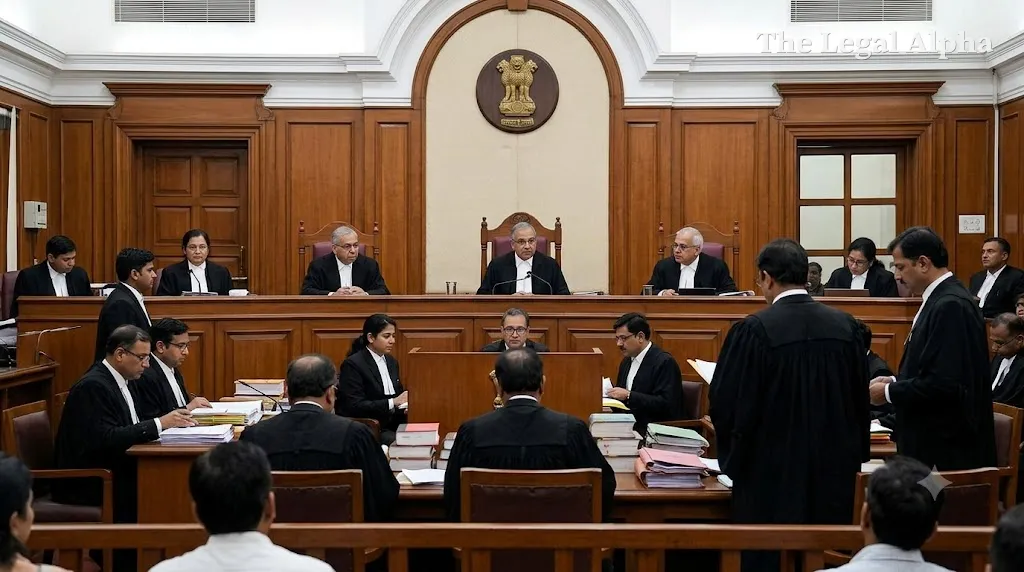
The Supreme Court has reserved its judgment on whether the Election Commission of India possesses the discretion to withhold bye-elections when a legislative vacancy arises with more than a year left in the term, but the statutory six-month period to conduct polls would push the remaining tenure under one year.
A three-judge bench comprising Justice Vikram Nath, Justice Augustine George Masih, and Justice Sandeep Mehta heard extensive arguments regarding the interpretation of statutory timelines for casual vacancies. The proceedings stem from challenges concerning vacant legislative seats, including an earlier ruling by the Bombay High Court concerning the Pune parliamentary seat, where the poll body was criticized for leaving a constituency unrepresented by not conducting timely bypolls.
Legal Topic
Area of Law: Election Law
Sub-topic: Conduct of Bye-Elections / Statutory Timelines and Casual Vacancies
Core Legal Issue
The controversy centres on the proper construction of Section 151A of the Representation of the People Act, 1951. Under clause (a) of the proviso, the statutory requirement to hold a bypoll within six months does not apply if the remainder of the member's term in relation to a vacancy is less than one year.
The primary legal question is whether the threshold of "less than one year" is calculated from the exact date the casual vacancy occurs or from the expiry of the six-month window provided to conduct the election. A connected issue is whether the Election Commission retains any administrative leeway under the statute to decide against conducting bypolls if the newly elected member would serve only a brief tenure.
What Did the Court / Authority Decide?
The Supreme Court has concluded oral arguments and reserved its verdict.
The bench did not pass a definitive final ruling on the merits during the hearing, keeping its interpretation of the statutory exception under advisement. Once delivered, the judgment will clarify whether the poll body is strictly mandated to hold elections whenever a seat falls vacant with over a year left in the legislative term, or whether subsequent delays and impending general elections allow an exemption.
Key Legal Points
-
Statutory Duty vs. Exception: Section 151A creates a mandatory duty to fill legislative vacancies within six months, subject to specific statutory exceptions under its proviso.
-
Relevant Date for Tenure Calculation: The dispute turns on whether the "one year" remaining term threshold is anchored to the date the seat became vacant or projected forward to the final date of the six-month polling window.
-
Constitutional Principle of Representation: Democratic governance disfavours leaving parliamentary or assembly seats unrepresented for prolonged durations without compelling legal justification.
-
Consistency in Electoral Administration: The proceedings highlight the requirement for clear, uniform guidelines preventing arbitrary or selective decisions by the poll body across different constituencies.
Relevant Law
-
Section 151A of the Representation of the People Act, 1951: Mandates the filling of casual vacancies through bye-elections within six months from the date of vacancy, with provisos governing terms of less than one year and consultation with the central government.
-
Article 324 of the Constitution of India: Confers powers of superintendence, direction, and control of elections upon the Election Commission of India.
Arguments of the Parties
Petitioner / Challenging Parties
The petitioners argued that Section 151A sets a binding statutory obligation aimed at preserving democratic representation in legislative bodies. They contended that if a vacancy occurs with more than one year remaining in the term, the Election Commission must conduct elections within six months. They submitted that allowing the Commission to postpone elections until the remaining term drops below one year would effectively permit the authority to bypass the legislative mandate and leave citizens unrepresented.
Election Commission of India / Respondents
The Election Commission submitted that statutory provisions governing elections must be interpreted practically, considering administrative feasibility and public expenditure. The respondents argued that holding an election when the incoming representative would only serve a negligible remaining term defeats the practical purpose of governance and diverts public machinery away from preparations for imminent general elections.
Why Does It Matter?
The forthcoming ruling will establish binding precedent on the administrative boundaries of the Election Commission in calling bye-elections. Leaving constituencies without representation creates governance vacuums, yet conducting elections for negligible tenures strains administrative and financial resources. By delivering an authoritative interpretation of Section 151A, the Supreme Court will resolve conflicting High Court approaches and set a uniform benchmark for when the electoral body may legally decline to conduct a bypoll.
Legal Takeaway
The Supreme Court's reserved judgment will determine whether the timeline under Section 151A of the Representation of the People Act is an inflexible constitutional and statutory mandate fixed on the date a seat falls vacant, or whether the Election Commission has discretion to withhold bye-elections when an incoming representative's actual tenure would be brief.
Sources
Primary Source:
-
Supreme Court of India: Oral proceedings and reservation of judgment before the bench of Justice Vikram Nath, Justice Augustine George Masih, and Justice Sandeep Mehta (Plea concerning interpretation of Section 151A, Representation of the People Act, 1951).
Additional Sources:
-
Text of Section 151A, Representation of the People Act, 1951.
-
Prior judicial orders concerning casual vacancies, including the Bombay High Court's directive regarding the Pune Lok Sabha constituency bye-election.