Supreme Court Moved Over Alleged Police Assault and Detention of Reporter Covering Delhi Demonstrations
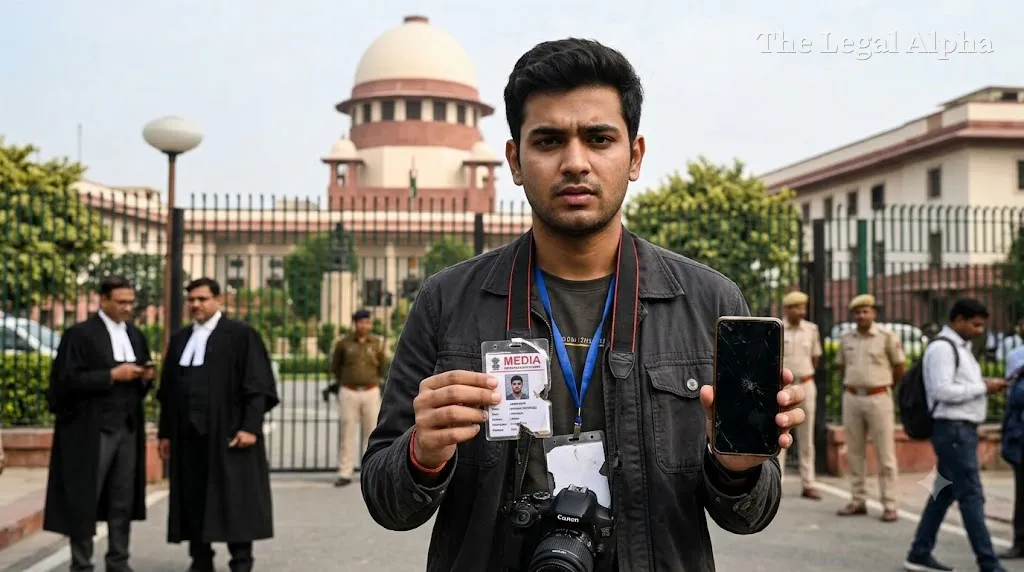
Amaan Rastogi, a reporter with digital outlet Molitics, approached the Supreme Court seeking contempt action against Union Home Secretary Govind Mohan and Delhi Police Commissioner Anurag Kumar. The petitioner contends that police authorities acted in direct contravention of judicial undertakings and directions issued by a special Sunday bench on October 11, 2026.
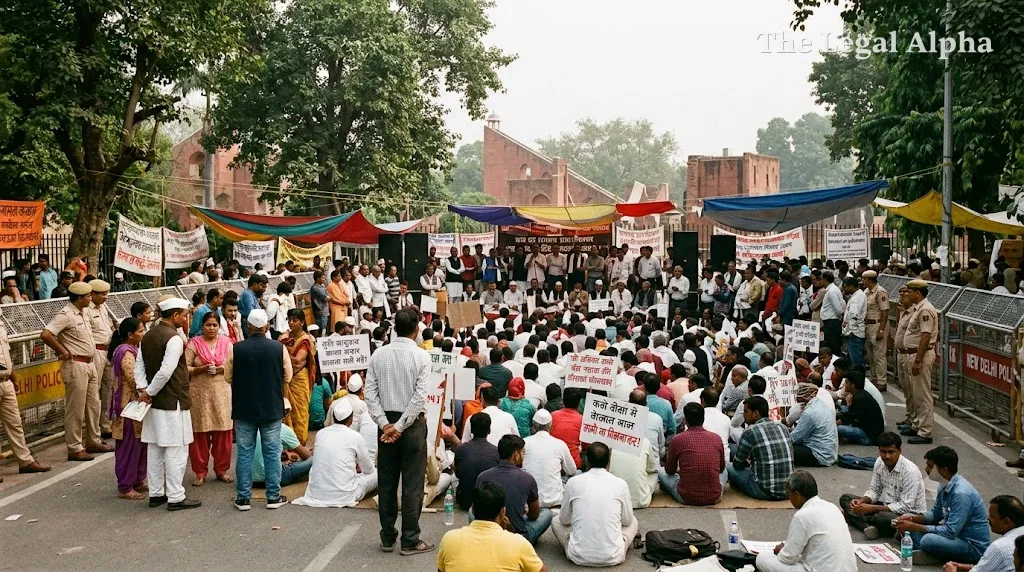
The petition details two consecutive instances of detention while performing journalistic duties during protests in the national capital. The first incident occurred after the journalist inquired about the custody of civilians, leading to their removal in a public transport bus despite brandishing a press credential. The second detention took place near Minto Road shortly after the apex court's protective directions, where officers allegedly confiscated the reporter's phone without documentation, returned it damaged, and destroyed their press pass.
Legal Topic
Area of Law: Constitutional Law / Contempt Jurisprudence Sub-topic: Freedom of the Press / Civil Contempt
Core Legal Issue
The controversy centres on whether the physical detention of a credentialed journalist and the seizure of digital devices—undertaken without statutory detention or seizure memos—constitutes wilful disobedience of court orders ensuring personal liberty and unrestrained movement during public assemblies.
It specifically questions whether police interference with journalists on ground duty violates the executive's solemn undertakings made through law officers before the Supreme Court.
What Did the Court / Authority Decide?
The contempt petition has been placed before the apex court in the wake of interim orders passed by a bench comprising Justice Joymalya Bagchi and Justice V. Mohana in Shailendra Mani Tripathi v. Govind Mohan.
In that proceeding, the bench directed the resumption of normal transit, warned against unlawful detentions, and took on record the Solicitor General's assurances regarding free movement and adherence to statutory procedures. The present petition seeking contempt sanctions against senior police and home ministry officials is currently pending judicial scrutiny and formal listing.
Key Legal Points
-
Wilful disregard of assurances recorded before the court constitutes actionable civil contempt under statutory powers and constitutional provisions.
-
Detention without supplying grounds or issuing mandated detention and seizure memos violates procedural safeguards guaranteed under statutory law and constitutional precedent.
-
Gathering news and recording unfolding public demonstrations on the ground forms an integral component of press freedom, rather than merely the downstream act of publication.
-
Police handling of media personnel must conform to established departmental guidelines governing visibly identified press representatives.
Relevant Law
-
Article 19(1)(a) of the Constitution of India (Freedom of speech and expression, including press freedom).
-
Article 19(1)(g) of the Constitution of India (Right to practice any profession or occupation).
-
Article 21 of the Constitution of India (Protection of life and personal liberty, requiring procedure established by law).
-
Article 129 of the Constitution of India (Supreme Court’s power to punish for contempt of itself).
-
Section 2(b) and Section 12 of the Contempt of Courts Act, 1971 (Civil contempt for wilful disobedience of judicial orders and undertakings).
-
Delhi Police Guidelines for Journalists (issued October 5, 2026).
Arguments of the Parties
Petitioner / Applicant
The petitioner argued that law enforcement officers deliberately breached the Supreme Court's October 11 interim directives and the binding assurances tendered by the Solicitor General. The plea contended that Rastogi complied fully with the Delhi Police's own press advisory by displaying proper media identification. It was further submitted that detaining reporters, seizing recording equipment without statutory memos, and discarding press credentials undermines journalistic immunity and fundamental civil liberties.
Respondent / State / Opposing Party
While formal counter-affidavits in this contempt petition remain to be filed, state authorities and police representatives in related protest hearings submitted that law enforcement personnel were engaged in maintaining public order amid volatile assembly situations. Police responses in connected matters have previously cited ground congestion and operational difficulties during containment efforts rather than any targeted malice toward accredited reporters.
Why Does It Matter?
This petition touches on the practical protection available to working journalists reporting from conflict zones and public protests. While free speech protections are frequently reaffirmed in appellate rulings, ground-level detention and unrecorded device seizures often escape immediate judicial review.
By framing these actions as contempt of specific undertakings rather than merely routine administrative lapses, the matter tests whether supervisory bureaucratic leadership can be held directly accountable for ground-level disregard of court mandates.
Legal Takeaway
Executive assurances and court orders guaranteeing freedom of movement and procedural compliance create binding legal duties for law enforcement. Detaining credentialed journalists or seizing their professional equipment without formal statutory records can trigger severe contempt liabilities for administrative leadership.
Sources
Primary Source:
-
Supreme Court of India: Order dated October 11, 2026, in Shailendra Mani Tripathi v. Govind Mohan & Ors. (Contempt Petition (Civil) Diary No. 63801/2026 in W.P.(C) Diary No. 63560/2026).
-
Contempt Petition filed by Amaan Rastogi before the Supreme Court of India (October 2026).
Additional Sources:
-
Delhi Police Administrative Guidelines for Journalists (October 5, 2026).