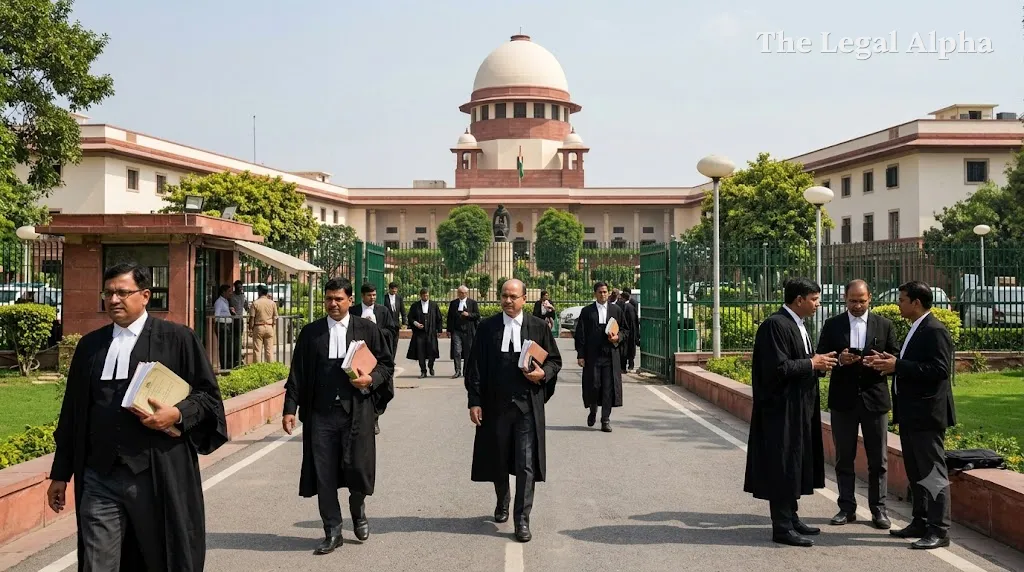
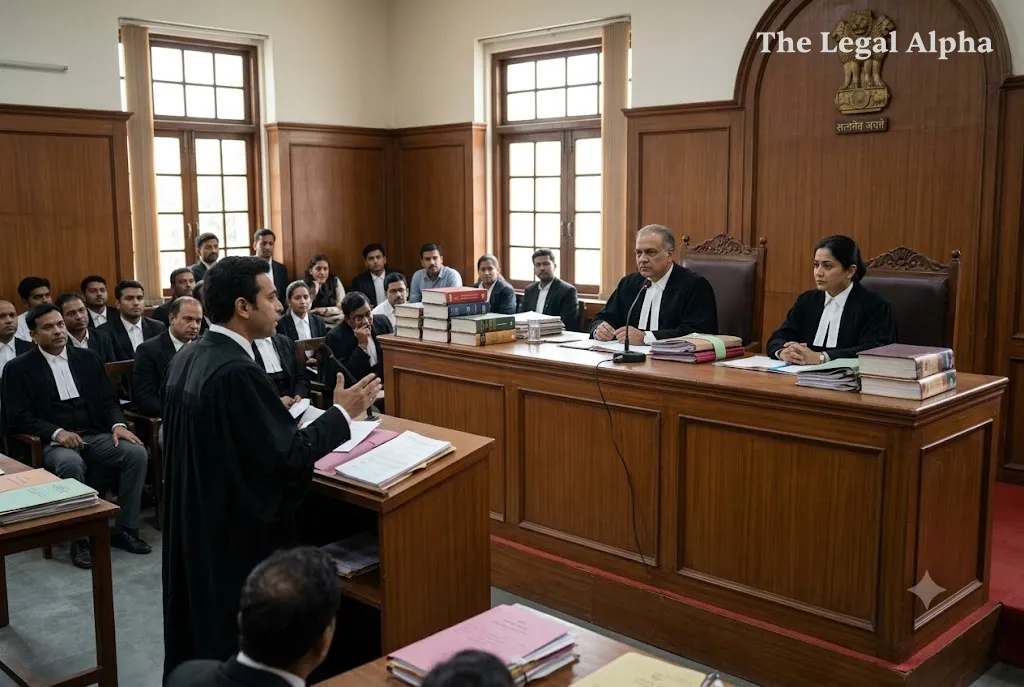
Supreme Court Affirms That Protest Cannot Be Met With Blanket Bans in Public Spaces
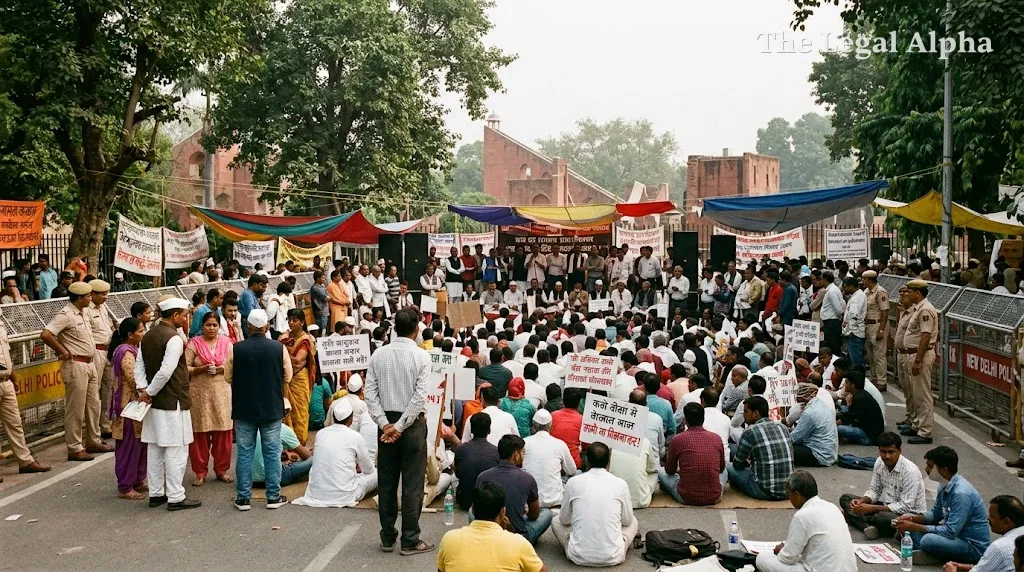
The Supreme Court examined challenges to continuous restrictions placed on peaceful assemblies in central areas of the national capital, specifically focusing on the prolonged prohibition of demonstrations at traditional spots like Jantar Mantar and Boat Club. Rather than allowing an indefinite, perpetual clampdown under recurring police prohibitory orders, the apex court stepped in to reconcile civil liberties with administrative concerns regarding civic order and traffic disruption.
The ruling addresses a recurring friction point in urban governance: the tendency of executive authorities to use recurring, sweeping orders to avoid managing public demonstrations, effectively transforming temporary administrative mechanisms into permanent curbs on public gatherings.
Legal Topic
Area of Law: Constitutional Law / Administrative Law
Sub-topic: Fundamental Freedoms / Public Order Restrictions
Core Legal Issue
The central legal question before the bench was whether executive authorities can invoke statutory police powers to enforce what amounts to a permanent, total prohibition on demonstrations in designated civic hubs.
Specifically, the court had to decide if repeated impositions of prohibitory orders pass the constitutional test of "reasonable restrictions" under fundamental freedoms, or whether the state is obligated to adopt a balanced regulatory mechanism that permits peaceful protest while safeguarding civic tranquility.
What Did the Court / Authority Decide?
The Supreme Court ruled that a blanket, total prohibition on holding peaceful demonstrations at Jantar Mantar cannot be sustained, striking down the absolute ban while refusing to treat protest as an unregulatable activity.
-
The court set aside orders that imposed continuous, open-ended prohibitions on gatherings in the designated demonstration zone.
-
Authorities were directed to formulate structured guidelines and an operational framework to regulate, rather than prohibit, assemblies.
-
The administration was instructed to balance the volume and duration of protests against local residents' quality of life and general vehicular movement, ensuring proper standard operating procedures are put in place.
Key Legal Points
-
Total prohibitions undermine democratic dialogue; regulation rather than outright prevention must serve as the primary executive response.
-
Repeated issuance of emergency police orders cannot be used as an administrative shortcut to bypass constitutional guarantees of free speech and assembly.
-
The state holds a positive obligation to balance the competing rights of protestors seeking to voice grievances and local residents entitled to peace and free movement.
-
Discretionary executive powers under criminal procedure must adhere strictly to the doctrine of proportionality.
Relevant Law
-
Article 19(1)(a) of the Constitution of India: Freedom of speech and expression.
-
Article 19(1)(b) of the Constitution of India: Right to assemble peaceably and without arms.
-
Article 19(2) & 19(3) of the Constitution of India: Reasonable restrictions on fundamental freedoms in the interest of public order.
-
Section 144 of the Code of Criminal Procedure, 1973: Executive authority to issue orders in urgent cases of nuisance or apprehended danger.
-
Mazdoor Kisan Shakti Sangathan (MKSS) v. Union of India (2018): Relevant Supreme Court ruling establishing limits on permanent demonstration bans.
Arguments of the Parties
Petitioner / Applicant / Appellant
The petitioners contended that peaceful public assembly is an indispensable democratic right that cannot be rendered illusory through indefinite administrative bans. They submitted that recurring emergency orders under Section 144 CrPC effectively shut down historic, visible platforms for civic dissent, violating Articles 19(1)(a) and 19(1)(b) of the Constitution.
Respondent / State / Opposing Party
The authorities and affected residents argued that unregulated, massive congregations in core urban hubs lead to severe public nuisance, unmanageable traffic congestion, and security risks. The State submitted that reasonable spatial boundaries and restrictions are essential to preserve public order, protect institutional buildings, and safeguard the daily lives of local citizens.
Why Does It Matter?
This development sets a crucial standard for civic administration across the country. It curtails the administrative practice of using Section 144 CrPC as a perpetual licensing or banning mechanism, making clear that public administration cannot treat ordinary peaceful demonstrations as indefinite security threats.
By requiring municipalities and law enforcement to draft objective, rule-based guidelines, the ruling sets a precedent for balancing urban convenience with fundamental democratic dissent, ensuring that dissenters are not entirely relegated to distant, invisible fringes of civic life.
Legal Takeaway
Peaceful assembly cannot be extinguished through recurring executive bans masquerading as temporary measures. While public order permits the state to regulate the time, place, and manner of demonstrations, any restriction must remain proportionate, structured, and distinct from outright prohibition.
Sources
Primary Source:
-
Mazdoor Kisan Shakti Sangathan (MKSS) v. Union of India & Anr. (Writ Petition (Civil) No. 1153 of 2017), Supreme Court of India.
Additional Sources:
-
Code of Criminal Procedure, 1973 (Section 144 statutory framework and police regulatory guidelines).