Supreme Court Declines to Halt CBI Probe Against Punjab Chief Minister's OSD but Shields Accused from Coercive Action
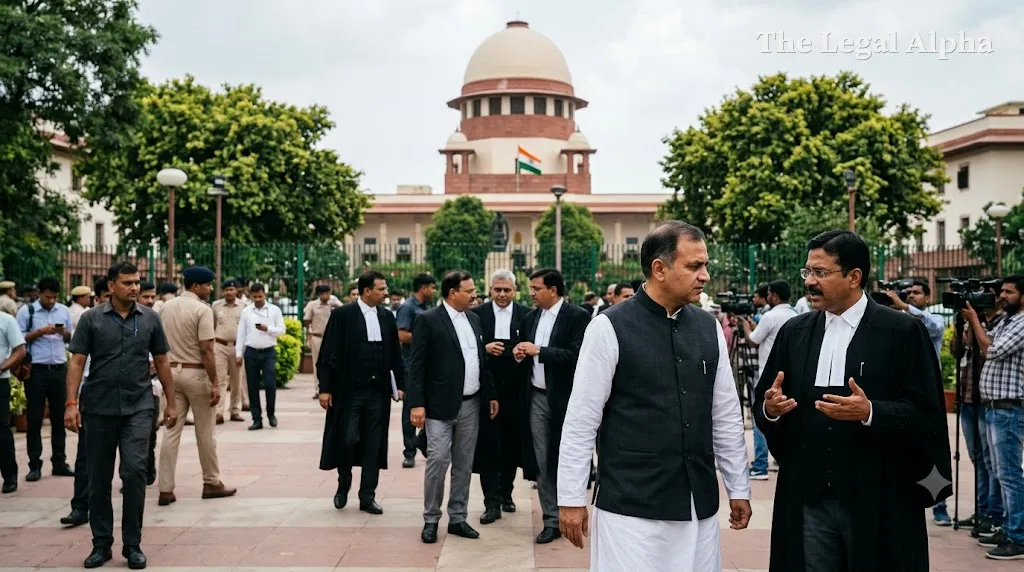
The Supreme Court of India declined to stay a Central Bureau of Investigation (CBI) probe and the resultant First Information Report (FIR) registered against Rajbir Ghuman, Officer on Special Duty (OSD) to Punjab Chief Minister Bhagwant Mann, along with five other individuals. However, the top court provided immediate interim relief to the accused by directing that no coercive steps be taken against them while the legal challenge remains pending.
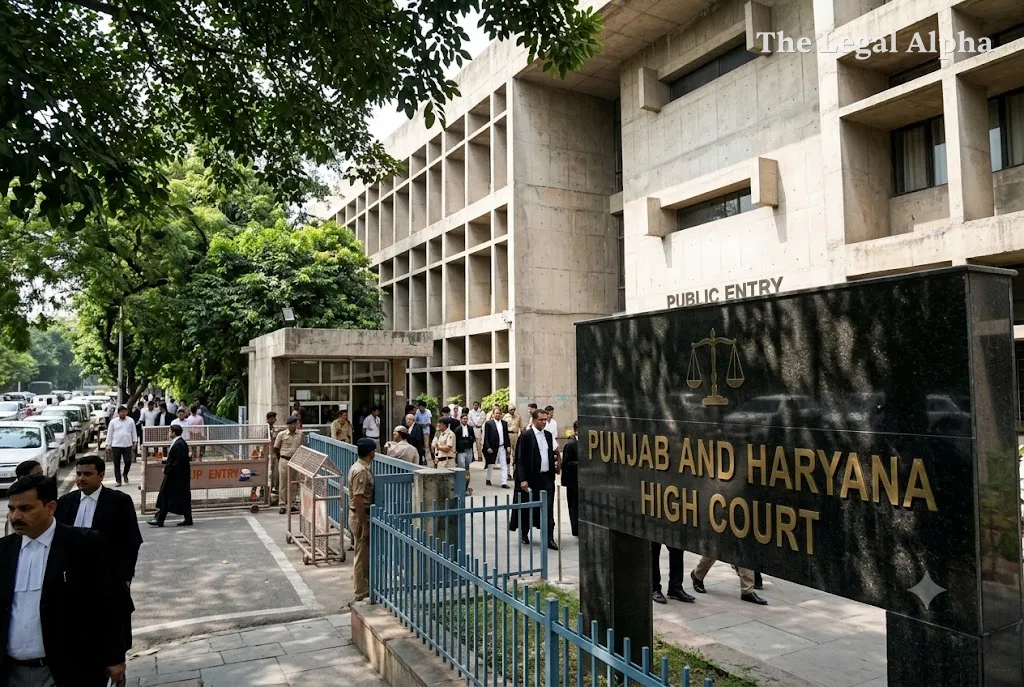
The matter reached the apex court after the Punjab government and the affected parties challenged a judgment delivered by the Punjab and Haryana High Court. The High Court had directed the CBI to step in and investigate alleged corruption involving government postings, tenders, and policy leakage following claims that the Punjab Police had failed to act on intelligence forwarded by the Enforcement Directorate.
Legal Topic
-
Area of Law: Criminal Law / Public Law & Governance
-
Sub-topic: Investigative Jurisdiction / Stay of FIR & Interim Protection
Core Legal Issue
The core legal dispute centres on whether a High Court can invoke its extraordinary constitutional powers under Article 226 to mandate a central investigative agency to register an FIR and conduct a probe within a state that has officially withdrawn general consent under Section 6 of the Delhi Special Police Establishment (DSPE) Act, 1946.
The Supreme Court is tasked with evaluating whether the inaction or delay by state law enforcement in probing allegations against high-ranking government officials presents an "exceptional circumstance" sufficient to override state police machinery, and whether such an investigation should be halted at the threshold.
What Did the Court / Authority Decide?
A Supreme Court bench comprising Justice M.M. Sundresh and Justice Prasanna B. Varale issued notice on the petitions and declined to stall the ongoing CBI investigation or stay the FIR.
At the same time, the bench granted substantial interim relief by barring the agency from taking any coercive action—including arrest—against Rajbir Ghuman and the other co-accused. While the CBI remains free to continue its inquiry and collect evidence, the main appeals questioning the legality of the High Court's transfer order remain sub judice before the Supreme Court.
Key Legal Points
-
Balanced Interim Approach: The Supreme Court maintained an equilibrium between allowing an anti-corruption probe to proceed and protecting the accused from custodial deprivation pending final adjudication.
-
High Court Jurisdiction under Article 226: The High Court's directive affirmed that constitutional courts retain the power to assign probes to central agencies where state agencies prima facie exhibit institutional inertia concerning influential public functionaries.
-
Federal Consent vs. Extraordinary Powers: While state consent is standard under the DSPE Act, constitutional jurisprudence permits judicial overrides in rare and exceptional matters to ensure public confidence in the administration of justice.
-
Non-Interference with Inception of Investigation: Reaffirming standard criminal jurisprudence, courts remain reluctant to quash or stay criminal proceedings at the threshold when the statutory material reveals cognizable allegations.
Relevant Law
-
Section 6 of the Delhi Special Police Establishment (DSPE) Act, 1946: Pertains to state consent requirements for CBI investigations.
-
Article 226 & Article 136 of the Constitution of India: Concerning the High Court's writ jurisdiction to mandate probes and the Supreme Court’s appellate scrutiny.
-
Relevant Provisions of the Prevention of Corruption Act, 1988 & Bharatiya Nyaya Sanhita (BNS): Concerning public servant misconduct, bribery, and criminal conspiracy.
-
State of West Bengal v. Committee for Protection of Democratic Rights (2010): Landmark precedent affirming that constitutional courts can direct CBI investigations without state consent in exceptional cases.
Arguments of the Parties
Petitioner / State of Punjab & Accused
-
Contended that the High Court erred in transferring the matter to the CBI without establishing the existence of extraordinary circumstances.
-
Argued that the Punjab Police Bureau of Investigation was actively examining the materials received from the Enforcement Directorate and had not refused to act.
-
Maintained that deploying the CBI in a state that had revoked general consent encroaches upon state autonomy and the federal division of police powers.
Respondent / Complainant
-
Submitted that critical intelligence highlighting a cash-for-transfers syndicate and policy leaks within high public offices sat unattended for months without the registration of an FIR.
-
Argued that an independent central investigation was essential because local police machinery faced an institutional conflict of interest when probing senior administrative personnel directly attached to the Chief Minister’s office.
Why Does It Matter?
This interim determination underscores the recurring constitutional friction between state autonomy and federal anti-corruption inquiries in states that have withdrawn general consent to the CBI. When high-level functionaries are implicated, courts are frequently called upon to decide whether local police can be viewed as genuinely independent.
By permitting the investigation to progress without staying the FIR, while simultaneously prohibiting coercive steps, the Supreme Court prevented a premature breakdown of the investigation while guarding against immediate executive or custodial consequences until the constitutional boundaries of the High Court's order are settled.
Legal Takeaway
A withdrawal of general consent by a state does not entirely shield officials from central agency investigations directed by constitutional courts. However, the Supreme Court continues to protect personal liberty by granting interim relief against coercive action when serious jurisdictional questions regarding investigative orders remain unresolved.
Sources
Primary Source:
-
Supreme Court of India, Record of Proceedings / Order dated October 12, 2026 (Bench of Justice M.M. Sundresh and Justice Prasanna B. Varale); Punjab and Haryana High Court order in CWP-PIL-238-2026 (order dated October 5, 2026).
Additional Sources:
-
Central Bureau of Investigation FIR & official records; Punjab Police Bureau of Investigation communications; reports via LiveLaw, Hindustan Times, and The Indian Express.