Delhi Police Register Criminal Case Against Lok Sabha MP Bimol Akoijam Following Workplace Harassment Inquiry and Dismissal by JNU
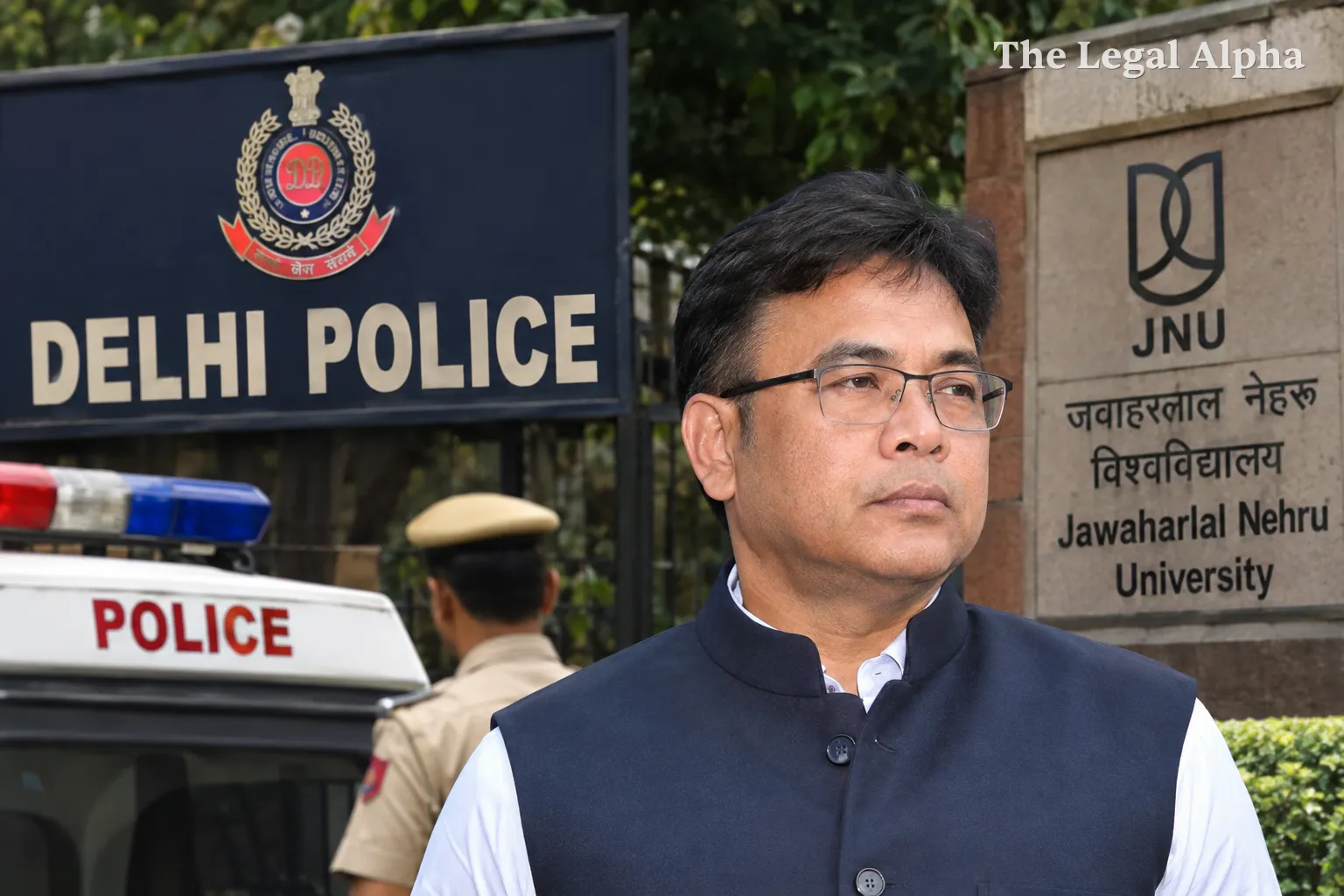
The Delhi Police have registered a First Information Report (FIR) against Angomcha Bimol Akoijam, Lok Sabha Member of Parliament from Inner Manipur and former faculty member at Jawaharlal Nehru University (JNU). The criminal complaint was filed by the university’s Chief Security Officer at the Vasant Kunj North police station following an internal institutional probe.
The police action comes immediately after JNU terminated Akoijam's service on October 9, 2026, acting on findings submitted by the university's Internal Committee. The committee investigated complaints brought forward by eleven female students alleging repeated verbal misconduct, inappropriate advances, and exploitation of academic authority. While the university concluded its service disciplinary proceedings with dismissal, the matter has now transitioned into a formal criminal investigation.
Legal Topic
Area of Law: Criminal Law & Employment / Service Jurisprudence
Sub-topic: Workplace Sexual Harassment, Institutional Disciplinary Action, and Penal Proceedings
Core Legal Issue
The matter involves the operational transition between internal disciplinary remedies under service rules and parallel criminal prosecution under penal statutes.
The primary legal issue is whether an administrative finding of misconduct by an employer's internal inquiry committee—operating under the Prevention of Sexual Harassment (POSH) statutory framework and service conduct rules—warrants immediate penal action, and how statutory bodies must balance substantive natural justice rights during disciplinary termination when concurrent penal charges under the Bharatiya Nyaya Sanhita are initiated.
What Did the Court / Authority Decide?
-
University Executive Action: JNU accepted the recommendations of its Internal Committee under the Central Civil Services (Classification, Control and Appeal) Rules, 1965, imposing the major penalty of immediate termination of service on October 9, 2026.
-
Police Registration: Acting on the institutional complaint of the Chief Security Officer, Delhi Police registered an FIR under Sections 75 and 79 of the Bharatiya Nyaya Sanhita, 2023.
-
Procedural Posture: The administrative dismissal is complete, while the criminal proceedings remain at the pre-trial investigative stage. No formal chargesheet or judicial findings have yet been issued by a magistrate.
Key Legal Points
-
Bifurcation of Administrative and Criminal Proceedings: Internal disciplinary procedures assessing professional misconduct operate under the "preponderance of probabilities" standard, whereas parallel criminal investigations initiated under the Bharatiya Nyaya Sanhita require proof "beyond reasonable doubt."
-
Statutory Obligation to Report: Institutional authorities handling internal inquiry findings that reveal prima facie cognizable penal offences are legally mandated to report the matter to law enforcement, separating departmental punishment from state prosecution.
-
Procedural Due Process Safeguards: The legal validity of civil service disciplinary dismissals hinges on compliance with principles of natural justice, including reasonable opportunity to rebut findings of internal inquiry committees prior to punitive separation.
Relevant Law
-
Bharatiya Nyaya Sanhita, 2023 (BNS):
-
Section 75, 75(1)(i), 75(1)(iv): Covers the offence of sexual harassment, including unwelcome physical contact and demands or requests for sexual favours.
-
Section 79: Addresses words, gestures, or acts intended to insult the modesty of a woman.
-
-
Sexual Harassment of Women at Workplace (Prevention, Prohibition and Redressal) Act, 2013 (POSH Act): Governing inquiry procedures and employer responsibilities.
-
Central Civil Services (Classification, Control and Appeal) Rules, 1965: Rule mechanisms governing major penalties and dismissal of academic personnel in central universities.
Arguments of the Parties
University Administration & Complainants:
The university administration acted on the findings of its duly constituted Internal Committee, which examined formal complaints submitted by eleven students. The administration maintained that the findings established severe breaches of professional conduct and abuse of academic supervision, necessitating termination under central service rules and formal reference to law enforcement to pursue statutory criminal accountability.
Angomcha Bimol Akoijam (Accused):
Akoijam has categorically denied the allegations, characterizing the institutional action and criminal complaint as a politically targeted "witch hunt". He contended that the university's disciplinary proceedings violated the principles of natural justice, asserting that he was denied a fair, adequate opportunity to rebut the committee's findings and defend himself before the major penalty of dismissal was imposed.
Why Does It Matter?
This development highlights the legal boundaries between institutional POSH mechanisms and state criminal law enforcement. For higher educational institutions and large workplaces, it underscores that completing an internal inquiry does not conclude an employer's statutory exposure; institutions face clear regulatory expectations to refer substantiated cognizable offences to the police.
Simultaneously, the case illustrates the procedural friction between rapid institutional action and administrative fairness. When high-profile public representatives face career-ending service dismissals alongside criminal complaints, rigorous procedural compliance in departmental inquiries becomes critical to ensure administrative orders survive judicial review under constitutional writ jurisdictions.
Legal Takeaway
An internal inquiry under workplace harassment rules functions independently of the criminal justice system, and departmental termination does not substitute for penal adjudication. While institutional findings can prompt police registration, criminal culpability requires rigorous independent investigation and judicial determination under statutory criminal standards.
Sources
Primary Source:
-
First Information Report (FIR), Vasant Kunj North Police Station, Delhi Police (Registered under Sections 75 and 79, Bharatiya Nyaya Sanhita, 2023).
-
Disciplinary Order of Jawaharlal Nehru University (Dated October 9, 2026, under CCS (CCA) Rules, 1965).
Additional Sources:
-
Official Communications, Jawaharlal Nehru University Administration.
-
Press Statements, Delhi Police & Lok Sabha Secretariat Communications.