Punjab and Haryana High Court Issues Criminal Contempt Notice to Punjab Government Over Dearness Allowance Dues
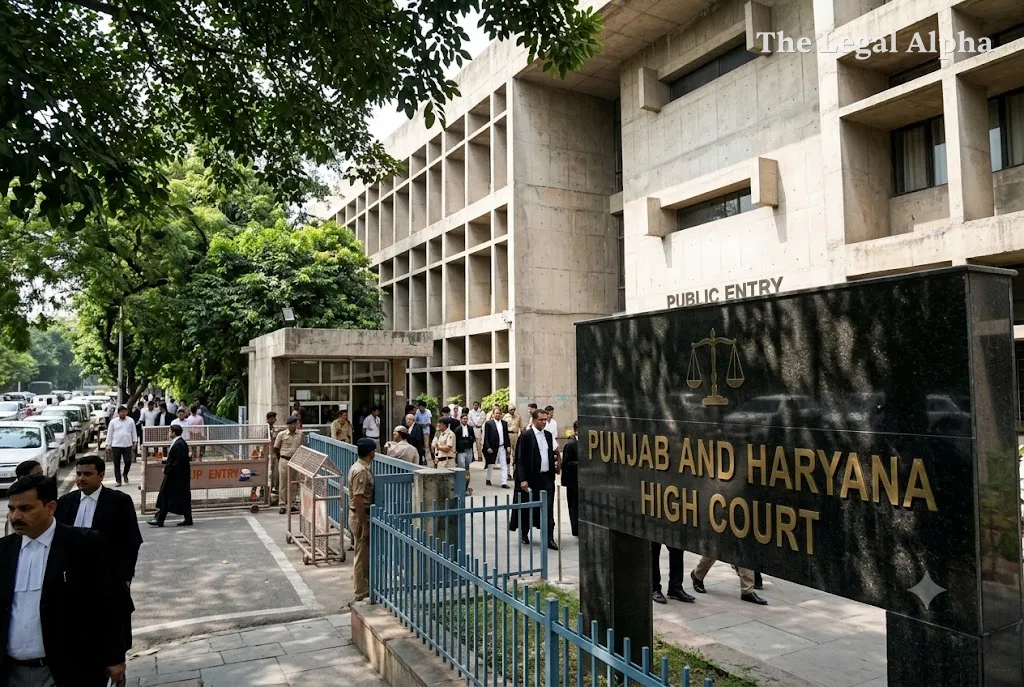
The Punjab and Haryana High Court has issued a formal notice of criminal contempt to the Punjab government over its prolonged failure to clear pending dearness allowance (DA) and dearness relief arrears for state employees and pensioners. The dispute stems from state authorities' non-compliance with earlier judicial directives that mandated the immediate disbursal of these statutory dues.
The matter escalated after the court detected misleading statements concerning whether the state had properly filed a challenge against the payment directions before the Supreme Court. Taking strong exception to administrative obstruction and misrepresentation on affidavit, a Division Bench designated to hear roster contempt matters issued the formal show-cause notice, directing the state administration to file its response by October 27, 2026.
Legal Topic
Area of Law: Service Law / Constitutional Law
Sub-topic: Criminal Contempt of Court / Enforcement of Statutory Employee Arrears
Core Legal Issue
The fundamental legal question before the court is whether the state administration crossed the boundary from mere non-compliance (civil contempt) into criminal contempt by allegedly submitting false or misleading statements regarding its appellate filings before the Supreme Court to stave off judicial enforcement.
Under Indian jurisprudence, when a party deliberately misrepresents procedural facts to a constitutional court, the issue ceases to be an ordinary execution dispute and becomes an act that obstructs and impairs the administration of justice.
What Did the Court / Authority Decide?
The Division Bench comprising Justice Vinod S. Bhardwaj and Justice Ravinder Malik issued formal notice to the state government in the criminal contempt petition.
The bench directed the State of Punjab to place its detailed reply on record by October 27, 2026. Earlier, during preliminary hearings before the Chief Justice’s bench, an unconditional apology had been tendered on behalf of the state's Chief Secretary, but the court maintained that the integrity and majesty of the judicial system could not be compromised, referring the matter to the roster bench for formal adjudication. While no final punitive finding of contempt has been recorded against individual contemnors yet, the court has formally put the state on notice to explain why punitive action should not follow.
Key Legal Points
-
Distinction Between Default and Misrepresentation: The High Court treated the deliberate tendering of incorrect factual statements regarding Supreme Court appeal status as prima facie obstruction of justice, elevating the matter beyond ordinary execution proceedings.
-
Sanctity of Affidavits: Statements of fact made by senior administrative authorities on oath are held to the highest standard of veracity; false assertions strike at the administration of justice.
-
Inherent Contempt Jurisdiction: The High Court exercised its constitutional authority as a court of record to initiate formal criminal contempt proceedings to protect institutional integrity.
-
Limits of Unconditional Apologies: The court reiterated that an apology tendered during proceedings cannot automatically purge criminal contempt when institutional dignity is undermined.
Relevant Law
-
Section 2(c), Contempt of Courts Act, 1971: Defines criminal contempt, including any act that scandalises the court, prejudices judicial proceedings, or obstructs the administration of justice.
-
Section 12, Contempt of Courts Act, 1971: Prescribes punishment for contempt of court and governs the acceptance of apologies.
-
Article 215, Constitution of India: Confers inherent power on High Courts as courts of record to punish for contempt of themselves.
Arguments of the Parties
Petitioner / Applicant / Appellant
Counsel representing the employee unions and pensioners submitted that the state had willfully defaulted on clear court orders mandating the release of long-overdue dearness allowance installments. They argued that the state deliberately took refuge behind misleading claims of pending Supreme Court appeals to avoid compliance and delay payouts, making out an open-and-shut case of criminal contempt.
Respondent / State / Opposing Party
The state administration contended that it was pursuing legitimate legal remedies against the payout directions and had no intent to disregard judicial authority. Counsel on behalf of senior administrative officials offered an unconditional apology for any factual inaccuracies regarding the filing status before the apex court, arguing that procedural inadvertence should not be construed as deliberate or contumacious obstruction of justice.
Why Does It Matter?
This development reinforces the critical boundary between standard bureaucratic delay and criminal contempt. State governments routinely plead fiscal constraints or pending appeals when faced with wage and pension arrears. However, this order signals that constitutional courts will not tolerate procedural misdirection or false statements as stall tactics.
For public sector employees and pensioners, it establishes that judicial enforcement mechanisms cannot be casually dodged through administrative inertia. For administrative bodies nationwide, it serves as a strict warning that misleading the judiciary in official pleadings exposes top bureaucrats to severe personal and penal consequences.
Legal Takeaway
Misrepresenting facts before a court to delay compliance with judicial directions is not merely civil disobedience, but can constitute criminal contempt of court. Public authorities are strictly accountable for the veracity of procedural claims made on oath, and apologies alone will not insulate administrators from formal contempt proceedings when the dignity of the judiciary is at stake.
Sources
Primary Source:
Punjab and Haryana High Court, Roster Division Bench (Justice Vinod S. Bhardwaj and Justice Ravinder Malik), Order dated October 12, 2026, in the dearness allowance compliance and criminal contempt proceedings.
Additional Sources:
Proceedings of the Division Bench headed by the Chief Justice, Punjab and Haryana High Court (Orders dated October 6 and October 9, 2026); Registry verification reports regarding Supreme Court SLP filings.